




Polished Brass Companion Set
A polished brass companion set brings warmth and bright reflective metal to the hearth, offering a practical arrangement of fireside tools.
Polished Brass Companion Set
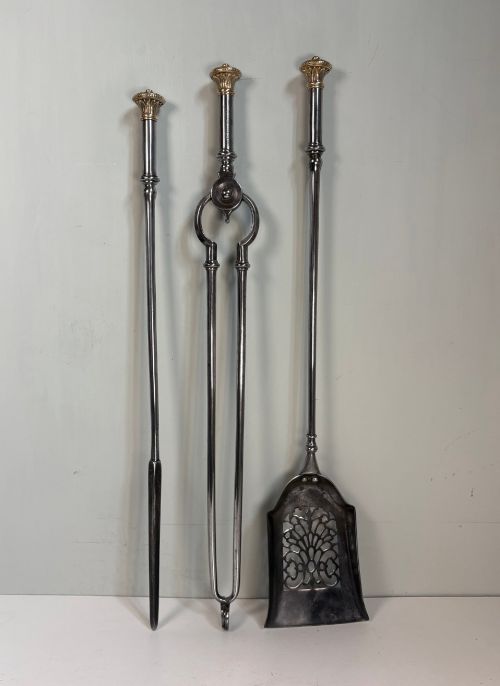
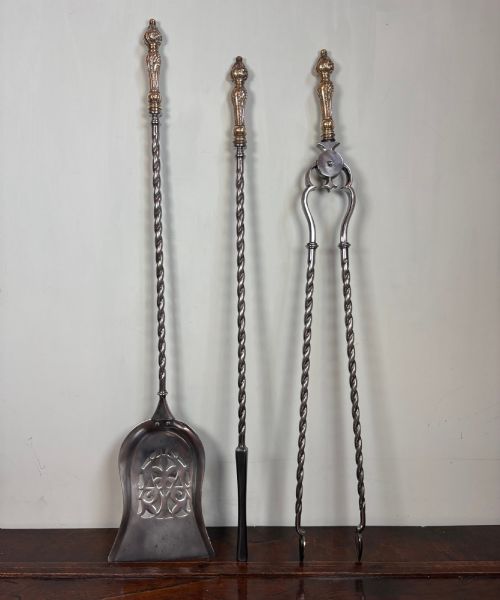
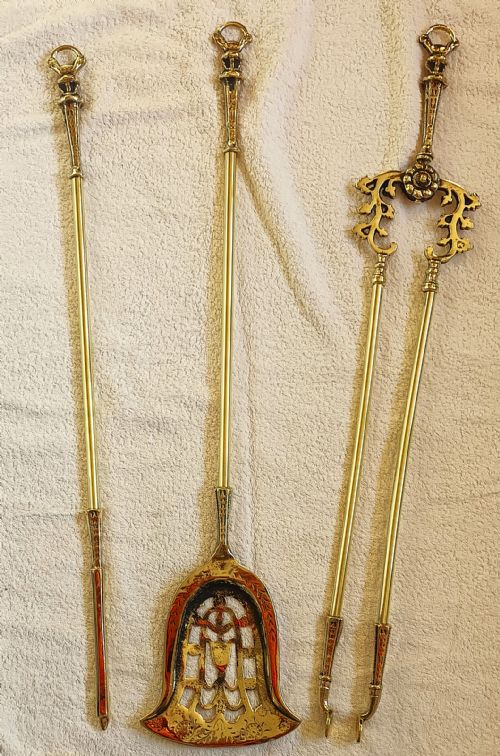
A polished brass companion set is an assembly of hearth implements designed to tend a coal or wood fire while presenting a bright, finished appearance in the room. These collections generally group together tools such as pokers, shovels, and tongs, sometimes accompanied by fire dogs or andirons.
The versions most commonly met on this page date from the Victorian period through to the early twentieth century. English traditional designs dominate, often combining brass shafts with steel working ends to ensure durability during use.
Sets range from simple three-piece arrangements to more extensive suites that include fenders and stands. The material selection shifts between solid brass components and mixed assemblies featuring iron and copper elements.
Materials and construction methods
Makers utilised brass for its bright appearance and ease of casting or spinning into decorative handles. Steel and iron were frequently incorporated into the shafts and working blades to provide the necessary strength and rigidity required for heavy hearth work.
Handles often display cast or turned details such as rope twists, starbursts, or ring handles, demonstrating the proficiency of nineteenth-century metalworkers. The polishing process gave the metal a high lustre that caught the candlelight and firelight of period drawing rooms.
Polished Brass Companion Set Retail Price Guide 2026
Typical asking prices for polished brass companion set among the pieces listed under this phrase on Sellingantiques today, from the lower quarter to the upper quarter. They describe what is for sale here now, not the wider market.
The listings span the eighteenth, nineteenth, and early twentieth centuries, featuring brass, steel, iron, and copper across traditional English and Regency styles.
Factors determining quality
Quality in these implements rests on the weight of the metal and the integrity of the joins between handles and shafts. Superior examples exhibit crisp casting details on the grips and substantial gauge metal that resists bending during regular fireside service.
Sets that retain their matching stands, fire dogs, or fenders show a higher degree of original cohesion than mixed groupings assembled later. The refinement of decorative motifs, such as claw and ball terminals or precise rope twist patterns, separates standard utility items from finer parlour pieces.
The Polished Brass Companion Set Glossary
- Companion set
- A matched group of fireside tools usually comprising a poker, shovel, and tongs held on a stand or resting against fire dogs.
- Fire irons
- The individual metal tools used for managing a coal or wood fire within a hearth.
- Andirons
- A pair of horizontal metal supports placed in a fireplace to hold logs above the floor of the hearth.
- Fender
- A low metal guard placed around the hearth opening to contain ash and protect the room.
- Rope twist
- A decorative spiral pattern chased or cast into the metal handle of a fire tool.
Polished Brass Companion Set: Frequently Asked Questions
What tools are included in a standard set?
A standard grouping typically comprises a poker for shifting fuel, a shovel for clearing ash, and tongs for handling pieces of coal or wood.
Many configurations also include a stand or pair of fire dogs to keep the implements organised beside the fireplace.
How do I clean polished brass?
Maintenance involves gentle dusting and the occasional use of a mild metal polish designed specifically for brass to preserve the bright finish.
Care should be taken around steel working ends to avoid transferring harsh cleaning agents onto blackened or blued iron surfaces.
Are these tools suitable for daily fireside use?
Nineteenth-century sets were built for active service, combining brass handles with robust steel shafts to withstand regular handling.
While sturdy, the polished surfaces benefit from mindful placement against the hearth to prevent unnecessary scratching or denting.
How can I tell Victorian sets apart?
Victorian examples often feature distinct handle motifs such as starburst patterns, ring knockers, or rope twists cast in heavy brass.
Earlier Georgian and Regency pieces tend to show simpler lines with heavier iron integration, while Edwardian versions lean towards lighter gauge construction.