



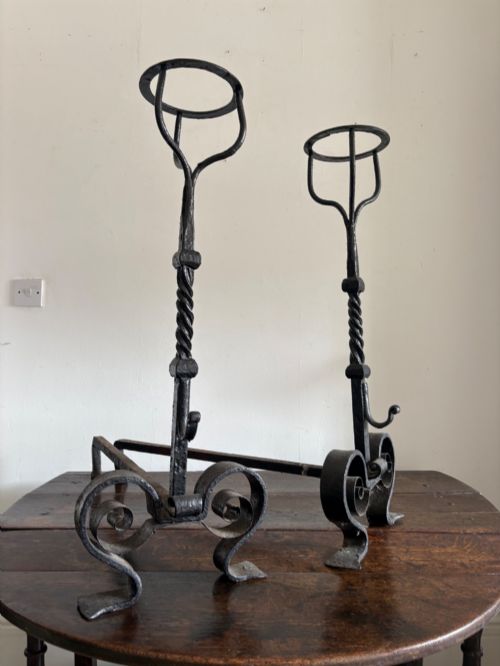


19th Century Fire Irons
These 19th century fire irons bring functional hearthside utility and period character to the fireplace.
19th Century Fire Irons
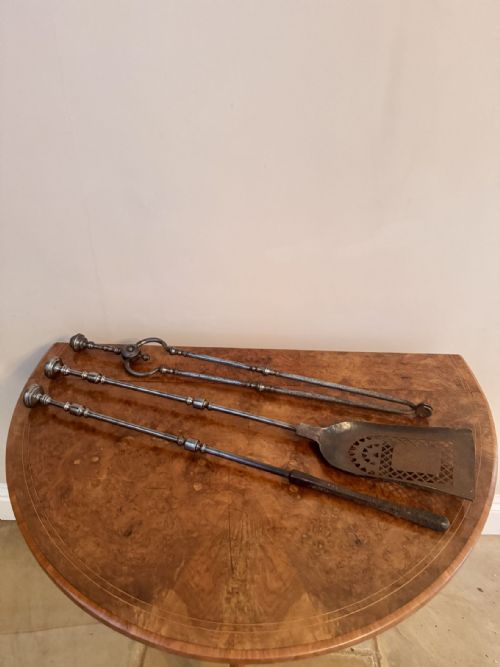
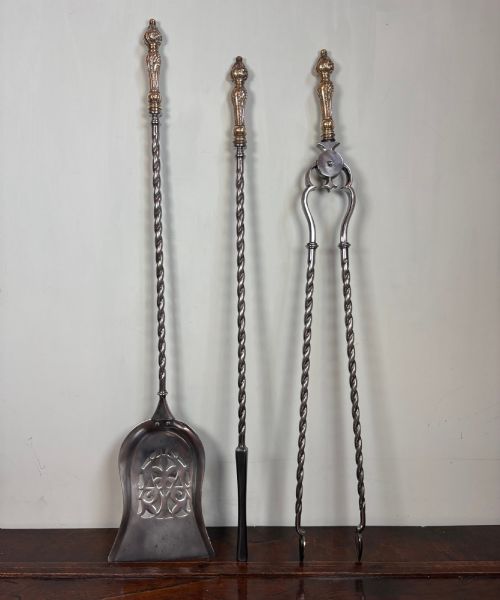
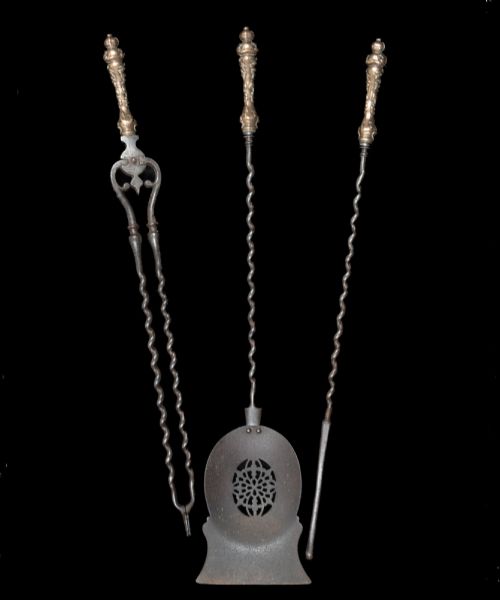
When searching for 19th century fire irons, buyers encounter sets comprising implements designed to manage a coal or wood fire. The most common forms on this page include matching sets of fireplace tools such as pokers, tongs and shovels.
Originating predominantly from the Victorian era and the broader nineteenth century, these fireplace accessories reflect the domestic hearth management of the period. They appear in configurations of polished steel, iron and solid brass.
Georgian survivals and mid-nineteenth century examples also enter the record, showing how fireside accessories evolved across the decades. Sets often combine metals, utilising brass for decorative handles alongside steel shafts.
How they were made
Makers fashioned these pieces from durable metals including iron, steel, polished steel and brass. Metalworking techniques of the nineteenth century involved forging, casting and turning to shape the shafts and decorative terminals.
Shovels frequently feature pierced decoration on the blade, whilst handles and shafts display knopped details. Combinations of brass and steel required joining distinct metals into cohesive fireside tools.
19th Century Fire Irons Retail Price Guide 2026
Typical asking prices for 19th century fire irons among the pieces listed under this phrase on Sellingantiques today, from the lower quarter to the upper quarter. They describe what is for sale here now, not the wider market.
Materials recorded in these listings include brass, steel, iron and polished steel across the nineteenth century.
What varies in quality
Distinctions in quality rest upon the weight of the metal and the complexity of the manufacture. Heavy gauge steel and solid brass command attention for their substantial feel and durability.
Artisanal touches like knopped shafts and pierced shovel blades separate standard utility pieces from finer examples. The cohesion of a matched set further defines the upper tier of these hearth implements.
Carron Foundry
The 19th Century Fire Irons Glossary
- Fire irons
- Implements used to tend a domestic fire, typically comprising a poker, tongs and a shovel.
- Knopped
- Describes a shaft or handle featuring rounded knobs or protuberances turned into the metal.
- Pierced shovel
- A coal shovel featuring cut-out or perforated patterns on the pan, common in brass sets.
- Polished steel
- Steel finished to a bright, reflective surface that enhances the visual appeal of the hearth.
- Victorian
- The period of Queen Victoria's reign from eighteen thirty-seven to nineteen zero one, defining many listed items.
19th Century Fire Irons: Frequently Asked Questions
What tools come in a set?
A standard set generally includes a poker for adjusting logs or coal, a pair of tongs for gripping fuel, and a shovel for clearing ash.
These three implements cover the primary tasks required to maintain an open fire.
How do I clean polished steel?
Polished steel requires careful maintenance to preserve the bright surface and prevent oxidation in damp environments.
Light application of protective oil helps maintain the metal without altering its historic finish.
Can these irons be used?
Many nineteenth century tools remain robust enough for regular fireside duties in active hearths.
Buyers often select them for functional use alongside period grates and baskets.
How do brass and steel differ?
Brass components offer a warm golden tone and resist rust, making them popular for decorative handles and terminals.
Steel provides the necessary rigidity and strength for the working shafts and pokers.