





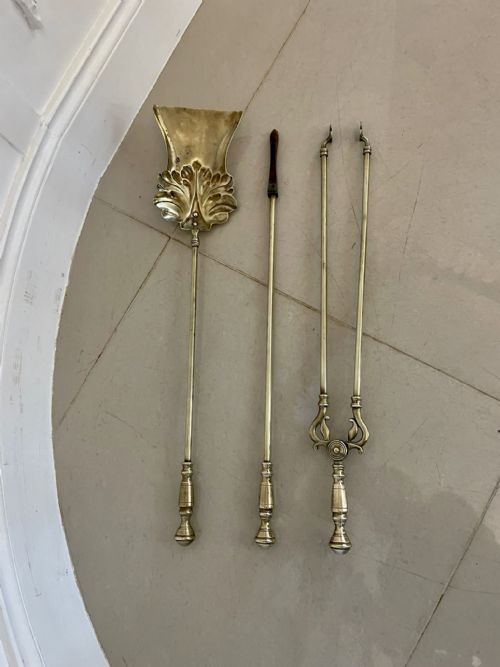

Heavy Brass Fire Tools
Heavy brass fire tools bring substance and shine to the hearth, offering the functional weight needed for daily tending.
Heavy Brass Fire Tools
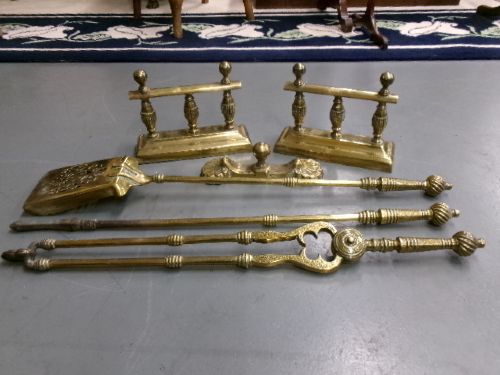
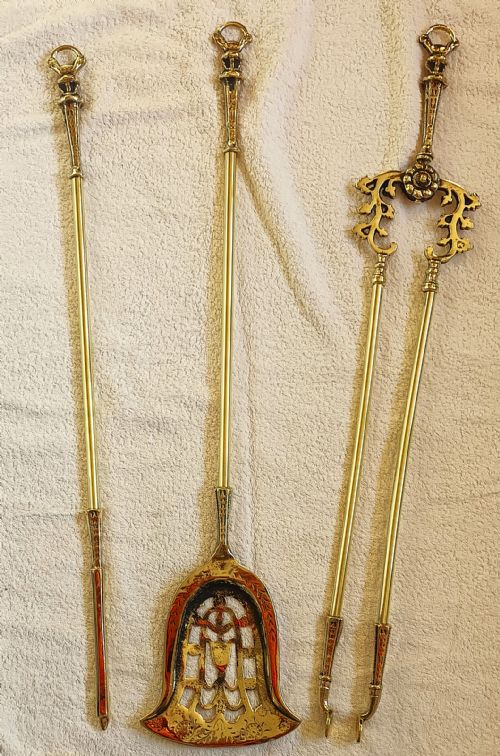
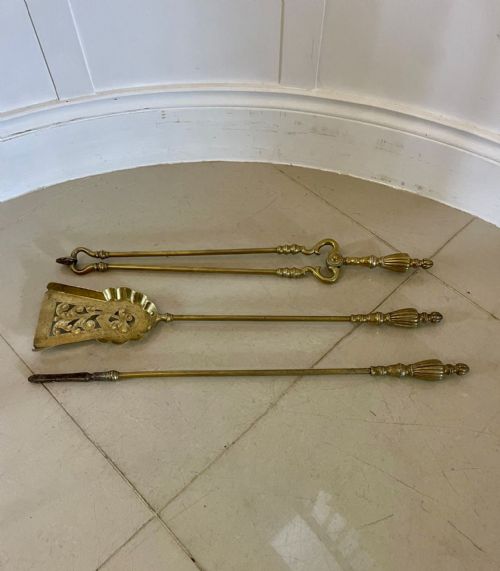
Heavy brass fire tools are substantial fireplace accessories designed for managing solid fuel fires while providing a decorative presence by the hearth. When you search for heavy brass fire tools, you encounter complete sets of fire irons, companion sets, and paired andirons dating from the nineteenth century. These items typically comprise tongs, pokers, and shovels fashioned from brass, often paired with iron or steel for functional strength.
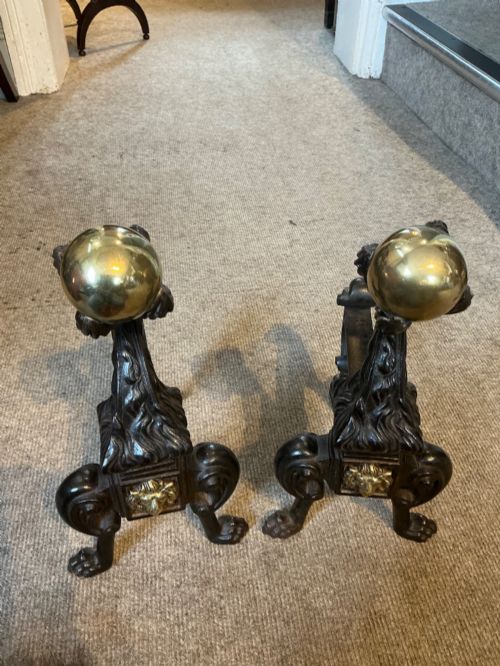
The pieces you are most likely to meet on this page hail from the Victorian era and the Arts and Crafts period. Makers of the time combined bright brass handles and mountings with robust iron shafts to withstand the rigours of stoking coal and wood. Individual sets frequently include matching fire dogs or andirons to support logs within the basket.
Victorian examples dominate the selection, showing both ornate nineteenth-century casting and the plainer utility associated with Arts and Crafts design. Buyers encounter sets numbering three pieces alongside larger companion sets complete with dedicated stands or hanging frames. Each configuration reflects the domestic habits of a period when the fireplace formed the undisputed centre of the room.
How they were made
The construction of these pieces relies on a combination of cast brass for decorative handles and terminals, joined to wrought iron or steel rods that provide rigidity and heat resistance. Foundry workers utilised sand casting methods to shape the heavy brass components, leaving subtle surface textures that distinguish period production from modern machine-made alternatives.
Steel and cast iron appear frequently in the working shafts and companion components, selected for their tensile strength when lifting heavy fuel. Brass elements were polished or left with natural patination, while iron parts often received a protective dark finish to contrast with the bright metalwork.
Heavy Brass Fire Tools Retail Price Guide 2026
Typical asking prices for heavy brass fire tools among the pieces listed under this phrase on Sellingantiques today, from the lower quarter to the upper quarter. They describe what is for sale here now, not the wider market.
What varies in quality
Quality in heavy brass fire tools rests upon the gauge of the metal and the integrity of the joins between the handle and the shaft. Superior sets display substantial weight in the hand, with solid cast terminals that remain firmly fixed through generations of lifting and prooking.
The refinement of the casting work separates standard utility items from finer examples produced during the Victorian and Arts and Crafts periods. Crisp detail in the moulding and well-balanced proportions indicate skilled craftsmanship rather than rapid mass production in nineteenth-century foundries.
The Heavy Brass Fire Tools Glossary
- Andirons
- Supports used in a fireplace to hold burning logs above the hearth floor, allowing air to circulate underneath. These metal supports often match the companion tools in design and material.
- Companion set
- A curated collection of fireplace tools, usually comprising a poker, tongs, and shovel, arranged together on a stand or hung from a frame.
- Fire irons
- The individual implements used to tend a fire, including pokers for stirring, tongs for grasping fuel, and shovels for clearing ash.
- Victorian
- The period of British history spanning the reign of Queen Victoria, characterised in these listings by robust construction and varied decorative revival styles.
Heavy Brass Fire Tools: Frequently Asked Questions
What tools are in a set?
Standard sets typically comprise three primary implements: a poker for adjusting the fuel, a shovel for clearing ash, and tongs for handling logs or coal.
Many configurations also include matching andirons or a dedicated stand to keep the implements organised beside the hearth.
Are these tools for daily use?
Nineteenth-century metalwork is inherently robust, combining heavy brass and iron to handle the physical demands of tending a solid fuel fire.
While functional, many buyers choose to balance active use with gentle care to preserve the original nineteenth-century surfaces.
How do I date these pieces?
Dating relies on stylistic markers from the nineteenth century, particularly the transition between ornate Victorian casting and simpler Arts and Crafts forms.
Material combinations, such as brass paired with cast iron, help place items within the 1860 to 1890 manufacturing window seen in the listings.
What is the role of iron?
Iron and steel provide the structural strength required for the working shafts of pokers and the blades of shovels, where brass alone might bend.
Foundries reserved heavy brass for handles and decorative elements that required visual warmth rather than direct heat resistance.