
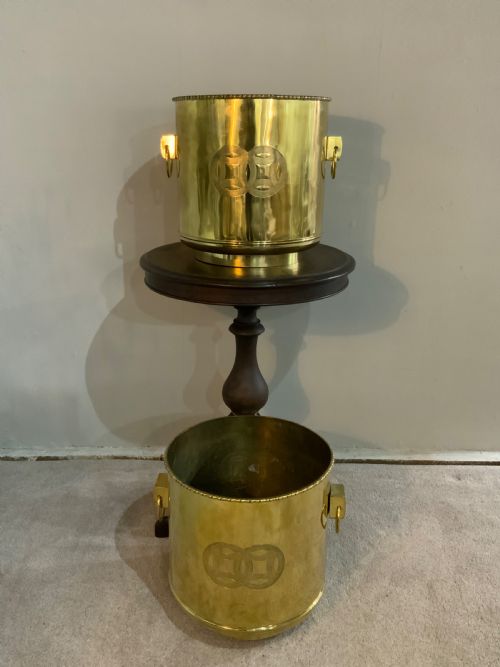


Polished Brass Bucket
A polished brass bucket brings a bright, reflective warmth to a hearth or room, serving equally as a practical fuel store or a planter.
Polished Brass Bucket
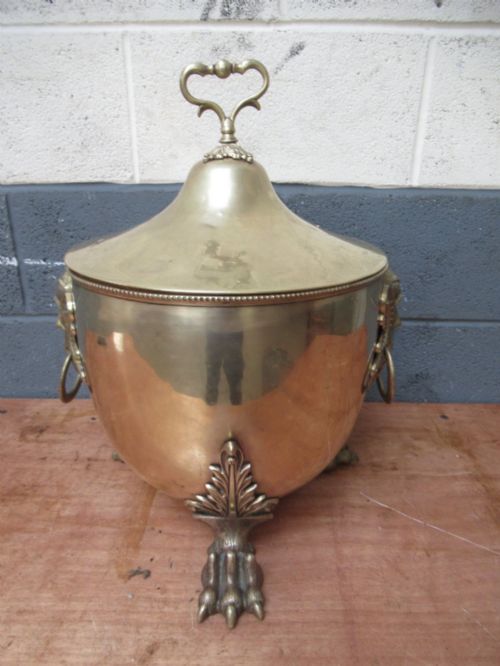
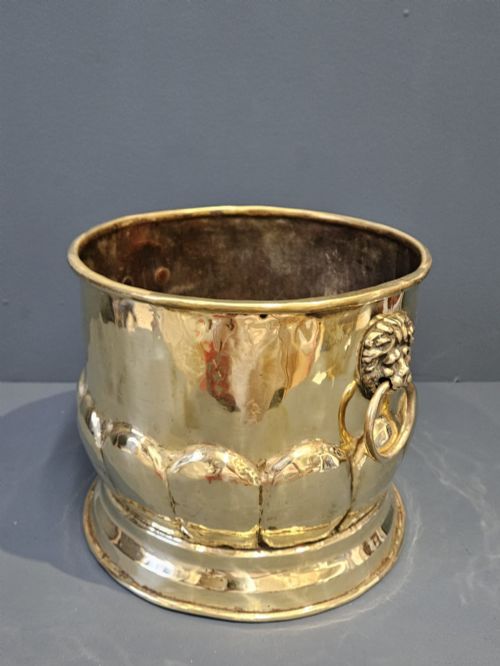
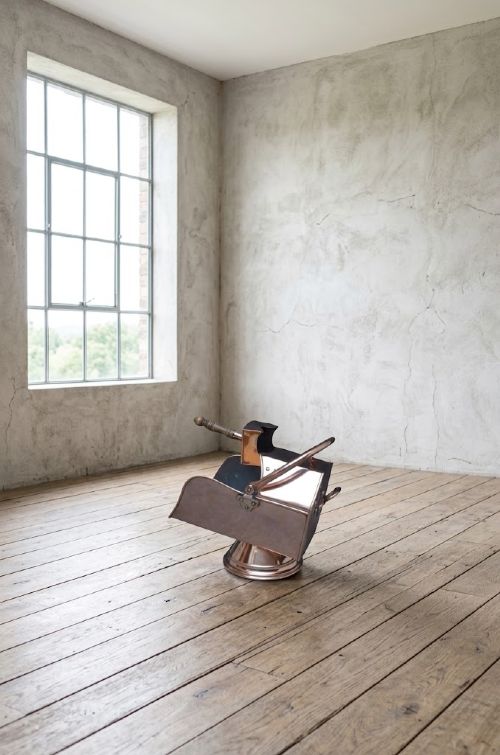
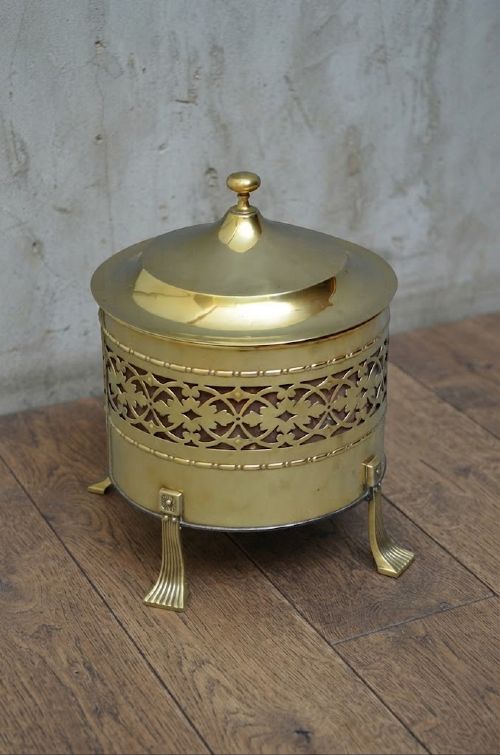
When you search for a polished brass bucket, you encounter heavy metal vessels designed primarily for fireside use or interior planting. The selection spans utilitarian coal scuttles, helmet-shaped coal buckets, and deep garden planters originating from the Georgian, Victorian, and Edwardian periods.
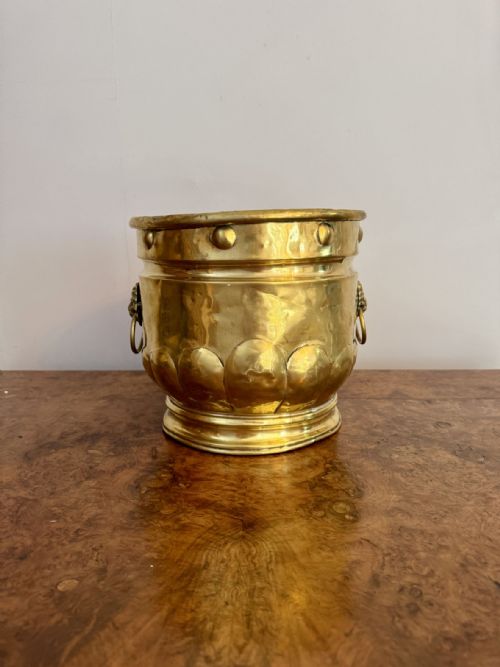
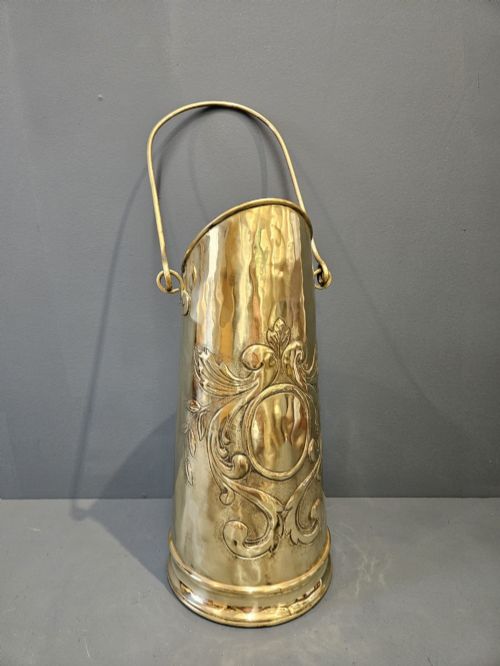
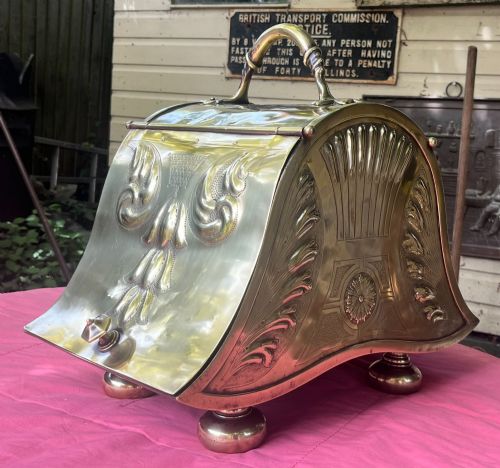
You are most likely to meet Victorian and Edwardian examples on this page, taking the form of helmet coal scuttles, cylindrical log bins, or large two-handled jardinieres. Many pieces combine polished brass with copper, iron accents, or internal liners.
The assortment reaches across domestic hearth accessories and decorative vessels, including occasional umbrella stands, wine coolers, and trench art items. Dating ranges from the eighteenth century through to the early twentieth century, showing diverse revival styles from Art Nouveau to French Rococo.
Materials and Construction
Makers utilised sheet brass and copper, often hammering, spinning, or riveting the metal sheets together to form durable bodies for holding coal, logs, or earth. Iron handles, fixings, and internal metal or ceramic liners added structural strength to everyday vessels.
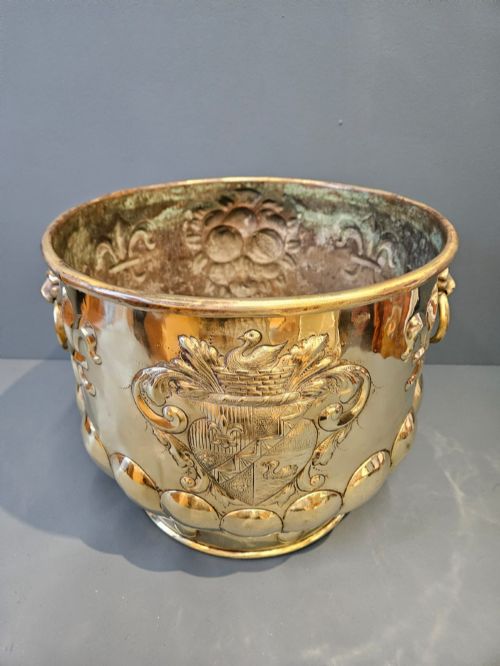
Surface finishing involved polishing the exterior metal to a bright shine, whilst decorative details were achieved through embossing, crest stamping, fretwork cutouts, and applied cast brass mounts.
Assessing Craftsmanship
Quality rests in the gauge of the metal and the firmness of the construction, where thicker brass and sturdy riveted joints distinguish substantial pieces from lighter press-formed items. Finer examples display crisp detail in embossed crests, balanced proportions, and original handles or matching liners.
The integrity of the surface finish and the subtlety of decorative elements like fretwork or applied brass mounts separate standard utilitarian items from pieces designed with greater aesthetic ambition.
BENHAM AND FROUD·William Soutter & Sons
The Polished Brass Bucket Glossary
- Coal scuttle
- A container designed for holding and carrying coal to a fireplace, often shaped like a helmet with a hinged handle and a slanted opening.
- Jardiniere
- An ornamental pot or stand for holding plants and flowers, frequently manufactured in heavy brass or copper for interior display.
- Helmet coal bucket
- A specific coal scuttle style featuring a flared rim resembling a traditional helmet, making it easier to scoop and pour fuel.
- Dinanderie
- A term for various objects made of beaten brass or bronze, historically associated with medieval Flemish craftwork and later applied to decorative metal vessels.
- Purdonium
- A domestic coal box or scuttle, typically enclosed with a hinged lid and designed to sit neatly by the fireplace.
Polished Brass Bucket: Frequently Asked Questions
How do I clean a polished brass bucket?
Clean polished brass with a soft cloth and a dedicated metal cleaner to maintain the reflective surface without removing the fine detail of the metal.
Avoid abrasive pads that scratch the brass or strip away aged patination where it adds depth to the recessed areas of embossing.
Can I use these buckets for live plants?
Many of these vessels function well as planters, particularly those supplied with original internal metal or ceramic liners that protect the outer brass from moisture.
If a piece lacks an internal liner, placing a separate potted plant inside prevents standing water from causing corrosion or staining the bottom of the bucket.
What is the difference between a coal scuttle and a log bin?
Coal scuttles generally feature a helmet shape or a sloped mouth with a shovel attachment designed for transporting smaller pieces of fuel to the grate.
Log bins and planters tend to be wider, deeper cylindrical containers with two side handles, built to hold larger firewood or accommodate soil.
How do I date a brass bucket?
Dating relies on stylistic clues such as Art Nouveau floral motifs, Victorian crests, Georgian helmet silhouettes, and the method of construction like hand-riveting versus machine pressing.
Examining the type of fixings, handles, and any maker stamps helps narrow the period of manufacture down to a specific decade or century.