




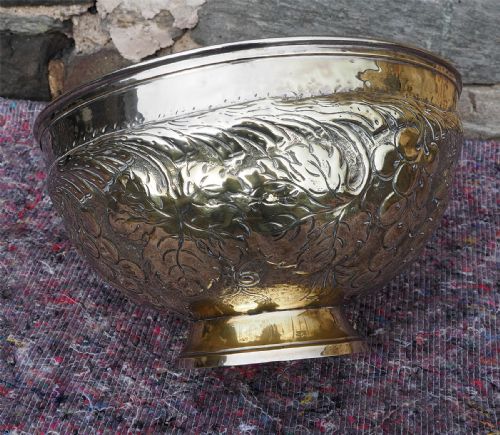
Brass Champagne Cooler
A brass champagne cooler brings functional theatre to a room, holding ice and bottles while showing the rich patination of metal and wood.
Brass Champagne Cooler
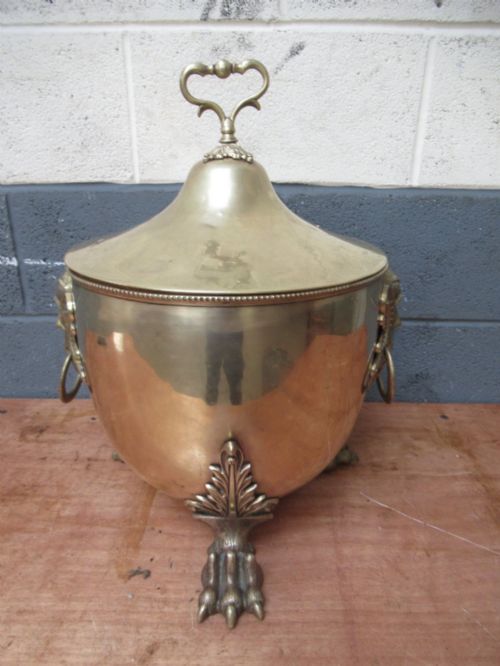
A brass champagne cooler is a vessel designed to chill wine and sparkling bottles, appearing across periods from the eighteenth century to the Edwardian era in forms such as buckets, bowls, and stands. When searching for a brass champagne cooler, buyers encounter a mix of coopered timber vessels with brass bands, solid brass bowls, and mounted glass pieces.
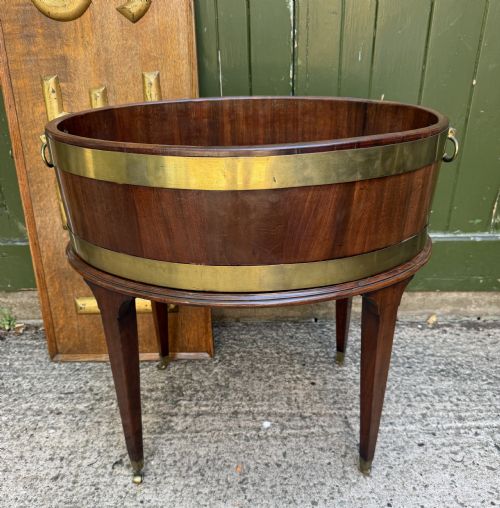
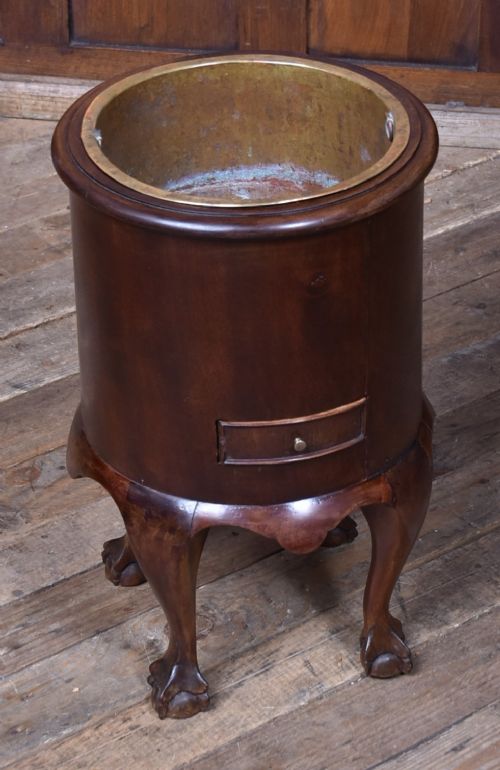
The most common examples on this page are Georgian and nineteenth-century mahogany wine coolers and buckets bound with brass, alongside later French brass and art nouveau designs. These objects frequently double in function as jardinières or planters when not serving drinks.
Origins span English Georgian workshops crafting mahogany staves to continental makers producing decorative brass vessels and gilt-bronze mounted glass. The selection ranges from plain eighteenth-century oval champagne buckets to late nineteenth-century trophy vases and Edwardian coolers on stands.
Materials and construction methods
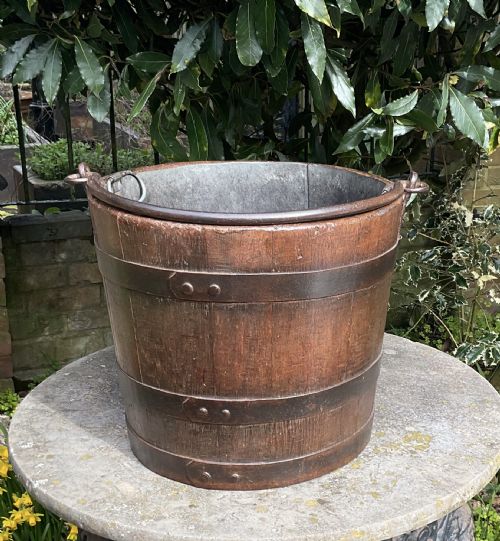
Coopers constructed timber wine coolers and oyster buckets using individual staves of mahogany or oak bound together with tight brass hoops. Craftsmen fitted many of these wooden vessels with internal metal liners to hold melting ice and water safely.
Solid brass champagne coolers and decorative bowls were shaped through spinning, beating, or casting metal before applying handles and mounts. French makers often integrated gilt-bronze mounts onto cut glass bodies or fashioned detailed art nouveau brass handles.
Listings feature brass, mahogany, oak, zinc, and cut glass across periods spanning the eighteenth century to the Edwardian era.
Distinguishing quality in coolers
Quality rests in the crispness of the brass bindings, the tightness of the timber cooperage, and the survival of original liners or stands. Eighteenth-century George III examples display refined dovetailing, careful timber selection, and substantial brass mounts that differ markedly from later decorative items.
The integrity of the metal surface and the weight of the brass or bronze separate utilitarian pieces from high-status drawing room accessories. Superior French and English coolers maintain proportion between the vessel and its stand, with crisp chasing on handles and mounts.
The Brass Champagne Cooler Glossary
- Coopered
- A method of construction where curved wooden staves are bound together with metal hoops to form a watertight vessel. This technique defines the traditional mahogany wine buckets.
- Jardiniere
- An ornamental pot or stand designed to hold growing plants or flowers. Many historic wine coolers were repurposed for this function.
- George III
- The period of British design spanning the late eighteenth and early nineteenth centuries, noted for restrained classical proportions in mahogany furniture. Pieces from this era often feature distinctive brass banding.
- Gilt-bronze
- Bronze metal treated with a fine layer of gold to give a rich, durable surface finish. It appears on nineteenth-century mounts and decorative accents.
Brass Champagne Cooler: Frequently Asked Questions
What is a brass champagne cooler?
A brass champagne cooler is a decorative vessel intended to hold ice and bottles during dining or entertaining. They appear in materials like solid brass, coppered mahogany, and glass with brass mounts.
Historically, these pieces sat on side tables or stands to keep wine at the correct temperature. Today, they serve both practical cooling duties and interior display.
How were antique wine coolers used?
Georgian and Victorian households used these vessels filled with ice and water to chill wine bottles near the dining table. Many were constructed with wooden staves and metal liners to contain melting ice.
Beyond dining use, larger buckets and bowls frequently functioned as planters or jardinières for indoor greenery. Their robust construction suited both heavy entertaining and domestic display.
Are these coolers watertight?
Many historic wooden coolers relied on metal liners to hold water and ice safely without damaging the timber staves. Over time, original liners can experience wear or replacement.
Solid brass and glass coolers naturally hold liquids, though buyers intending to chill bottles with ice should check the interior condition. Some pieces serve better today as dry decorative containers or planters.
How do I date an antique cooler?
Dating relies on stylistic clues, construction methods, and materials such as eighteenth-century mahogany or Edwardian brasswork. Georgian pieces often display clean oval forms with hand-beaten brass bands.
Later Victorian and art nouveau examples introduce flowing organic handles, cast brass motifs, and different mounting techniques. Comparing the timber grain, patination, and joining methods helps determine the period.