
Pocket Watch T Bar
A pocket watch t bar anchors a heavy metal chain designed to secure a timepiece inside a waistcoat pocket.
Pocket Watch T Bar
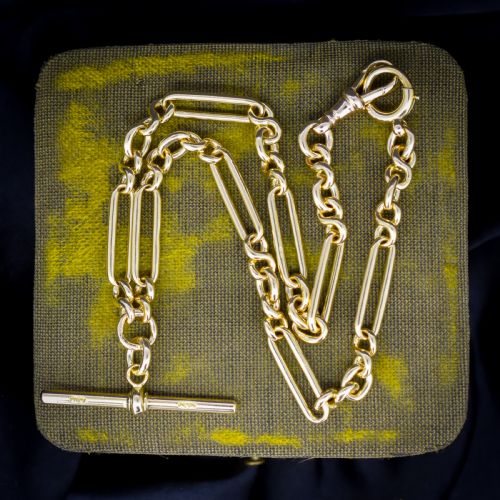
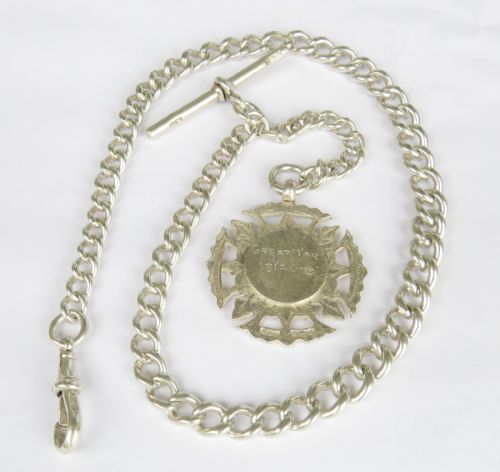
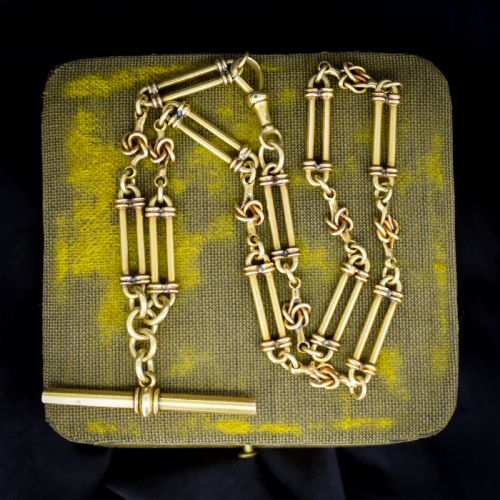
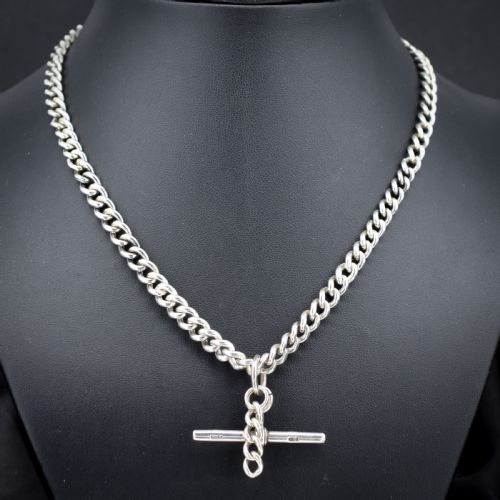
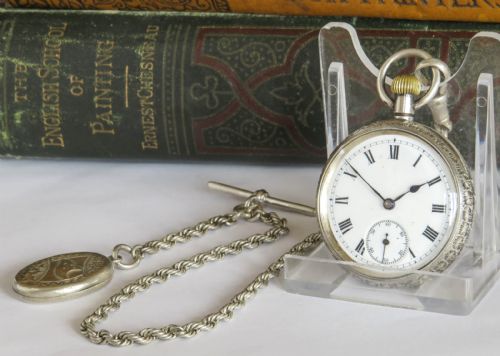
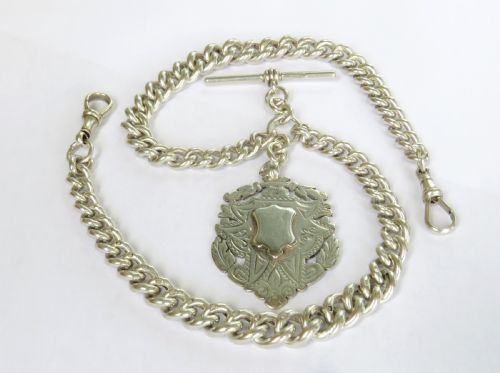
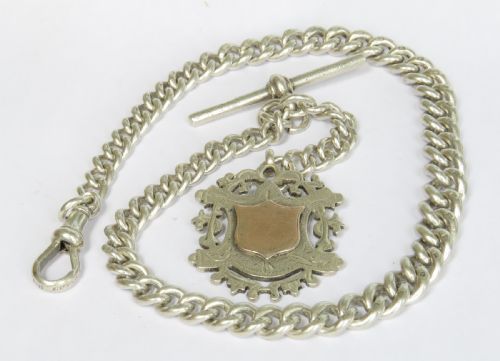
A pocket watch t bar serves as the terminal crossbar for watch chains, often called albert chains, worn across the front of a garment. These pieces originate predominantly from the Victorian, Edwardian, and Art Deco periods, spanning the late nineteenth century through to the nineteen thirties.
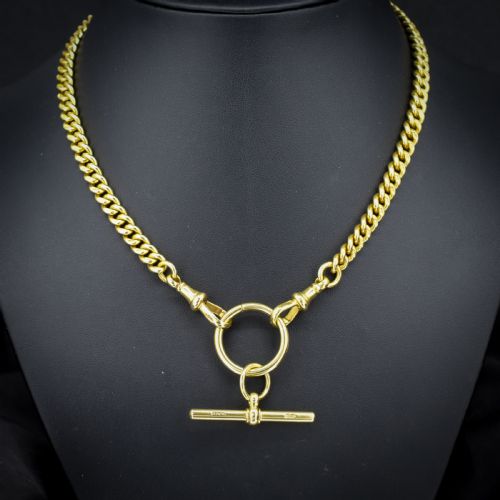
Most items reflect everyday gentleman's attire of the period, though many length specifications and link styles now function comfortably as shorter necklaces. Sterling silver and various hues of gold dominate the available formations.
Materials and construction
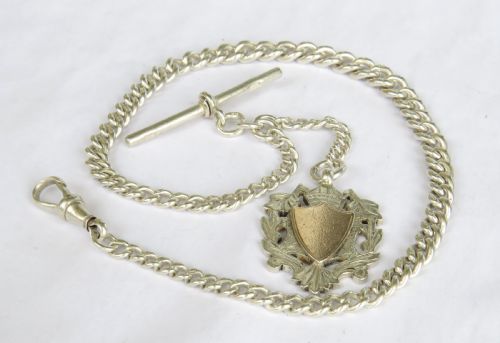
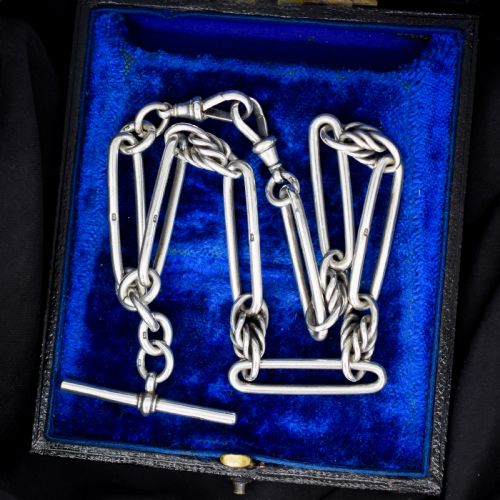
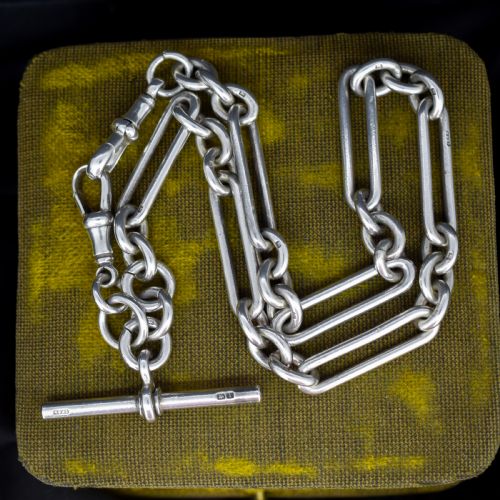
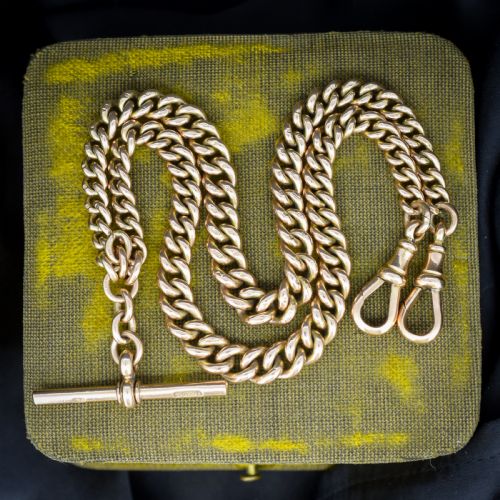
Metals form the core of these pieces, utilising solid sterling silver, nine carat, ten carat, eighteen carat yellow and rose gold, alongside rolled gold finishes. Artisans linked these metals manually, shaping individual curb, oval, and trombone components into unified strands.
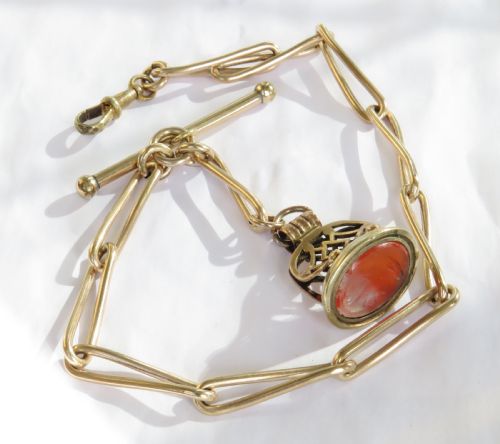
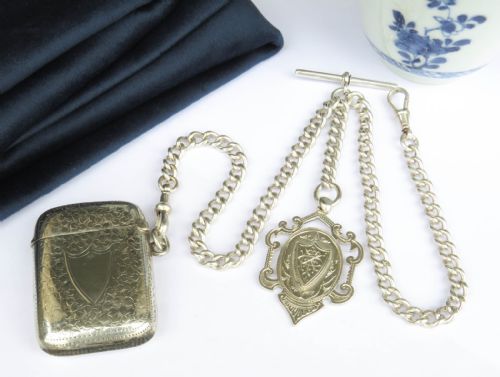
Makers integrated swivel dog clips, bolt rings, and the characteristic crossbars through sturdy loop connections designed to endure daily handling. Decorative elements such as enamel panels or glass intaglios occasionally supplement the metalwork on attached fobs.
Some chains still anchor tiny glass intaglios carved with miniature hay making scenes.
Distinctions in quality
Substantial weight and gauge of the metal links separate heavier masterworks from lighter daily accessories. Solid precious metals and higher gold carat standards represent superior manufacturing tier placement compared to rolled gold alternatives.
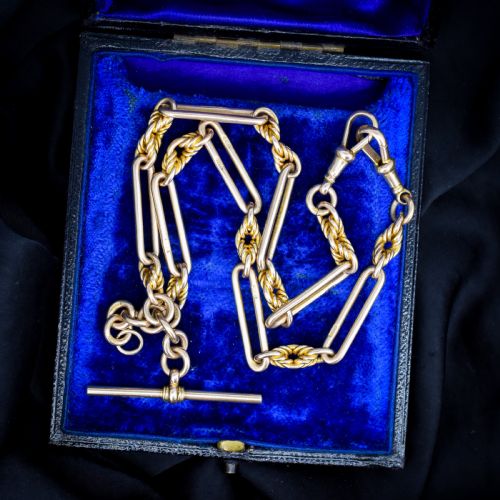
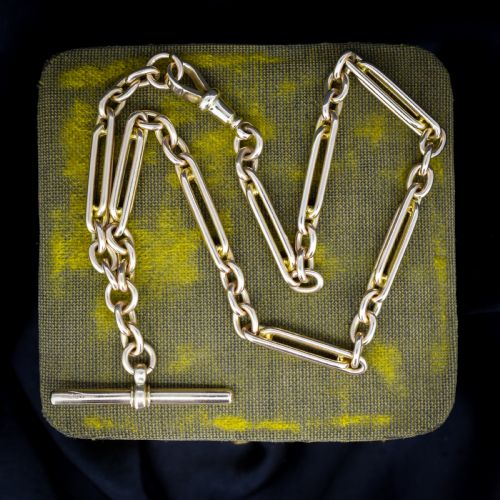
The complexity of the link assembly, such as alternating trombone and love knot patterns or fully matched uniform curb construction, indicates artisan investment. Intact original components, including matching dog clips and fully marked crossbars, elevate the integrity of a surviving chain.
Waltham·Lancashire Watch Co·Paul Garnier·Junghans·Omega
The Pocket Watch T Bar Glossary
- Albert chain
- A type of watch chain named after Prince Albert, designed to secure a pocket watch to a waistcoat. These lengths often include a drop piece for a fob or key.
- T-bar
- The small horizontal metal bar fastened to the end of a watch chain, passed through a buttonhole to anchor the entire assembly securely. It remains the defining terminal of these pieces.
- Dog clip
- A spring-loaded snap hook attached to watch chains for fastening to a timepiece or vestas. This mechanical clasp allows quick detachment of the watch.
- Trombone link
- An elongated rectangular metal link resembling the shape of a trombone, frequently interspersed with smaller round or love knot links in antique chains. This pattern provides distinct visual rhythm to the strand.
- Vesta
- A small pocket container designed for holding matches, frequently suspended from watch chains alongside the crossbar. These matchsafes often share the metal type and hallmarks of the main chain.
Pocket Watch T Bar: Frequently Asked Questions
How do you wear a pocket watch t bar?
The crossbar inserts through a central buttonhole on a waistcoat, while the attached chain drapes across the front pockets. The timepiece itself rests inside the pocket connected to one end of the strand.
Alternatively, many contemporary wearers detach the watch and fasten the chain around the neck as a short necklace. The terminal bar then hangs as a decorative pendant drop.
Are these chains made of solid gold?
The listings include both solid precious metals and rolled gold variations. Solid pieces are typically marked for nine, ten, or eighteen carat gold.
Rolled gold versions feature a thin layer of gold mechanically bonded to a base metal core. Hallmarks stamped onto the links or crossbar usually clarify the metal standard.
What period do most chains come from?
The majority of pieces date from the late nineteenth century through to the nineteen twenties. Victorian and Edwardian examples represent the height of pocket watch chain production.
Art Deco and nineteen thirties variations introduce slightly sleeker link geometries. Each era displays distinct preferences in link thickness and decorative fobs.