



Vintage Watch Fob Medal
These vintage watch fob medal pieces combine personal achievement with pocket watch chains, offering wearable history from the late nineteenth and early twentieth centuries.
Vintage Watch Fob Medal
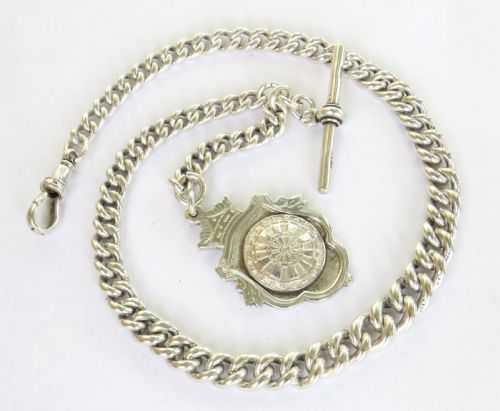
A vintage watch fob medal is a small commemorative medallion originally worn suspended from a pocket watch albert chain, recording sporting victories, club memberships, and personal milestones. These items typically emerge from Victorian, Edwardian, and Art Deco periods, capturing the social pursuits of past decades through miniature sculptural reliefs and heraldic shields.
The versions most commonly met on this page span the years between eighteen-eighty and nineteen-forty, reflecting a distinct era of competitive sport and civic organisation. Collectors encounter everything from plain silver shields to intricate enamel novelties, each piece bearing the marks of local leagues, golf clubs, tennis tournaments, and football matches.
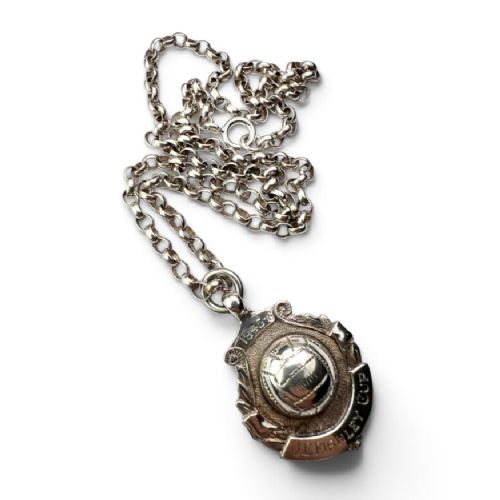
Many of these medals double as pendants, adapting easily to modern neckchains while retaining their original suspension loops and hallmarked fittings. The forms range from simple stamped discs to heavy cast medallions with floral borders, showcasing the varied aesthetic preferences of Edwardian and interwar craftsmen.
Materials and construction
Sterling silver forms the structural basis for the majority of these pieces, often worked into heavy cast or stamped medals that take bright polish and dark patina equally well. Workers applied rose gold details and gold accents to highlight central lettering, crests, and figures against the pale background metal.
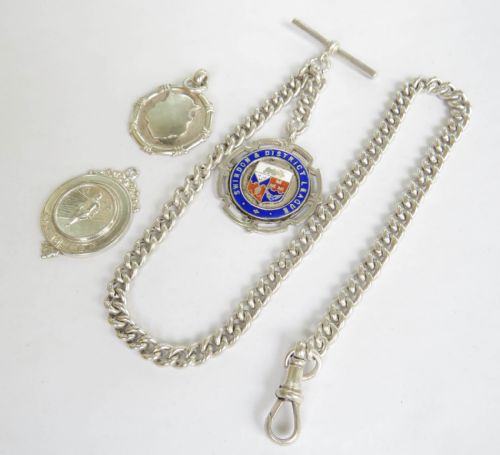
Vivid vitreous enamel provides the colour on sporting pieces, fired directly into recessed metal channels to depict dartboards, club colours, and team badges. Nickel and silver plate appear alongside solid metals, whilst glass elements occasionally protect photographic or painted inserts within the medallion body.
Vintage Watch Fob Medal Retail Price Guide 2026
Typical asking prices for vintage watch fob medal among the pieces listed under this phrase on Sellingantiques today, from the lower quarter to the upper quarter. They describe what is for sale here now, not the wider market.
Someone once spent hours squinting at a tiny enamelled dartboard fob, only to find the miniature treble twenty was perfectly painted.
Assessing quality and character
The distinction between standard pieces and superior examples rests upon the depth of the casting and the crispness of the hand-engraved lettering on the reverse. Medals featuring multi-part construction, applied gold accents, and undamaged vitreous enamel stand apart from simpler stamped items produced in higher volumes.
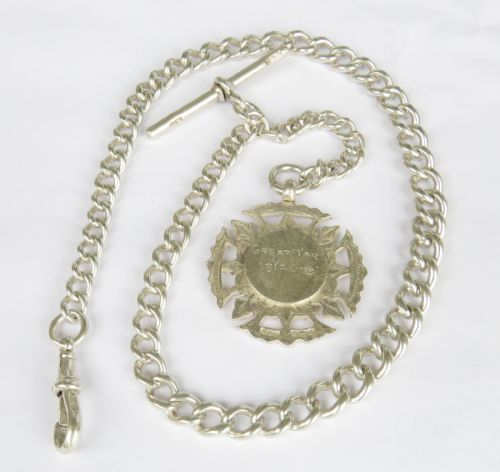
Weight and gauge determine the tactile presence of a fob, with heavier cast silver versions offering a more substantial feel than thin plated alternatives. Well-preserved hallmarks and legible presentation inscriptions on the back add documentary value, grounding the object in a specific local context and date.
The Vintage Watch Fob Medal Glossary
- Albert chain
- A type of pocket watch chain designed to stretch across a waistcoat, named after Prince Albert. These chains usually feature a T-bar at one end and a swivel clasp to hold the fob medal.
- Vitreous enamel
- A glass-like substance fused to metal surfaces through high-temperature firing. It provides durable, glossy colour for club crests and sporting details on medals.
- Hallmark
- An official stamp applied by an assay office to indicate the metal purity, place of testing, and year of manufacture. These small marks help date silver and gold items accurately.
- T-bar
- The short transverse bar attached to the centre of a watch chain. It slips through a buttonhole to secure the chain and any suspended fob securely to clothing.
- Medallion
- A large medal created to commemorate a specific event, person, or victory. Unlike coins, these were worn or displayed rather than used as currency.
Vintage Watch Fob Medal: Frequently Asked Questions
How were watch fobs originally worn?
Watch fobs hung from the end of an albert chain attached to a pocket watch carried in a waistcoat pocket. The chain draped across the front of the garment, securing with a T-bar through a buttonhole while the medal dangled visibly.
Owners often collected multiple fobs on a single chain to display their membership in cricket, football, or golf clubs. Over time, these items shifted from practical timekeeping accessories to standalone symbols of personal pride.
Can I wear a fob medal as a pendant?
These medals adapt readily to modern neckchains by utilising their original suspension loops or jump rings. Their compact size and balanced weight make them well-suited for daily wear.
Pairing an antique fob with a simple chain highlights the intricate engraving and enamel work. Many pieces retain the original reverse inscriptions, offering a glimpse into their past owners.
How do I date an antique fob?
Assay office hallmarks on the reverse provide the most reliable guide to the exact year of manufacture. Stylistic clues, such as Art Deco geometric borders or Edwardian scrollwork, also help narrow down the period.
Many medals also feature engraved presentation dates on the back, recording the exact year a tournament was won. Comparing these dates with the hallmark confirms whether the piece was created specifically for the event.