
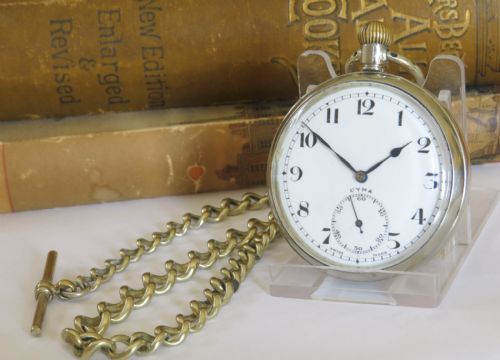
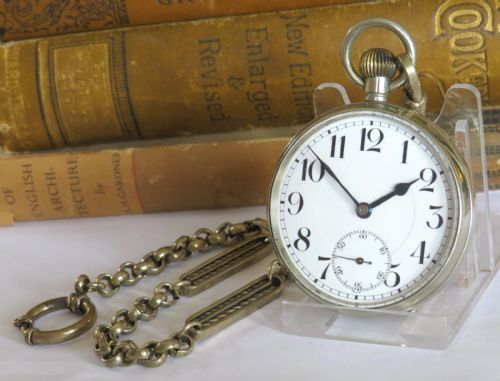
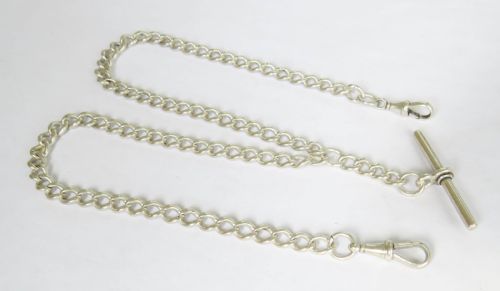
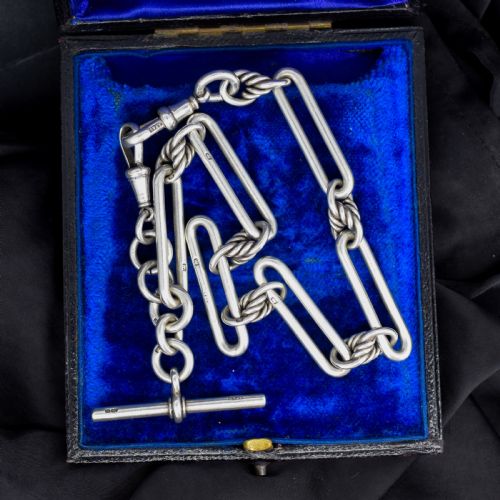
Mens Albert Chain Watch
A mens albert chain watch brings together a traditional timepiece and a linked chain designed to secure it across a waistcoat.
Mens Albert Chain Watch
When searching for a mens albert chain watch, you encounter combinations of pocket watches paired with linked metal chains. These items originate predominantly from the Victorian, Edwardian, and Art Deco periods, spanning the late nineteenth century into the 1930s.
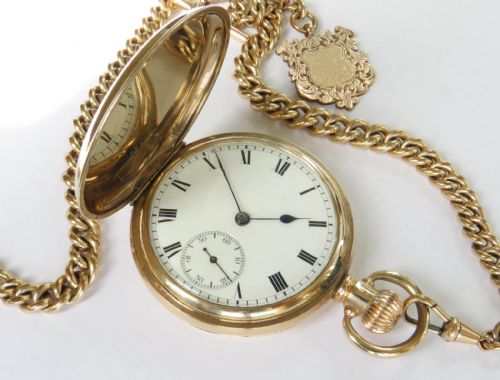
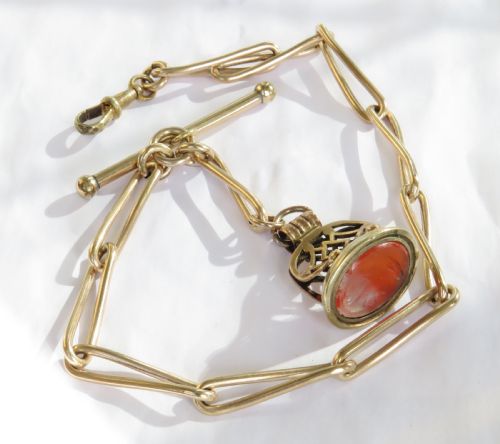
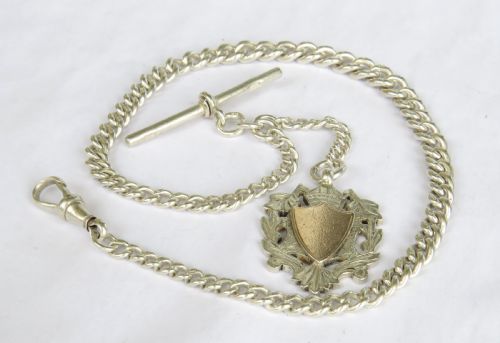
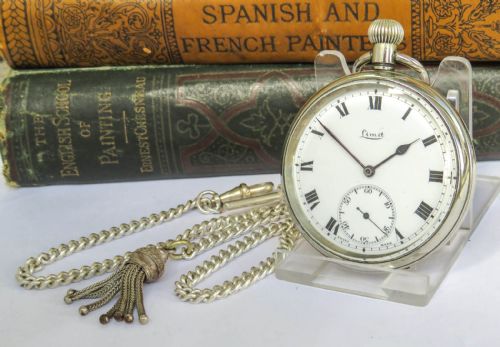
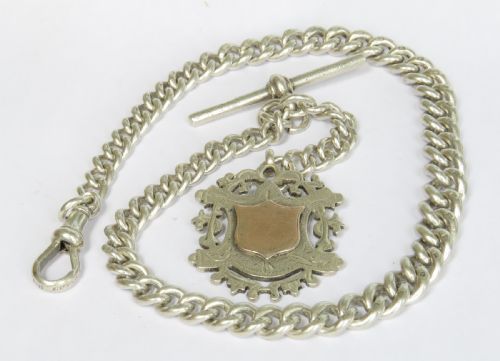
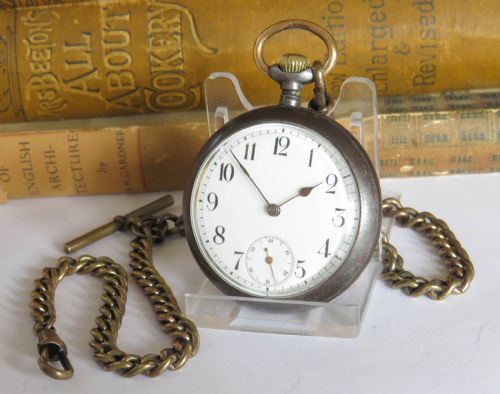
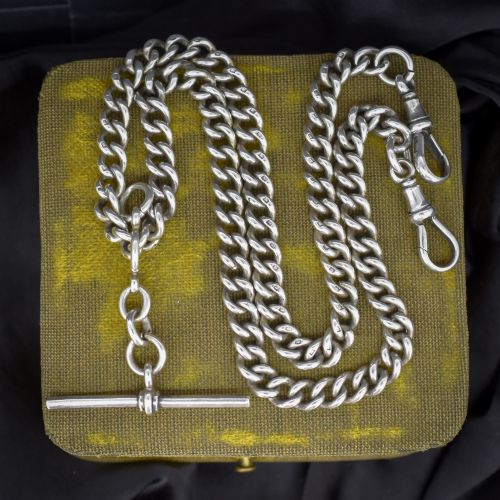
The most common configurations on this page include sterling silver and rolled gold chains attached to pocket watches, often accompanied by fobs, T-bars, or dog clips. Pieces range from single strands to double chains designed to drape across a garment.
Makers and brands appearing alongside these chains include Waltham, Omega, Cyma, Limit Revue, Octava, and The General Lever. Dating typically relies on hallmarks, inscriptions on attached fobs, and the specific link formation of the chain itself.
Materials and Construction
Metals form the structural basis of these items, with sterling silver, rolled gold, and occasional 9ct rose gold dominating the selection. Brass, steel, and nickel also appear in specific watch movements and utilitarian components.
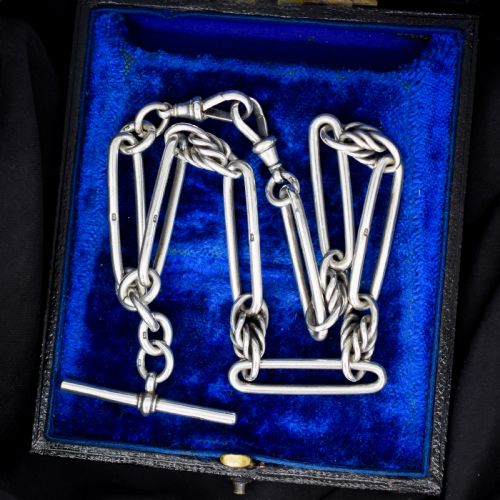
Links are shaped into distinct patterns such as curb, trombone, love knot, and fetter formations, often assembled by hand or with early industrial machinery. Enamel and glass frequently contribute to the decorative faces of pocket watches and commemorative fobs.
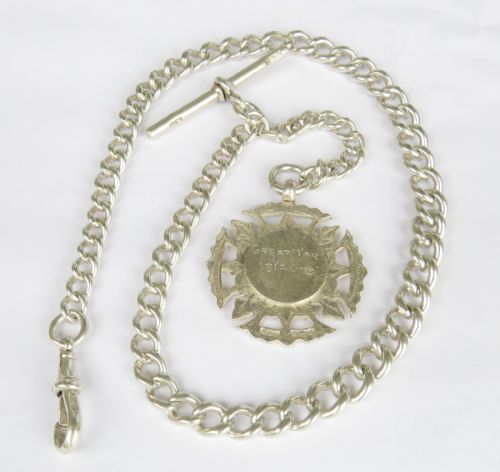
Several chains carry commemorative fobs dedicated to Irish football matches and Great War service, proving men accessorised with fierce local loyalties.
Factors of Quality
Quality rests upon the weight and structural integrity of the metal links, alongside the mechanical reliability of the accompanying pocket watch. Solid sterling silver or gold variants demonstrate superior material endurance compared to rolled gold alternatives.
The presence of original hallmarks, matched components, and detailed subsidiary elements like swivel fobs or seals elevates a piece. Fine craftsmanship shows in the fluid articulation of each link and the secure snap of dog clips.
Waltham·Omega·Cyma·Limit Revue·Octava
The Mens Albert Chain Watch Glossary
- T-bar
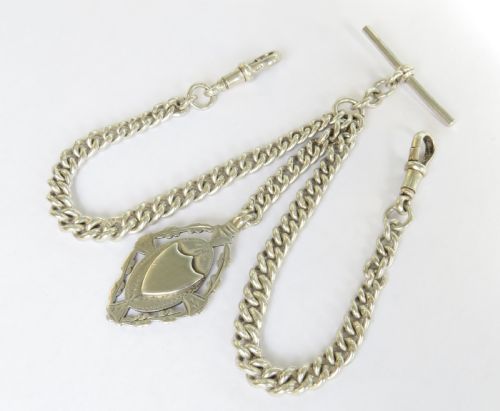
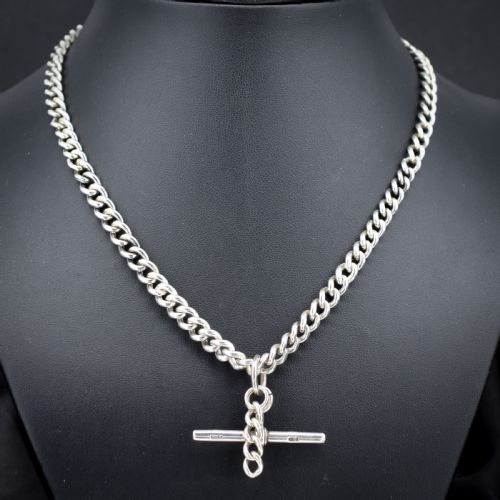
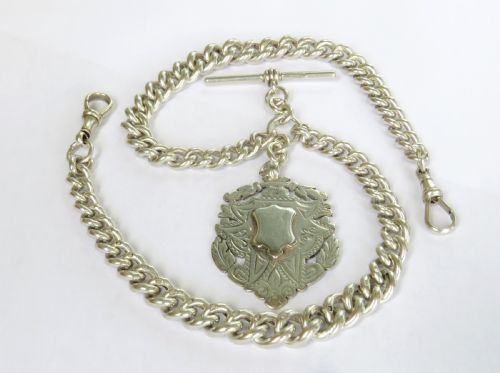
- A short transverse bar attached to the centre of an albert chain, slipped through a buttonhole to anchor the chain securely. It is a defining component of mens albert chain watch assemblies.
- Dog clip
- A spring-loaded swivel clasp used to attach the pocket watch or fob to the chain. It allows the watch to be detached easily while maintaining a secure connection during wear.
- Fob
- An ornamental pendant or medal attached to a watch chain. Fobs often carry engraved dates, football club crests, or military service records from the First World War.
- Full hunter
- A pocket watch featuring a hinged metal cover that protects the glass dial. The cover springs open via a push-piece on the crown.
- Curb link
- A type of chain link design where the links are flattened and twisted so they lie flat. It provides a robust and uniform appearance suitable for daily wear.
Mens Albert Chain Watch: Frequently Asked Questions
How do you wear a mens albert chain watch?
The T-bar is inserted through a central buttonhole of a waistcoat, while the chain drapes across the front. The pocket watch itself is placed into the corresponding waistcoat pocket.
For a double albert chain, the two strands drape across two pockets or anchor centrally with pendants hanging from the middle.
How do you date a silver albert chain?
Dating relies heavily on British silver hallmarks stamped onto the individual links, the T-bar, and the dog clips. These stamps indicate the assay office, standard of silver, and the specific year letter.
Attached fobs often bear engraved presentation dates that provide a reliable secondary indicator of the item's age.
Are pocket watches sold with these chains working?
Many mechanical pocket watches from the late nineteenth and early twentieth centuries remain functional, though running accuracy varies. Some pieces feature 8-day movements while others require daily manual winding.
Servicing by a horologist is often recommended if you intend to keep accurate time with an antique movement.