


Plinth Base Drawers
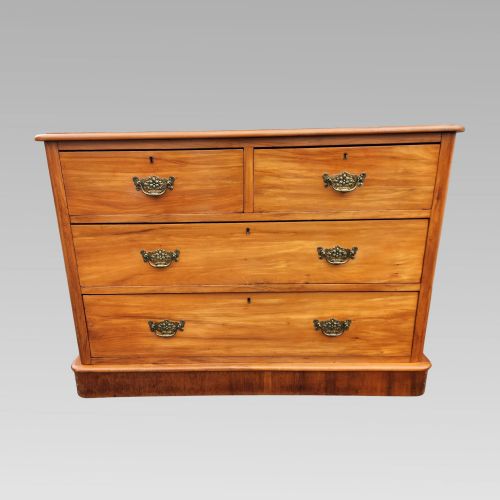
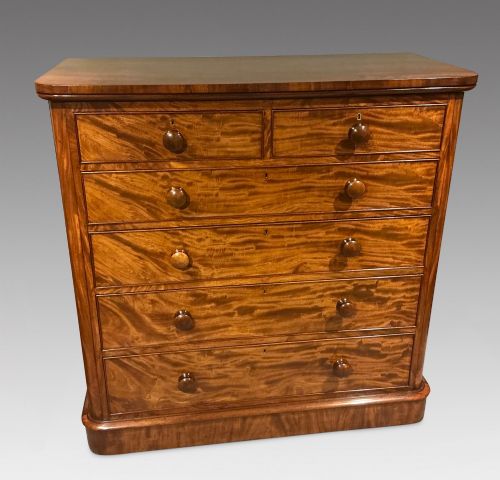
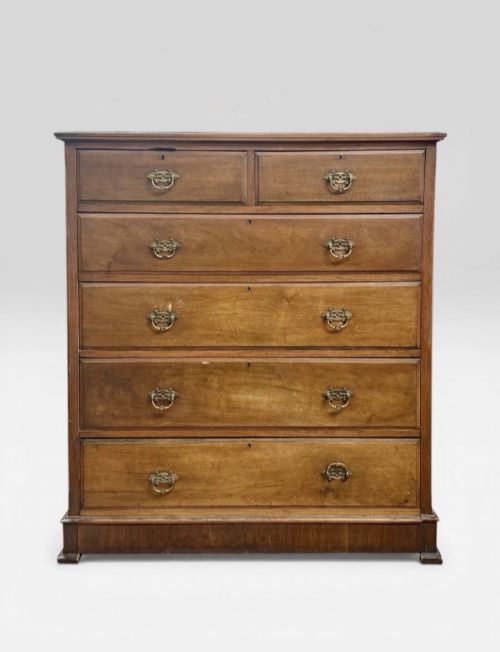
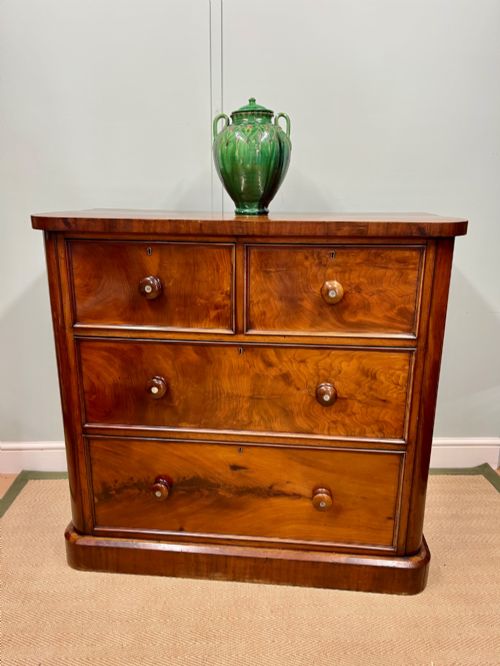
Plinth base drawers unite solid timber construction with grounded, flush-floor profiles found across nineteenth-century chests, desks, and bookcases.
Plinth Base Drawers
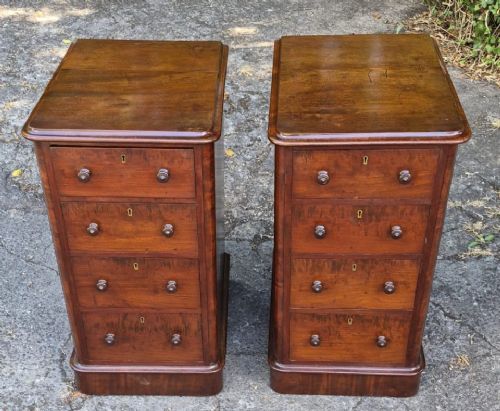
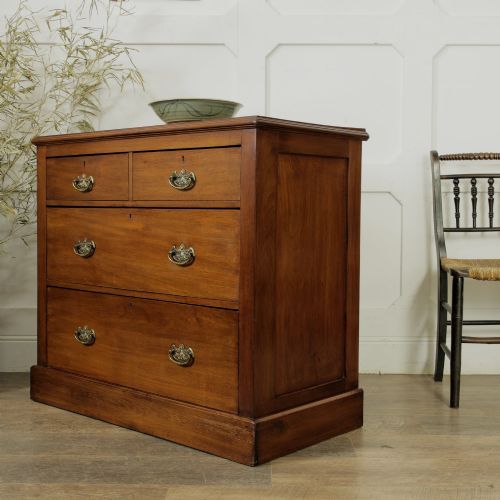
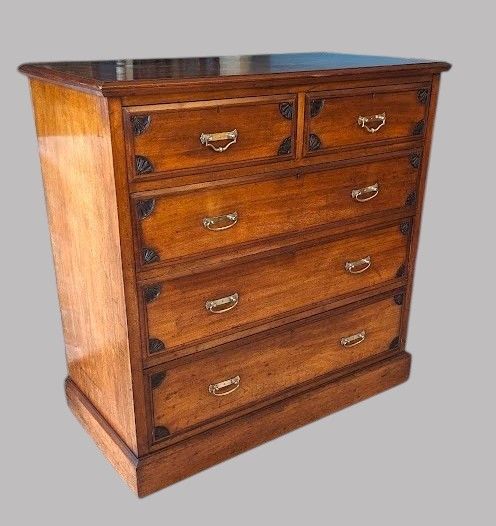
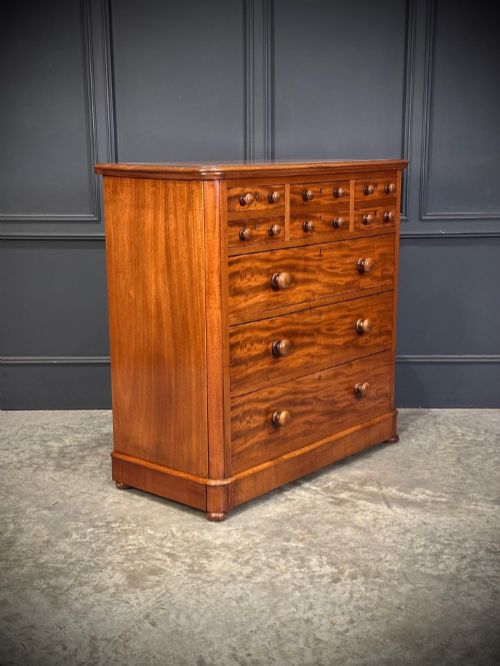
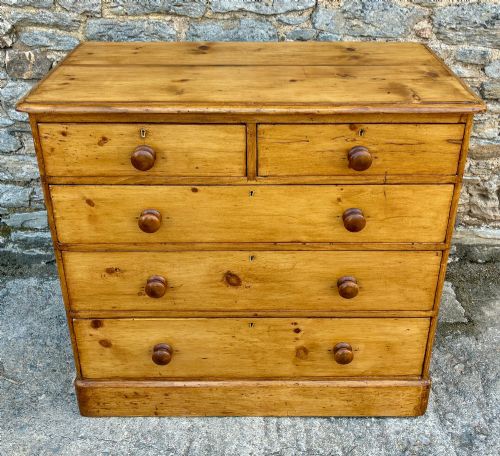
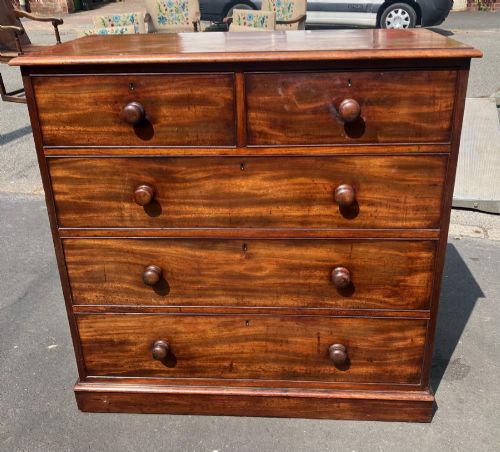
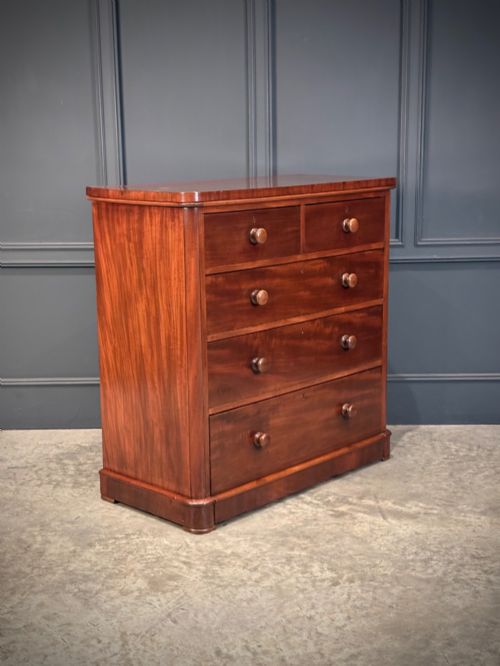
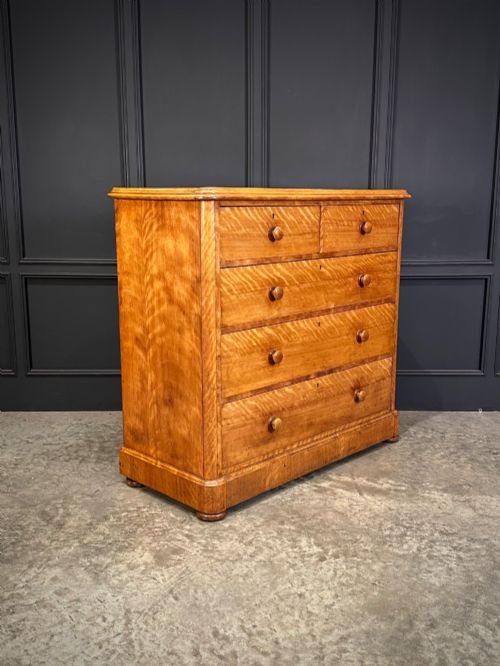
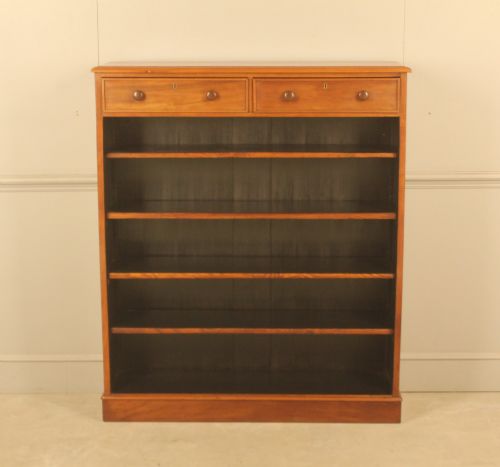
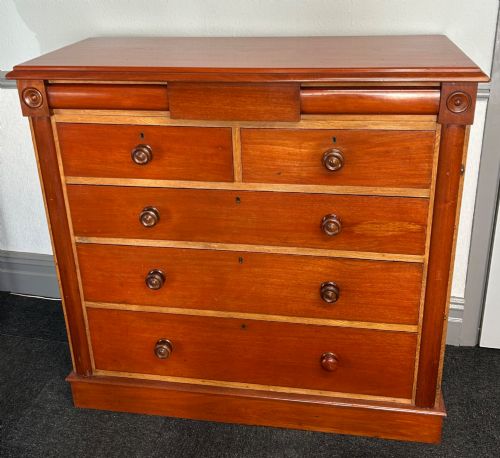
Plinth base drawers encompass nineteenth-century storage forms, where chests of drawers, Wellington chests, and pedestal desks sit directly upon flat wooden foundations rather than traditional bracket feet or legs. The most common iteration met on this page is the Victorian mahogany chest of drawers, alongside examples in pine, satinwood, and walnut.
Beyond standard chests, the inventory includes specialised writing desks, bedside chests, and bookcases that incorporate drawers above or within a solid plinth framework. These pieces span the Victorian, Edwardian, and Regency eras, reflecting domestic storage needs across the nineteenth and early twentieth centuries.
How they were made
Cabinet makers built these pieces using primary hardwoods such as mahogany, satinwood, and oak, frequently employing flame mahogany veneers to create striking grain patterns on drawer fronts. Secondary timbers like pine and cedar appear in structural carcases and drawer linings.
Surface detailing relies on natural timber figuring, brass hardware including swan neck handles, and inlaid accents, constructed to fit squarely upon the continuous wooden plinth at the base.
Forms on this page include chests of drawers, Wellington chests, pedestal desks, and bookcases.
What varies in quality
Quality rests in the selection of timbers and the handling of veneers, moving from utilitarian pine carcases to finely figured flame mahogany and satinwood. The integration of the plinth base with the main body, alongside the crispness of inlaid details and the preservation of original handles, distinguishes finer workshops.
Internal construction, including cedar or mahogany drawer linings and the graduation of the drawers themselves, marks the distinction between standard domestic furniture and pieces bearing maker attributions.
Heal & Son·Mawer & Stephenson·Harris Lebus
The Plinth Base Drawers Glossary
- Plinth base
- A solid, flat architectural foundation upon which a cabinet or chest rests directly, replacing conventional feet. This design gives heavy pieces a grounded, substantial silhouette.
- Wellington chest
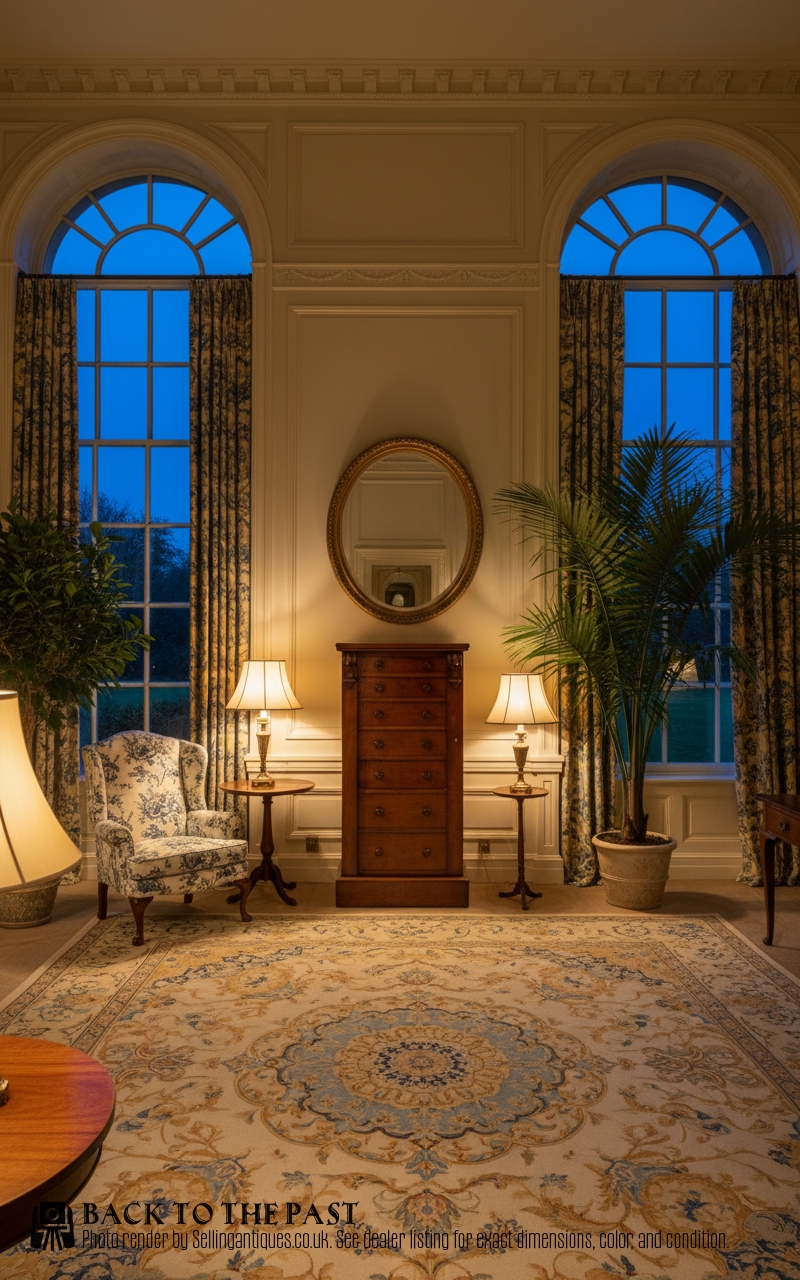
- A tall, narrow chest of drawers typically secured by a hinged locking stile on one vertical edge. They frequently incorporate numerous graduating drawers above a plinth base.
- Flame mahogany
- A veneer cut from the fork of a mahogany tree where the branches join the trunk, producing a distinctive, rippling flame-like pattern. Makers utilised this timber on primary display surfaces like drawer fronts.
- Pedestal desk
- A heavy writing table supported by two banks of drawers forming the pedestals. These often sit upon low plinth bases to anchor the piece firmly in a study or library.
Plinth Base Drawers: Frequently Asked Questions
What is a plinth base?
A plinth base is a solid wooden platform that sits flat on the floor, supporting the entire weight of the cabinet or chest without legs.
This construction style provides a heavy, grounded appearance characteristic of many nineteenth-century case pieces.
How do I identify a Wellington chest?
A Wellington chest is unusually tall and narrow, featuring multiple graduating drawers secured by a single locking side bar.
This locking mechanism swings or hinges outward to release all the drawers at once.
What woods were commonly used?
Mahogany is the predominant timber seen, alongside satinwood, walnut, oak, and pine.
Cabinet makers often combined fine hardwoods for external display with softer secondary woods for internal drawer linings.
Are these pieces strictly Victorian?
While the majority date from the Victorian period, the selection also spans Regency, William IV, and Edwardian eras.
Dates range from the early nineteenth century through to the early twentieth century.