


Flame Veneer Chest
A flame veneer chest brings striking wood grain into a room, offering practical storage through rich patterns.
Flame Veneer Chest
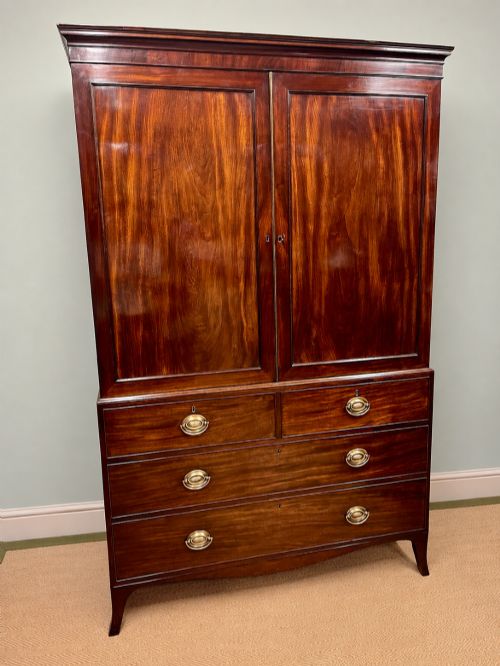
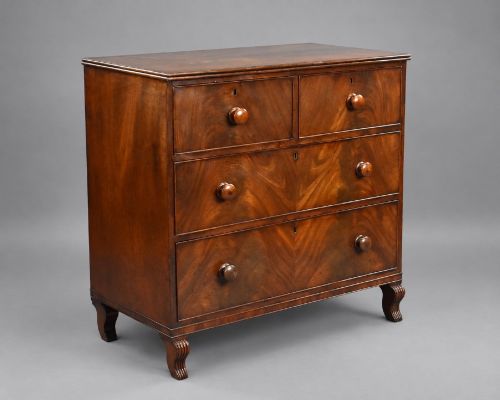
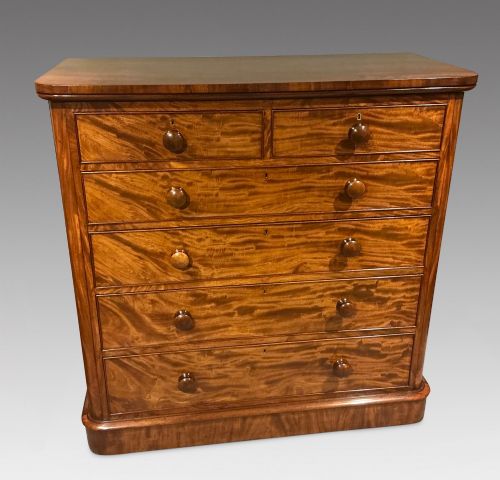
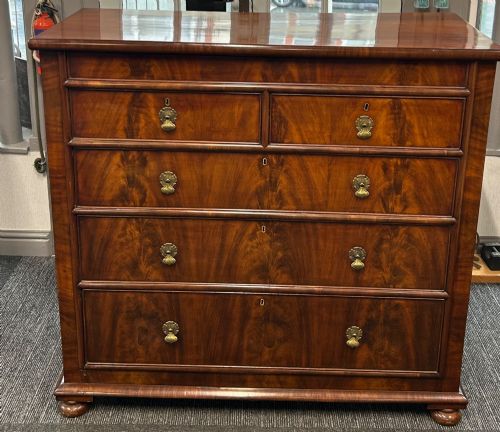
A flame veneer chest uses dramatic wood figures across drawer fronts and doors, creating natural patterns that catch the eye. The pieces gathered here span the Regency, Victorian, and Edwardian eras, alongside continental Biedermeier examples from the nineteenth century.
Most items on this page are chests of drawers, supplemented by linen presses, wardrobes, cabinets, and music cabinets. Forms range from compact bedside pieces to tall Scottish chests and large wardrobes.
Origins stretch from British workshops to Swedish and general continental makers, showing how cabinetmakers across Europe prized this figured timber.
How they were made
Cabinetmakers selected timber cut from the fork of the tree where branches meet the trunk, slicing thin layers to reveal swirling flame figures. These delicate veneers were then painstakingly applied to stable secondary woods such as pine or solid mahogany.
Turned wood and brass hardware frequently complement the polished surfaces, providing structural contrast and functional handles for heavy drawers.
Listings feature mahogany, birch, and pine, demonstrating how makers paired decorative flame veneers with sturdy structural timbers.
What varies in quality
The visual impact depends entirely on the symmetry and bookmatching of the grain patterns across the drawer fronts. Finer examples display continuous, mirrored figures that flow seamlessly from one drawer to the next.
Construction methods also separate standard production from exceptional work, seen in the precision of the drawer dovetails and the weight of the secondary timbers used inside the carcass.
R H & J Simpson
The Flame Veneer Chest Glossary
- Flame veneer
- A thin slice of wood cut from the branch junction of a tree to create a flickering, flame-like grain pattern. This decorative surface defines the aesthetic of the entire piece.
- Biedermeier
- A Central European style from the nineteenth century favouring clean architectural lines and warm fruitwood or mahogany veneers. It often lets the natural timber grain serve as the primary decoration.
- Linen press
- A tall piece combining upper cabinet storage with lower drawers originally designed for household textiles. The doors frequently conceal sliding trays rather than hanging space.
- Compactum
- A fitted wardrobe or combination chest designed to hold a wide variety of clothing within a confined footprint. These items maximise internal storage through specialised compartments.
- Bookmatching
- A technique where adjacent veneer slices are opened like a book to mirror each other. This creates symmetrical patterns across a chest front.
Flame Veneer Chest: Frequently Asked Questions
How do I care for flame veneer?
Keep these pieces away from direct sunlight and steady heat sources to prevent the thin timber layers from drying out or lifting. Regular dusting with a soft, dry cloth maintains the polished finish without harsh chemical polishes.
Wax can be applied sparingly every few years to nourish the wood and preserve the depth of the grain pattern. Avoid placing damp items directly on the top surface.
Where should I place a chest?
These chests serve well in bedrooms, hallways, or living rooms where their prominent wood grain acts as a focal point. Ensure the room has stable humidity levels to protect antique timbers and glued joints.
Allow enough clearance for drawers to open fully, particularly with larger Regency or Victorian models that feature deep carcasses.
How do I tell Regency from Victorian?
Regency pieces generally feature cleaner classical lines, restraint in ornamentation, and earlier British cabinetmaking traits. Victorian examples often present heavier proportions, bolder brass mounts, and taller formats.
Continental Biedermeier items from the same broad era lean towards minimalist geometry with an emphasis on unadorned wood figures.
What is a Scottish chest?
Scottish chests of the nineteenth century typically feature a distinctive layout with a deep cushion drawer sitting above standard configuration drawers. They often incorporate flame mahogany veneers across substantial proportions.
These pieces were built for larger rooms and offer deeper storage capacity than standard urban equivalents.