




Pleated Work Basket Table
A pleated work basket table is a domestic sewing table featuring a suspended fabric bag to hold needlework, offering both practical storage and elegant charm.
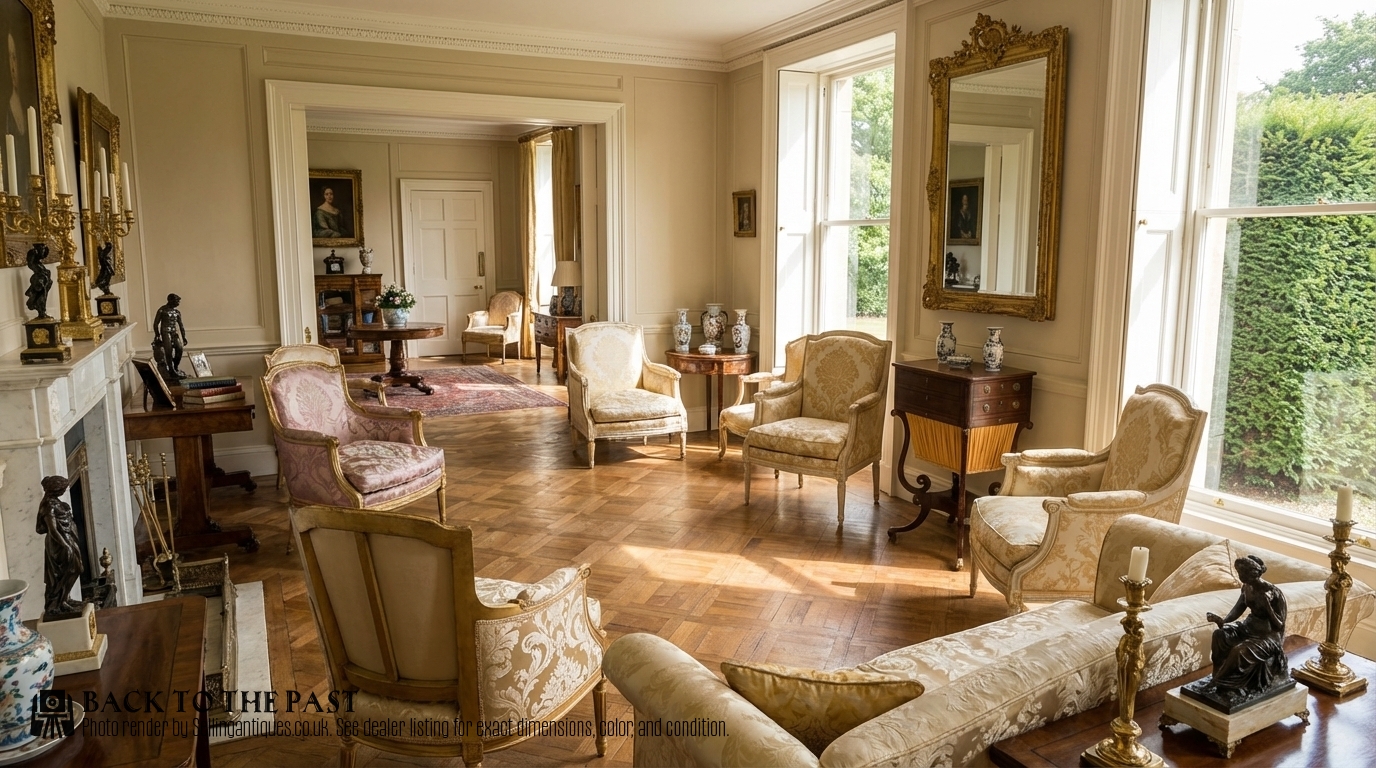
Pleated Work Basket Table
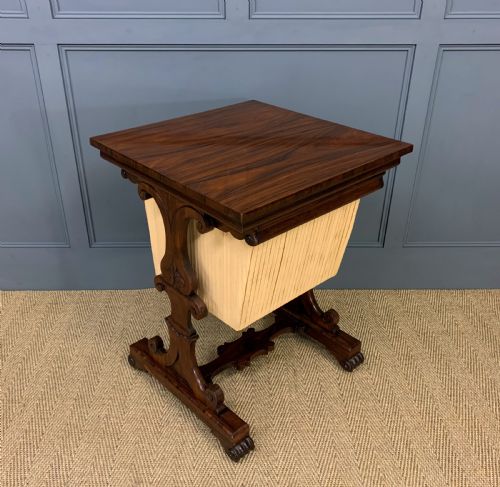
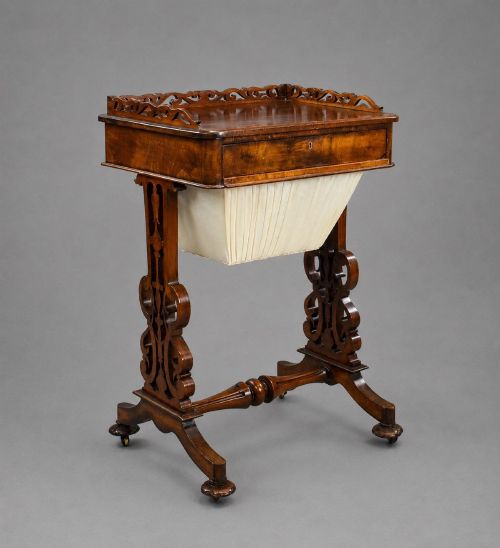
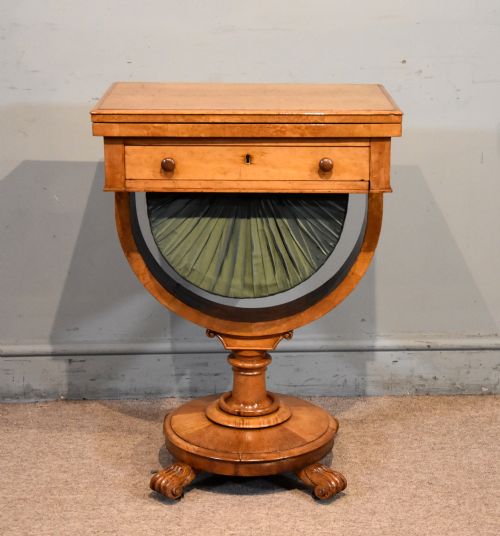
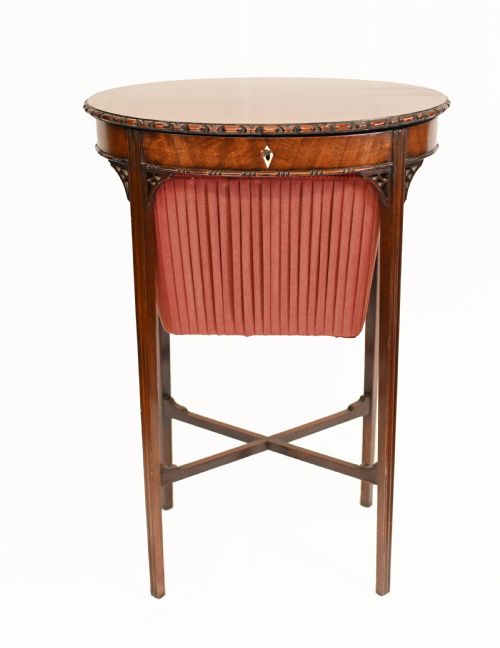
A pleated work basket table combines the surface utility of an occasional or side table with dedicated storage for sewing and needlework supplies. The pleated bag hangs beneath the main body to hold fabrics, threads and implements out of sight yet close at hand.
Buyers browsing this selection will most frequently encounter nineteenth-century examples in mahogany, rosewood and walnut, spanning the Regency, William IV and Victorian periods. These pieces often double as games tables or simple sewing stands, reflecting the domestic habits of their era.
How they were made
Cabinetmakers constructed these tables using dense hardwoods such as mahogany, rosewood, walnut and burr walnut, frequently utilising figured veneers to create visually striking table tops. Inlaid details and drop flaps demonstrate the cabinetmaker's skill in balancing decorative appeal with functional design.
The suspended work baskets rely on gathered or pleated silk and fabric attached to rigid frames beneath the table body. Brass fittings and mounts appear across various pieces to secure joints, hinges and handles.
Current listings demonstrate a strong representation of nineteenth-century pieces, spanning the Regency, William IV, Victorian and Edwardian periods.
What varies in quality
Quality in a pleated work basket table lies in the selection of timber veneers, such as figured mahogany or burr walnut, and the crispness of any inlay work. Finer examples display meticulous attention to the internal compartment layout and the structural joinery of the table frame.
The condition and execution of the pleated silk or fabric basket heavily influence the overall standard of the piece. Tables that retain balanced proportions between the solid wood body and the soft fabric container demonstrate superior design harmony.
The Pleated Work Basket Table Glossary
- Work table
- A specialised domestic table designed to hold sewing equipment, fabrics and needlework tools. These pieces usually include internal compartments alongside the pleated fabric basket.
- Regency
- An English design style dating from the early nineteenth century, characterised by classical restraint and clean architectural lines. Pieces from this period often incorporate mahogany or maple.
- Drop flap
- A hinged leaf on the side of a table that can be raised to extend the surface area or lowered when space is limited. This feature appears on several work and sewing stands.
- Burr walnut
- A highly decorative wood veneer taken from the burl growth of a walnut tree, showing intricate swirling patterns. Cabinetmakers utilised this material on top surfaces to create visual depth.
Pleated Work Basket Table: Frequently Asked Questions
What is a work table?
A work table is a nineteenth-century furniture form designed specifically for domestic needlework and sewing tasks. It provides a flat surface alongside concealed storage compartments.
Beneath the main top, these tables typically feature a pleated fabric bag that holds loose wools, threads and cloths. This design kept domestic handwork tidy in the parlour.
How do I date a sewing table?
Dating a sewing table involves examining the primary timber, veneer choice and overall stylistic period. Regency pieces often feature clean lines in mahogany or maple, while Victorian examples lean towards heavier walnut and burr walnut.
Secondary woods and construction methods inside the drawers also offer clues to the manufacturing decade. Hardware such as brass locks and hinges helps narrow down the production era.
Where were these tables used?
These tables sat primarily in nineteenth-century drawing rooms, parlours and sitting rooms where ladies gathered for needlework and conversation. Their compact footprint allowed them to sit beside chairs or sofas without crowding the room.
Because many double as games tables or side tables, they served multiple functions throughout the daily routine of a Victorian household.
What woods are most common?
Mahogany and rosewood appear frequently across nineteenth-century examples, offering strong dark tones and fine grain patterns. Cabinetmakers also favoured walnut and burr walnut for their rich, figured surfaces.
Lighter woods like satinwood and maple occasionally appear in later Edwardian or Regency pieces to create contrasting decorative details.