



Plaster Cameo Medallions
These plaster cameo medallions bring classical antiquity home through miniature reliefs set into frames.
Plaster Cameo Medallions
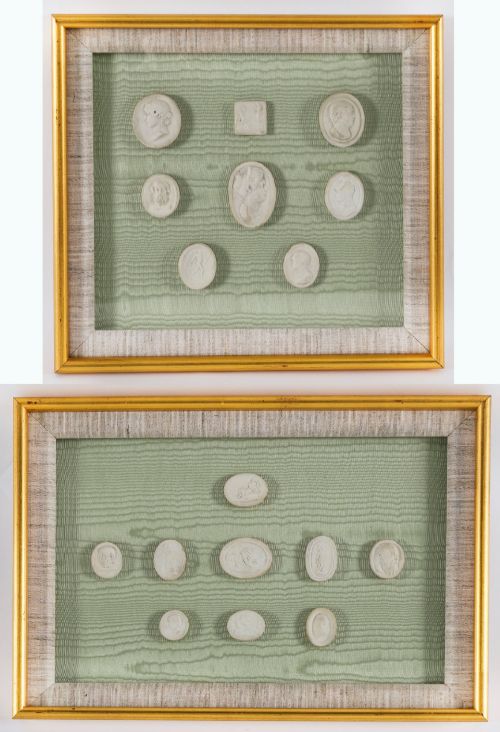
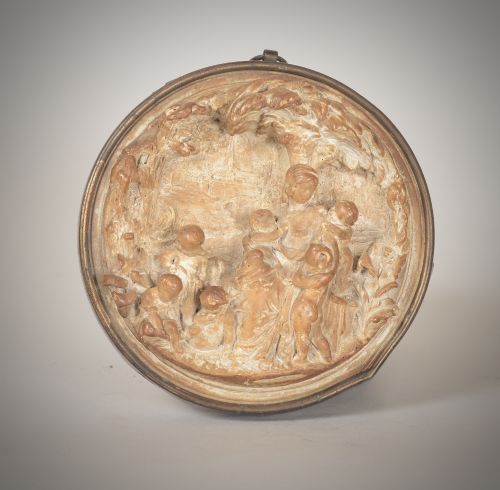
Plaster cameo medallions take the form of wall plaques, framed artwork, and decorative objects that capture neoclassical subjects. These pieces frequently emerge as collections or pairs gathered during the Grand Tour, mapping antique sculpture onto miniature gypsum surfaces.
The objects span the late eighteenth century through the nineteenth century and into the Edwardian period, with Italian workshops producing many of the surviving framed sets. Buyers encounter individual plaques alongside framed collections numbering up to thirty-five distinct classical intaglios.
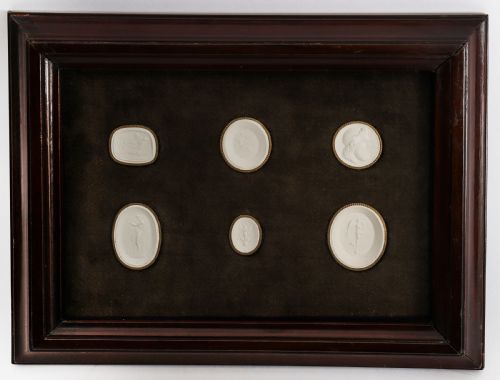
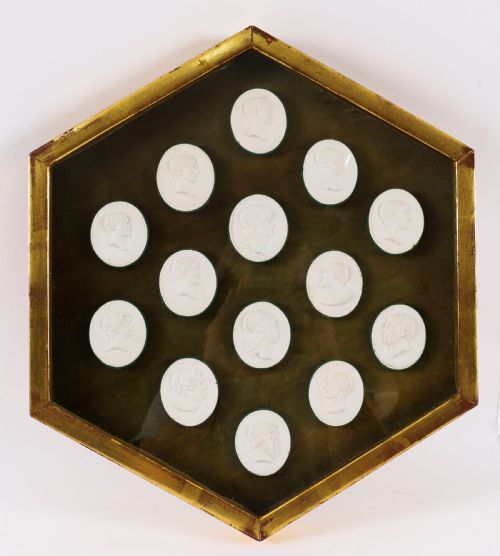
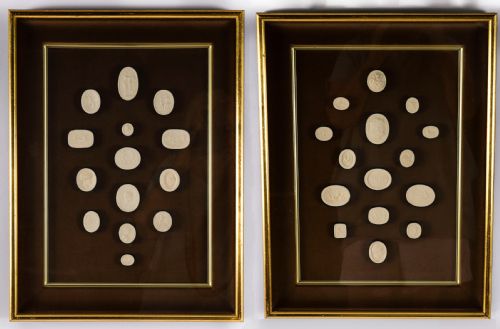
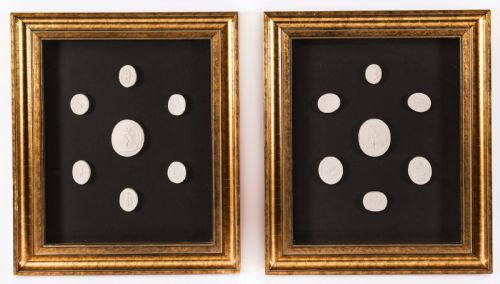
The compositions reflect Georgian neoclassical and Grand Tour tastes, translating ancient Greek and Roman motifs into portable wall art. Most examples present white plaster casts mounted against contrasting velvet, fabric, or painted backdrops within wooden frames.
Materials and Construction
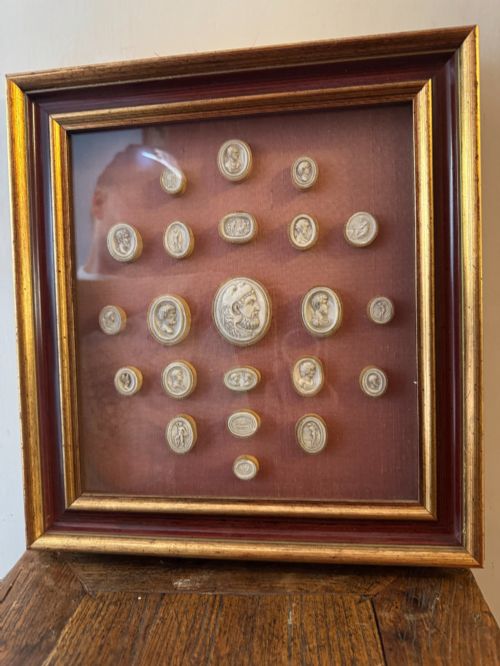
Plaster and gypsum form the primary relief elements, cast from moulds taken of ancient gems, coins, and sculpture. These crisp white casts capture fine facial profiles and classical drapery with sharp definition.
Makers set the plaster casts against velvet or fabric backgrounds inside wooden frames finished with gold leaf, gilt wood, or giltwood moulding. Some compositions incorporate pressed white glass paste or operate alongside portrait miniatures in the manner of James Tassie.
Grand Tour travellers packed thirty-five classical profiles into a single frame just to prove they had seen the sights.
Assessing Quality and Presentation
The crispness of the plaster cast and the depth of the relief separate finer examples from softer, worn impressions. Superior sets display meticulous arrangement within the frame, where each intaglio aligns correctly against its velvet or fabric backing.
Frame construction also distinguishes the pieces, with original giltwood surrounds and glazed shadow boxes providing better context than later replacements. The completeness of larger sets, particularly those retaining historic maker attributions or unified collections, influences the overall coherence of the piece.
Giovanni Liberotti·Pietro Bracci
The Plaster Cameo Medallions Glossary
- Grand Tour
- An extended journey through Europe, particularly Italy, undertaken by young men of status in the eighteenth and nineteenth centuries to study classical art. Travellers collected plaster medallions and intaglios as portable souvenirs of ancient sculpture.
- Intaglio
- A gem or medallion carved or cast with a design sunk below the surface, allowing it to produce a relief impression. In these collections, plaster casts reproduce the appearance of carved stone intaglios.
- Gypsum
- A soft sulphate mineral used to create plaster of Paris for casting medallions and reliefs. It provides the bright white surface characteristic of these classical casts.
- Giltwood
- Wood carved and covered with a thin layer of gold leaf or gilt. Frames of this material house many of the framed wall art collections.
- Glass paste
- A vitreous material melted and pressed into moulds to imitate carved gemstones or cameos. White glass paste appears in portrait miniature style pieces alongside plaster casts.
Plaster Cameo Medallions: Frequently Asked Questions
What are plaster cameo medallions?
These pieces are miniature plaster casts of classical sculpture, coins, and carved gems, framed as wall art or decorative objects. They were created to record antiquity in miniature.
Most surviving examples date from the late eighteenth and nineteenth centuries, often assembled as sets within glazed wooden frames.
How were these medallions displayed originally?
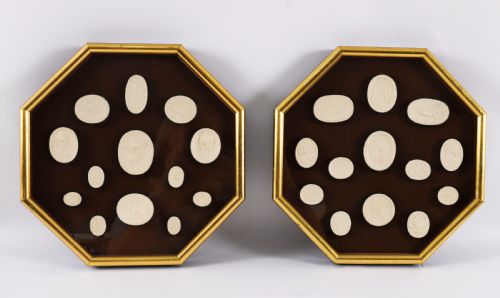
Travellers returning from Europe mounted these plaster casts in custom frames, shadow boxes, and octagonal wall plaques. They served as scholarly records and decorative displays in libraries and drawing rooms.
The arrangements range from single framed pieces to extensive sets of thirty-five or more classical intaglios.
How do I care for framed plaster medallions?
Keep the framed pieces away from direct sunlight and damp environments to protect the plaster reliefs and fabric backings. Glazed frames should remain sealed to prevent dust from settling on the delicate white surfaces.
Handle the wooden frames rather than the glazing when moving the wall art.
How can I tell the period of a piece?
Dating relies on the style of the framing, the materials used for the backing velvet or fabric, and the construction methods of the wood. Eighteenth-century and early nineteenth-century Grand Tour pieces often feature hand-carved giltwood frames.
Later nineteenth-century and Edwardian examples show distinct mounting styles and framing techniques typical of those periods.