



Plank Coffer Chest
A plank coffer chest is a utilitarian wooden storage box constructed from vertical boards, offering early domestic utility and robust simplicity.
Plank Coffer Chest
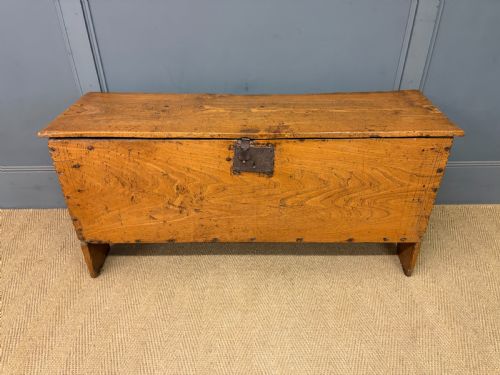
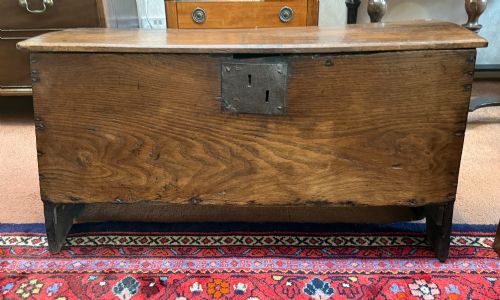
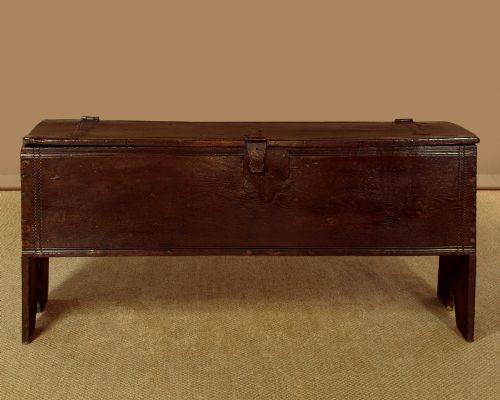
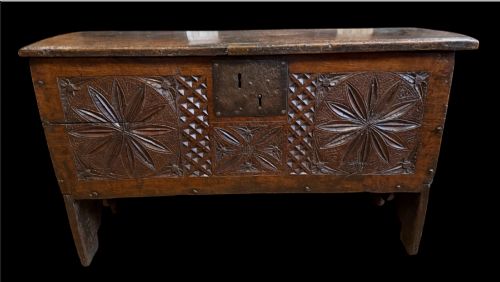
A plank coffer chest is a straightforward storage box built from vertical boards fastened at the edges rather than using a complex frame-and-panel construction. These pieces served early domestic needs for securing valuables, linens, and weapons in domestic and institutional settings.
The versions met most frequently on this page originate from the sixteenth, seventeenth, and eighteenth centuries, predominantly built by regional carpenters using local timber. These items include specialised narrow forms known as sword chests alongside standard blanket boxes.
Survivors span vernacular country styles, Tudor and Jacobean periods, and later vernacular revivals up to the twentieth century. Their fundamental structure relies on simple side boards supporting a hinged lid, often reinforced with iron strapwork.
Materials and construction
Carpenters utilised native hardwoods like oak and elm, splitting and sawing logs into thick planks to form the walls of the chest. These heavy boards were joined at the corners using simple nailed, pegged, or dovetailed methods.
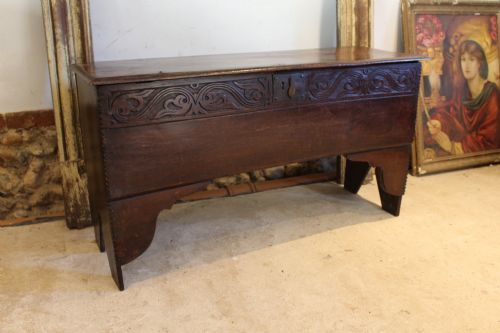
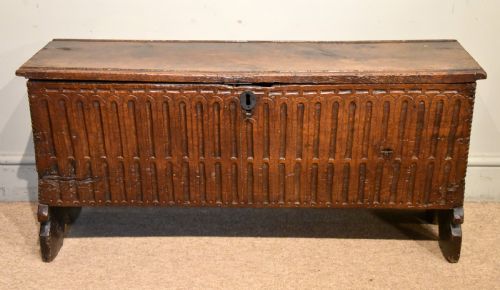
Wrought iron reinforcement in the form of strap hinges and brackets often secured the lid and corners, providing essential durability for heavy usage. Selected examples feature carved surface decoration or inlaid wood detailing applied directly onto the plank face.
Early carpenters occasionally hid maker's marks beneath heavy iron strapwork, leaving secret signatures for future generations.
Assessing quality in early chests
Quality rests upon the proportion, thickness, and integrity of the original timber boards used to build the box. Thicker oak or elm planks and minimal replacement hardware distinguish superior survivals from heavily restored examples.
The presence of untouched period surfaces, original snipe hinges, and authentic feet or bracket supports elevates an example. Subtle design elements like carved fluting or early date inscriptions separate standard utility boxes from finely detailed regional pieces.
Jack Grimble
The Plank Coffer Chest Glossary
- Six-plank coffer
- A chest constructed from six principal boards forming the front, back, ends, bottom, and lid. This represents the simplest method of box construction.
- Sword chest
- A narrow, elongated coffer designed specifically to accommodate historical edged weapons. These pieces often feature shallow proportions.
- Vernacular country
- A style of furniture making rooted in local traditions rather than court fashions. Makers utilised readily available regional woods and practical building methods.
- Wrought iron
- Iron beaten into shape by a blacksmith to create functional hardware. This material appears on early chests as hinges, lock plates, and corner straps.
- Pollard oak
- Timber harvested from trees that were pollarded, creating dense wood with distinctive grain patterns. This specialised material appears on later Arts and Crafts pieces.
Plank Coffer Chest: Frequently Asked Questions
What were plank coffer chests used for?
These chests served primarily as secure storage for household valuables, documents, clothing, and weaponry in early homes. Their robust plank construction kept contents safe from dampness and theft.
Over subsequent centuries, many adapted into general blanket boxes or hall furniture as domestic storage needs shifted.
How do I date an oak coffer?
Dating relies upon examining the construction marks, nail types, hinge styles, and timber preparation methods used by the carpenter. Hand-split boards and early wrought ironwork typically point towards the sixteenth or seventeenth centuries.
Later vernacular pieces often display sawn timber marks and standardised fixings associated with the eighteenth century or later.
Where should I place one at home?
Plank chests suit placement in hallways, at the foot of a bed, or as living room coffee tables providing internal storage. Their narrow profiles make them particularly useful in tight circulation spaces.
Keep them away from direct heat sources and radiators to prevent the ancient hardwood planks from drying out and splitting.
Is elm different from oak for chests?
Elm timber tends to have a wilder, interlocked grain pattern and was frequently chosen for country pieces due to its resistance to splitting. Oak offers a straighter grain with prominent medullary rays and forms the majority of formal early survivals.
Both woods provide exceptional durability, though elm chests often carry a distinctly rustic regional character.