


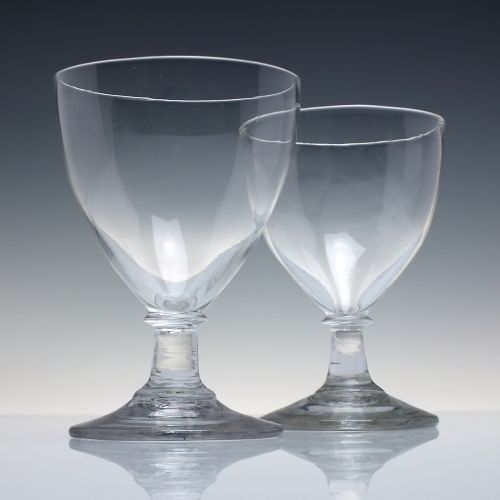


Plain Stem Glass Goblet
A plain stem glass goblet is a sturdy eighteenth-century drinking vessel valued for its heavy lead metal and simple architectural silhouette.
Plain Stem Glass Goblet
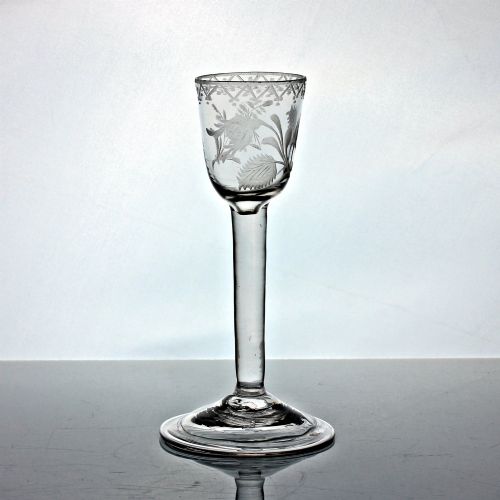
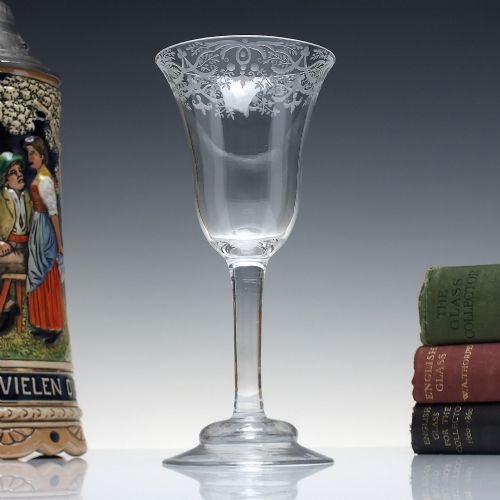
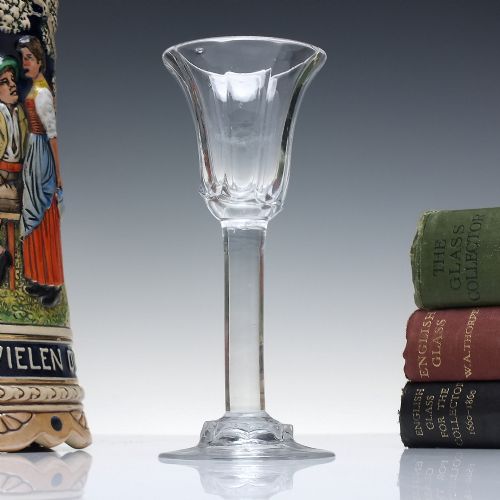
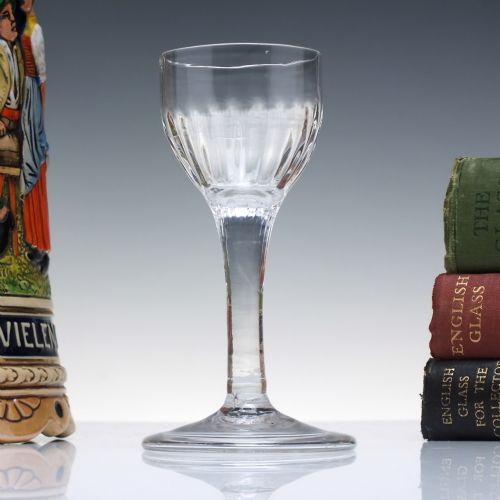
When you search for a plain stem glass goblet, you encounter drinking vessels dating primarily from the eighteenth century and the Georgian period. These pieces span forms such as wine glasses, ale glasses, cordial glasses, and rummers, all sharing the characteristic unadorned stem.
You are most likely to meet clear lead glass examples featuring straight, drawn, or columnar stems supporting ovoid, trumpet, or ribbed bowls. Many carry folded feet to add stability and edge strength to the vessel.
The origins of these glasses lie in English production during an era when glasshouses mastered heavy lead metal compositions. The aesthetic relies entirely on proportion, metal weight, and tactile presence rather than surface cutting.
Judging quality
Quality in these vessels rests upon the clarity and weight of the metal, together with the crispness of the forming. Superior examples display a brilliant grey-white metal tone and a satisfying heft in the hand.
Proportion and balance dictate the hierarchy of these objects. A well-centered bowl sitting squarely upon a straight stem and a properly balanced foot distinguishes a finer piece from a heavier or clumsier contemporary standard.
The Plain Stem Glass Goblet Glossary
- Plain stem
- A straight, unadorned glass stem lacking air twists, mercury twists, or facets. It provides the architectural foundation for mid-eighteenth-century drinking vessels.
- Folded foot
- A glass foot where the outer rim is turned underneath itself to create a thickened edge. This technique added physical strength and stability to the base.
- Air tear
- An elongated bubble trapped intentionally or accidentally inside a glass stem. Makers sometimes used these as a subtle decorative element.
- Lead glass
- A heavy glass composition incorporating lead oxide, prized for its high refractive index and resonant ring. It forms the primary material of Georgian drinking vessels.
- Ovoid bowl
- An egg-shaped drinking vessel bowl typical of eighteenth-century goblets and rummers. This form concentrates aromas and provides a comfortable mouthrim.
Plain Stem Glass Goblet: Frequently Asked Questions
What is a plain stem glass goblet?
A plain stem glass goblet is an eighteenth-century drinking vessel made from lead glass with an unadorned, straight stem. These pieces include wine glasses, ale glasses, and larger goblets.
They represent a fundamental shift in English glassmaking towards heavier, clearer metal formulas during the Georgian era.
What is an air tear?
An air tear is a small elongated bubble trapped inside the stem of a glass during manufacture. Glassmakers sometimes manipulated these bubbles as a decorative feature.
They appear commonly in eighteenth-century lead glass stems and contribute to the authenticity of the period.
Can I use antique goblets today?
Yes, these sturdy lead glass vessels can be used carefully for dining or display. Hand washing in warm water without harsh detergents protects the historic metal.
Their robust construction reflects their original purpose as functional drinking vessels rather than fragile cabinet ornaments.