


Pitch Pine Cupboard
A pitch pine cupboard offers robust utility, bringing dense grain and enduring character to domestic storage.
Pitch Pine Cupboard
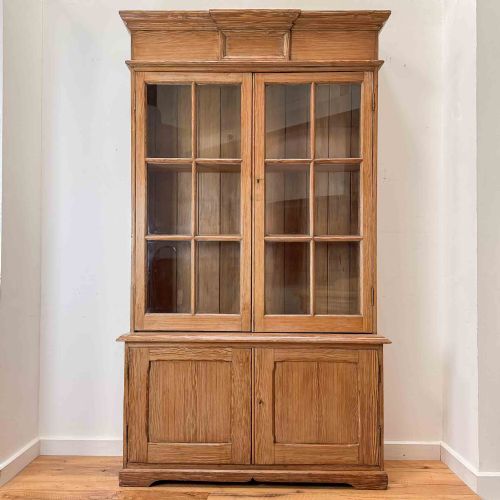
A pitch pine cupboard provides practical storage formed from resilient timber, appearing across domestic, school, and institutional contexts from the nineteenth century onwards. Buyers searching for a pitch pine cupboard encounter diverse formats, from tall housekeeper and school storage units to bedside cabinets, wardrobes, and glazed bookcases.
The nineteenth century and Victorian period dominate the available stock, alongside examples from the Edwardian era and the nineteen-thirties. Forms range from compact wall-hanging cupboards and bedside pot cupboards to large multi-door kitchen larders and architectural buffet deux corps.
How they were made
Construction relies heavily on pitch pine timber, frequently paired with secondary pine, wood, and glass panels. Metal components include brass and iron hinges, handles, and fixings, while occasional pieces incorporate ceramic elements or marble tops.
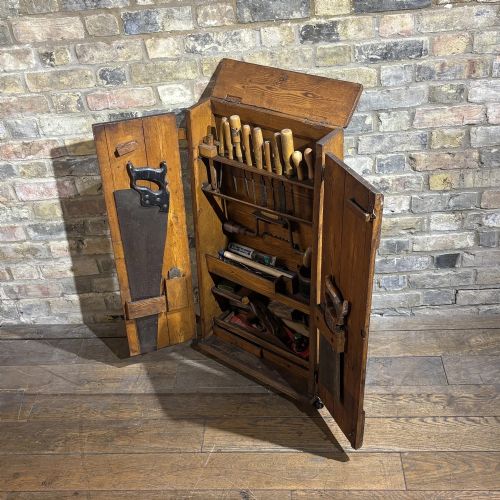
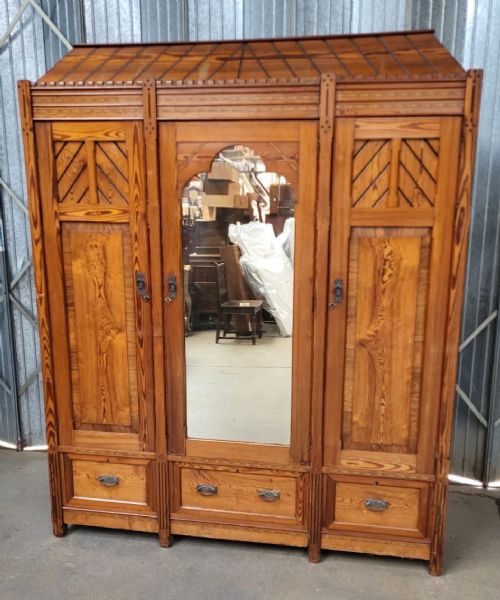
Joinery methods encompass panelled doors, drawers, and shelving, varying from utilitarian school sliding doors to intricate Gothic Revival framing and Arts and Crafts inlay. Surfaces appear stripped, painted, or sign-painted.
Some school cupboards retain original sign-painted lettering that once organised sports equipment and playground supplies.
What varies in quality
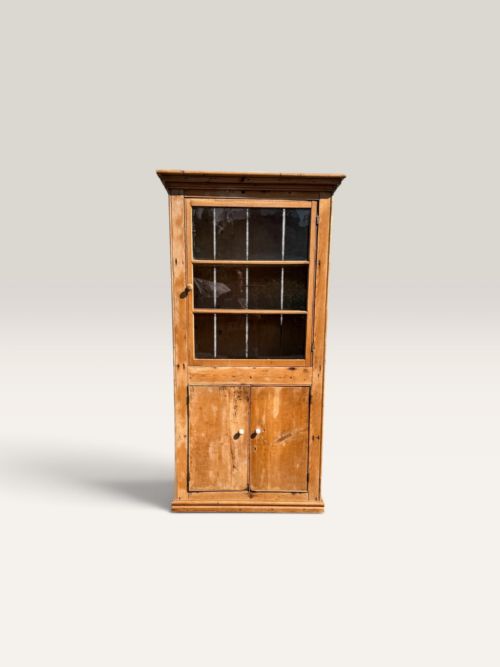
Quality rests in the density of the timber grain, the structural integrity of the joinery, and the retention of original hardware such as brass handles and iron fittings. Pieces intended for institutional use prioritise robust utility, whereas domestic wardrobes and bookcase cabinets often display finer detailing like inlaid decoration and mirrored doors.
Proportion and scale dictate the visual impact, separating simple utility pieces from ambitious architectural furniture like large multi-door school cupboards and French buffet deux corps.
R Denham and Co
The Pitch Pine Cupboard Glossary
- Pitch pine
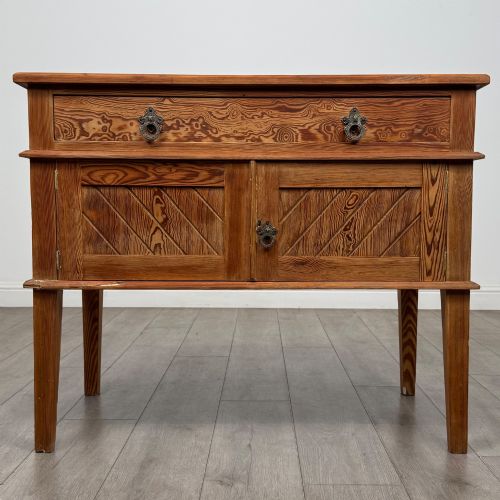
- A resinous and durable timber known for its prominent growth rings and distinct grain pattern. It provides exceptional strength for heavy-use furniture.
- Pot cupboard
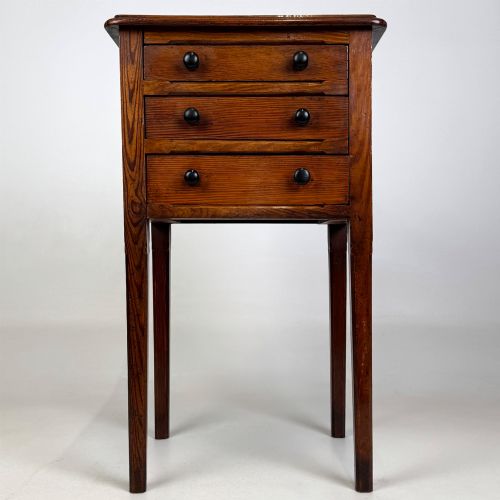
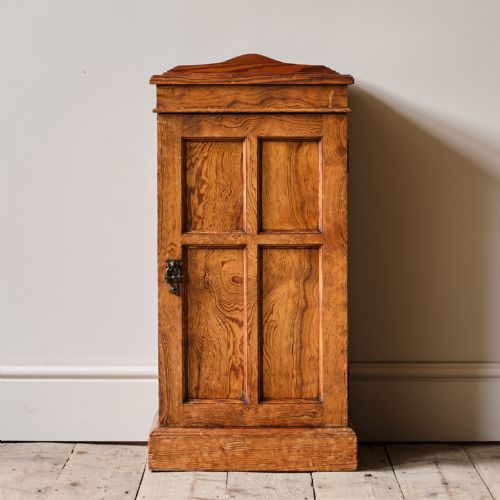
- A small bedside cabinet originally designed to house a chamber pot. These compact units frequently feature a single door and a small drawer.
- Housekeeper's cupboard
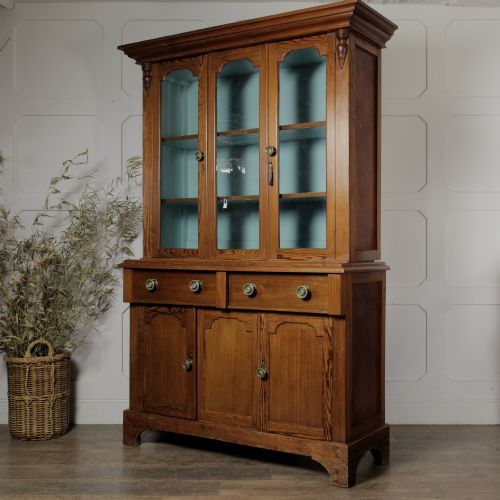
- A large storage piece traditionally used in large homes for linen or provisions. These tall standing units often combine multiple doors and internal shelving.
- Gothic Revival
- A nineteenth-century design style drawing inspiration from medieval architecture. Pieces in this aesthetic incorporate pointed arches, heavy framing, and ecclesiastical detailing.
Pitch Pine Cupboard: Frequently Asked Questions
What is a pitch pine cupboard?
A pitch pine cupboard is a storage unit built from resinous pine timber, featuring prominent grain and sturdy construction. These pieces range from small bedside cabinets to large school and housekeeper units.
Most surviving examples date from the Victorian period through to the early twentieth century, reflecting practical domestic and institutional uses.
How do I date a pitch pine cupboard?
Dating relies on architectural styles, construction techniques, and hardware types seen across the Victorian, Edwardian, and nineteenth-century periods. Gothic Revival and Arts and Crafts details offer specific stylistic markers.
Secondary materials like brass, iron, glass, and ceramic elements further help determine the era of manufacture.
Where were these cupboards used?
These cupboards served diverse environments, including domestic kitchens, bedrooms, and grand housekeepers' rooms. Institutional examples also served schools and offices.
Specialised forms include bedside pot cupboards, library bookcase cabinets, and tall hallway storage units.
Are pitch pine cupboards heavy?
Pitch pine is a notably dense and heavy resinous timber, making these cupboards exceptionally solid. Larger variants like school cupboards and multi-door wardrobes require careful placement.
This inherent weight contributes to the long-term durability and structural stability of the furniture.