



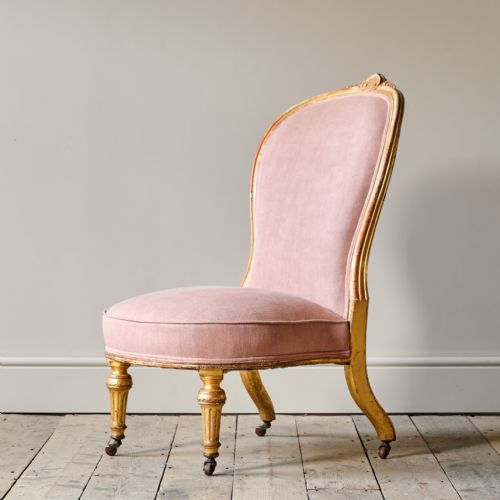


Pink Upholstered Slipper Chair
A pink upholstered slipper chair is a low-seated Victorian or Edwardian chair designed for comfort, bringing soft colour and period charm to a modern bedroom.
Pink Upholstered Slipper Chair
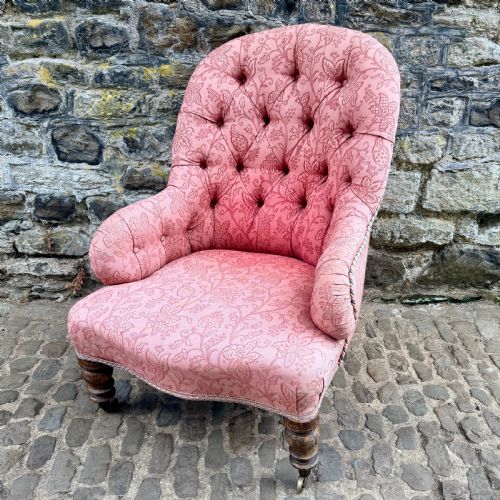
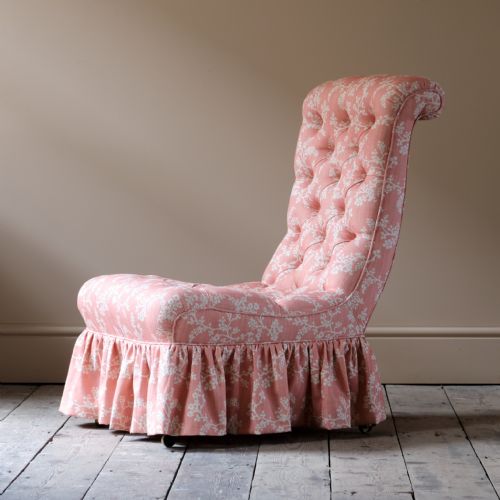
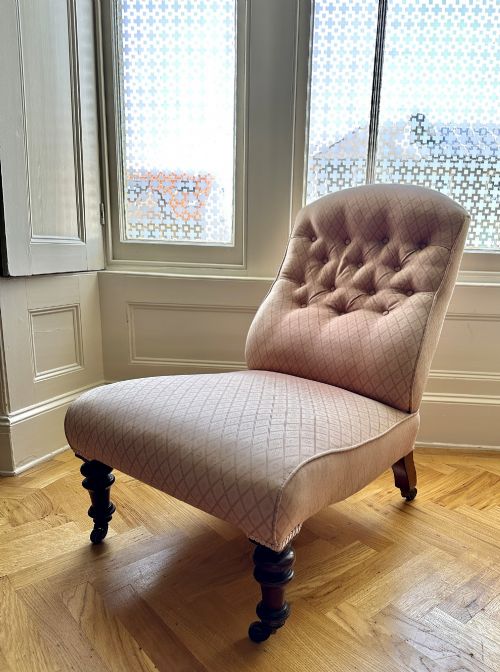
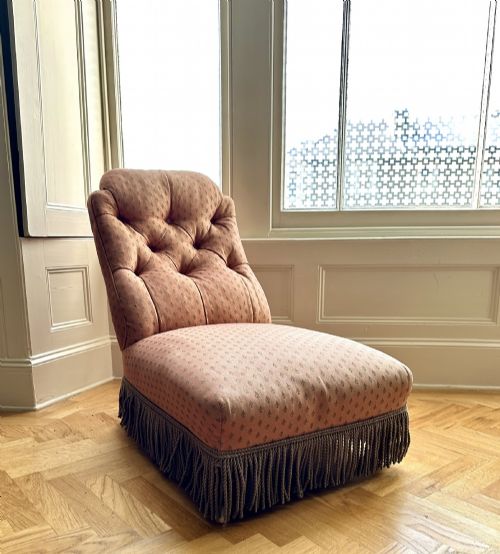
A pink upholstered slipper chair typically takes the form of a low nursing chair, ladies chair, or compact armchair dating from the nineteenth and early twentieth centuries. These pieces sit low to the ground, designed originally for dressing rooms and bedrooms where comfort and ease of movement mattered.
The selection on this page draws primarily from the Victorian and Edwardian eras, featuring walnut, mahogany, and rosewood frames paired with varied textile coverings. Forms range from balloon backs and spoon backs to buttoned designs, reflecting the diverse seating styles popular across the nineteenth century.
Makers and workshops of the period, including notable firms, produced these low chairs with carved timber details and substantial padding. Buyers find pieces shaped by distinct regional and maker traditions, all united by their compact proportions and low profile.
Materials and construction
Timbers such as walnut, mahogany, and rosewood form the structural framework of these chairs, shaped through nineteenth-century carpentry techniques. Carved wooden frames often feature detailed woodwork along the crest rails and cabriole or turned legs.
Upholstery methods rely on traditional stuffing and springing techniques, secured within fabric, velvet, or textile coverings. Brass castors frequently appear on the feet of nineteenth-century examples to allow easy movement across carpets and wooden floors.
Pink Upholstered Slipper Chair Retail Price Guide 2026
Typical asking prices for pink upholstered slipper chair among the pieces listed under this phrase on Sellingantiques today, from the lower quarter to the upper quarter. They describe what is for sale here now, not the wider market.
Listings span from eighteen fifty to nineteen twenty, featuring walnut, mahogany, and rosewood frames paired with brass castors.
Assessing quality and craftsmanship
The refinement of the timber carving and the architectural balance of the frame set superior examples apart from standard production. Finer frames exhibit crisp detailing in the walnut or mahogany, whilst lesser pieces show simpler, plain turns.
Attribution to documented nineteenth-century cabinet makers elevates the standing of a chair significantly. The integrity of the original show wood and the proportion of the low seat relative to the back dictate the visual harmony of the piece.
Gillows·Holland and Sons·Hindley and Sons·Lamb of Manchester
The Pink Upholstered Slipper Chair Glossary
- Spoonback
- A chair back carved into an oval depression resembling the bowl of a spoon, designed to fit the human spine.
- Balloon back
- A rounded, closed chair back shaped like a balloon, highly popular during the Victorian period.
- Nursing chair
- A low-seated chair originally designed to assist mothers with infant care, featuring an absence of arms to accommodate full skirts.
- Castor
- A small wheel mounted on a swivel attached to the foot of a chair leg for mobility.
- Button back
- An upholstery style where buttons are pulled deep into the padding to create a quilted, geometric pattern.
Pink Upholstered Slipper Chair: Frequently Asked Questions
What is a slipper chair?
A slipper chair is a low-seated, armless chair originally designed for bedrooms and dressing rooms during the Victorian era. The low profile made it practical for changing shoes and garments.
Today, these compact chairs function well as accent seating in living rooms, hallways, and bedrooms where space is limited.
How do I date a Victorian chair?
Dating relies on examining the timber species, joinery methods, and stylistic cues such as balloon backs or carved walnut frames. Victorian pieces typically date between eighteen thirty-seven and nineteen oh one.
Cabinet maker stamps, brass hardware, and secondary woods inside the frame also help narrow down the manufacturing decade.
Where should I place a pink chair?
These chairs suit bedroom dressing areas, reading corners, and drawing rooms where a touch of colour is desired. Their low height prevents them from overwhelming smaller spaces.
Pairing the piece with neutral surroundings allows the pink upholstery and antique timber frame to stand out visually.
Were these chairs originally upholstered in pink?
Most nineteenth-century chairs have been reupholstered multiple times over their lifespan to match changing interior tastes. The pink fabric seen today reflects modern restoration choices rather than the original factory textile.
Underneath the modern fabric, the webbing, springs, and stuffing often reveal the historical depth of the chair's construction.