
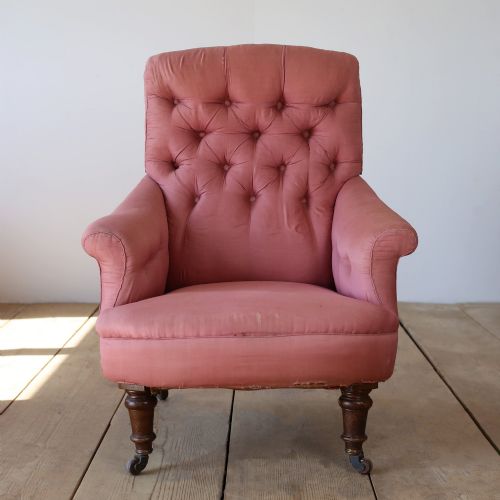
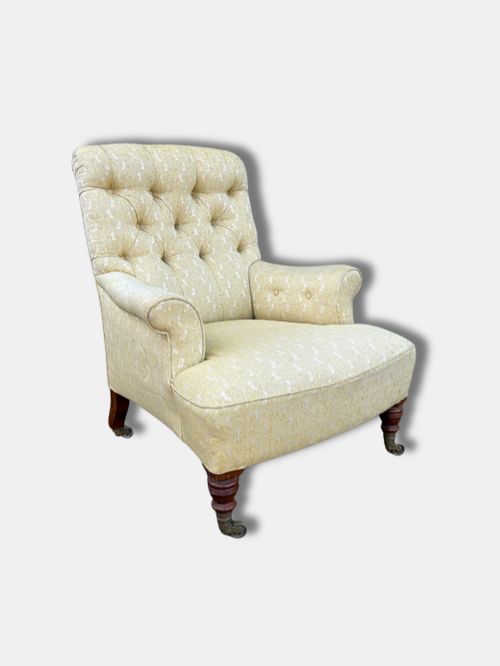
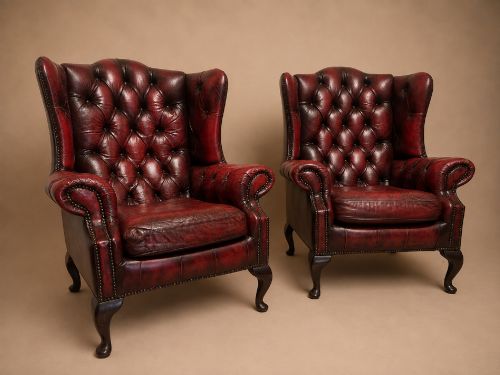
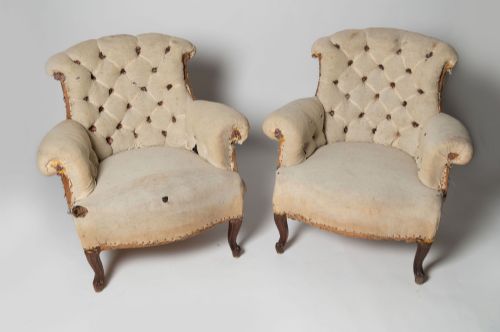
Traditional Tufted Chair
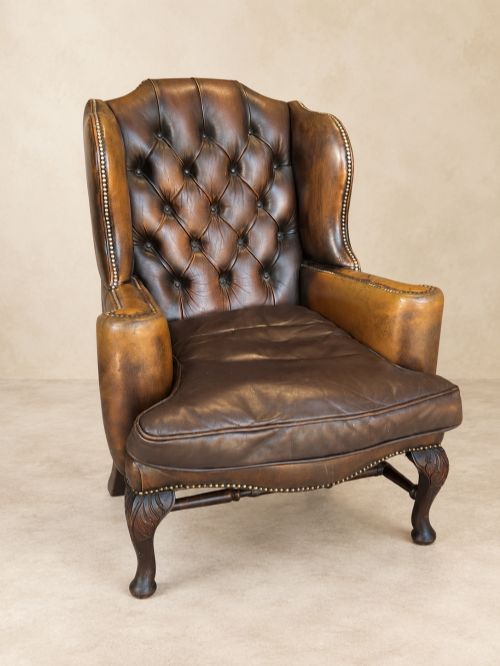
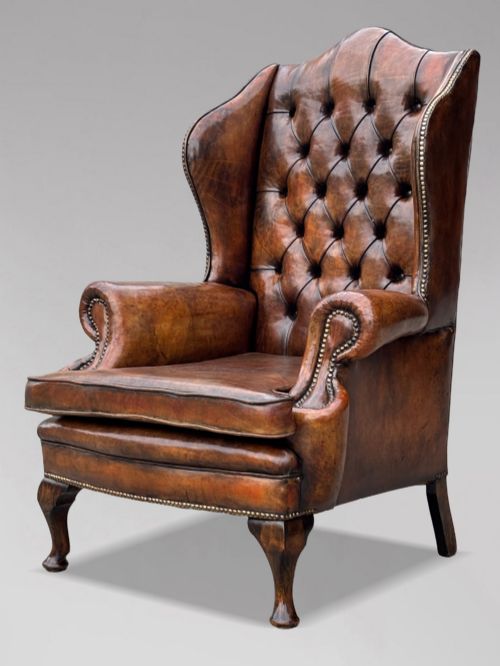
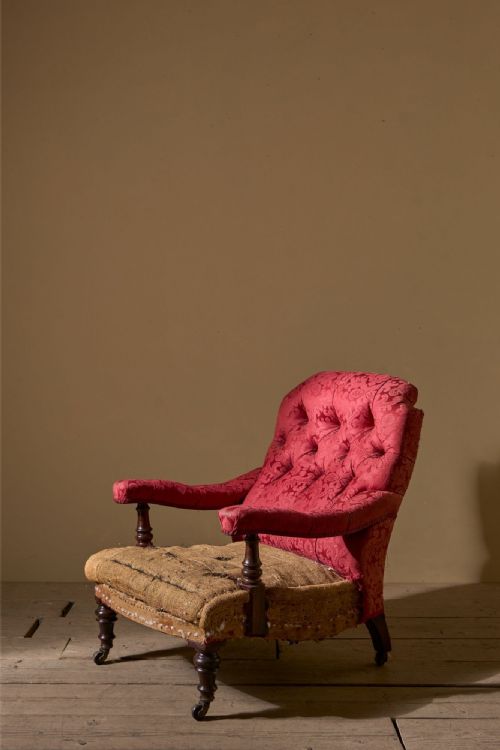
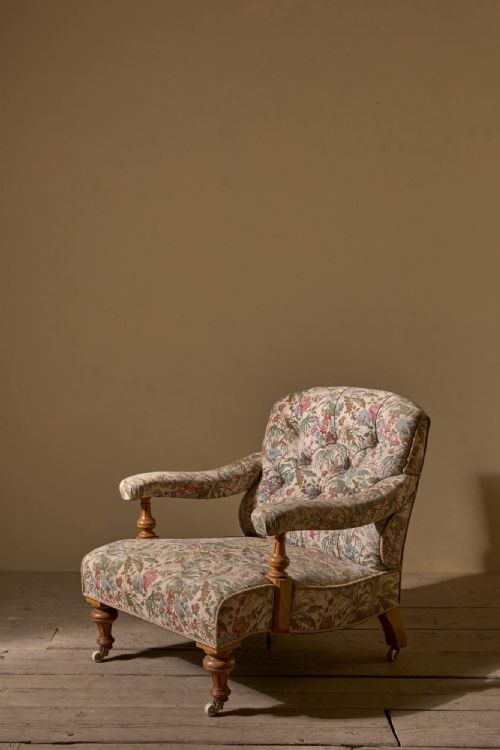
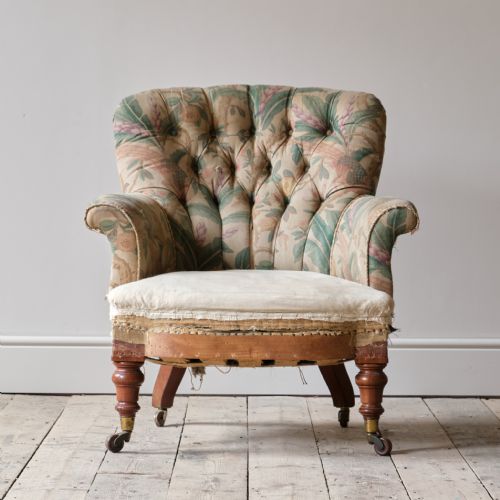
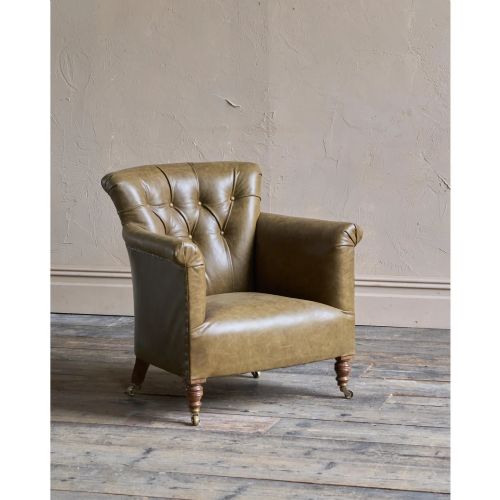
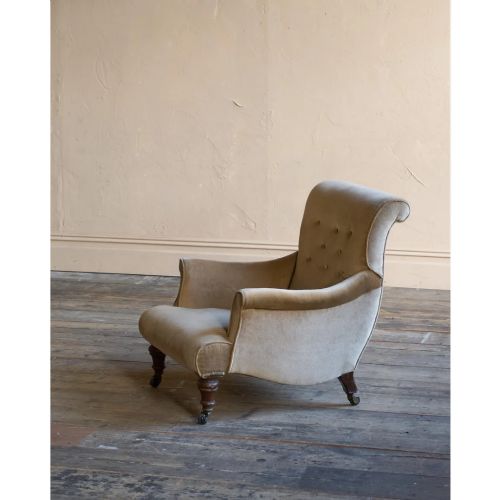
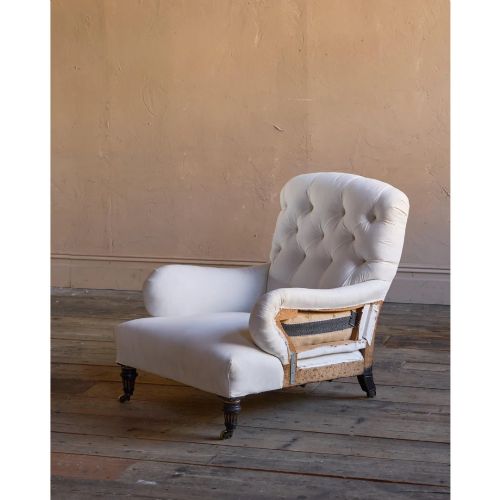
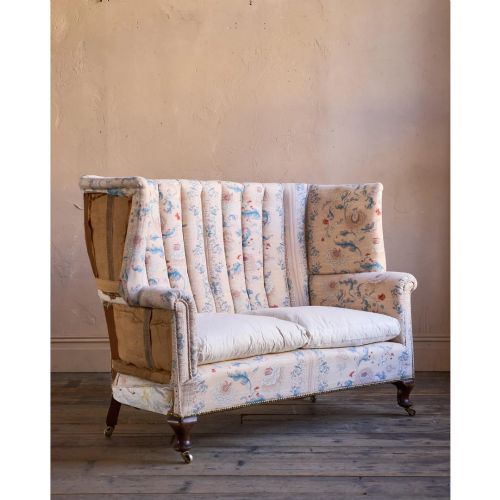
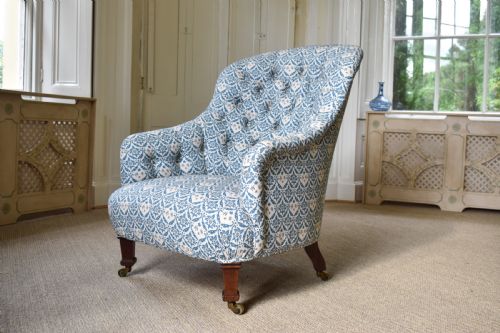
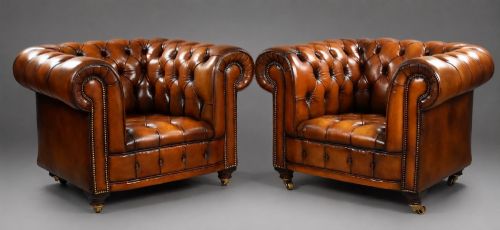
These traditional tufted chairs and seating bring deep buttoning, generous proportions and leather or fabric upholstery into a room.
Traditional Tufted Chair
Most pieces you meet here rely on robust wooden frames, such as mahogany, oak or walnut, paired with upholstered buttoning that defines the classic tufted aesthetic. Makers often utilised durable leather, velvet or calico to cover sprung seats designed for long hours of reading or conversation.
Beyond standard armchairs, the inventory includes related seating forms like chaises longues, daybeds and rocking chairs. These pieces carry the same deep buttoned upholstery and turned wooden legs seen across the primary chair selection.
How they were made
Craftsmen built these frames using solid hardwoods like mahogany and oak, often shaping arms and legs with hand-carved details or brass castors. Joinery relied on traditional mortise and tenon methods to ensure the heavy frames could support daily use.
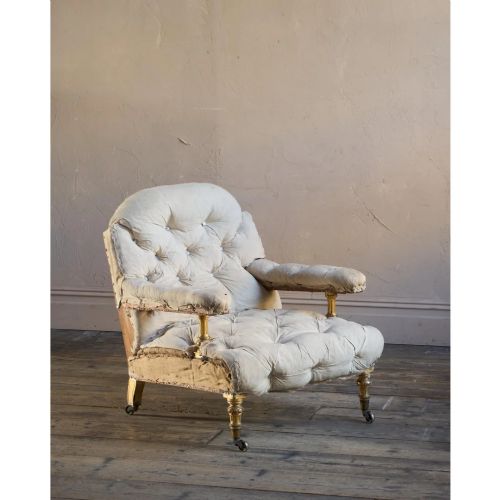
Upholstery involved hand-tying springs into the seat base and stuffing the backs with horsehair or wool before securing the outer layer with deep tufting buttons. This meticulous tensioning created the characteristic diamond pattern across the leather or fabric backrest.
What varies in quality
The distinction between standard examples and exceptional pieces rests upon the integrity of the frame construction and the depth of the maker's handiwork. Finer chairs exhibit tighter buttoning, superior leather patination and sturdy hardwood frames that show no structural slack over time.
Attribution plays a major role in the standing of a piece, with signed or stamped works by notable makers commanding greater attention from collectors. The finesse of the carved mahogany legs and the symmetry of the tufted pleats further separate ordinary workshop output from master craftsmanship.
Howard and Sons·Shoolbred
The Traditional Tufted Chair Glossary
- Button back
- A style of upholstery where buttons are pulled deep into the padding to form a geometric diamond pattern. This technique secures the internal stuffing while adding texture to the chair back.
- Wingback
- An armchair featuring protective side panels attached to the armrests, designed originally to shield the sitter from drafts. These wings often curve backward into the main upholstered body.
- Library chair
- A heavy, sturdy armchair upholstered in leather and built for prolonged reading or study in domestic libraries. They frequently incorporate padded armrests and deep seats.
- Chaise longue
- An elongated upholstered chair designed for reclining, combining the backrest of a chair with the seat of a daybed. Many Victorian examples feature carved mahogany frames.
Traditional Tufted Chair: Frequently Asked Questions
What is a traditional tufted chair?
A traditional tufted chair is an upholstered seat featuring deep buttoning that creates a gathered diamond pattern across the backrest. These pieces typically date from the nineteenth and early twentieth centuries.
They encompass various forms, including club chairs, library chairs and wing armchairs, built with wooden frames and leather or fabric coverings.
How were these chairs used historically?
These seating pieces served primarily as comfortable lounging furniture in drawing rooms, studies and country house libraries. Their generous padding and supportive backs made them ideal for reading or resting.
Larger wingback and club models provided warmth near fireplaces, while slipper chairs sat comfortably in bedrooms for daily dressing.
How do I identify a Victorian tufted chair?
Victorian tufted chairs often feature turned mahogany or oak frames, sometimes set upon brass castors for mobility. Their upholstery commonly utilises dark brown or tan leather with tight buttoning.
Examining the underside reveals period construction methods, such as hand-tied springs and traditional webbing, rather than modern staples.
How do I care for antique leather furniture?
Antique leather requires gentle cleaning with a soft, dry cloth to remove dust without stripping the natural surface. Applying specialised leather balms periodically helps maintain flexibility and prevents drying.
Keep these chairs away from direct sunlight and heat sources to preserve the original hide and prevent the tufting tension from warping.