
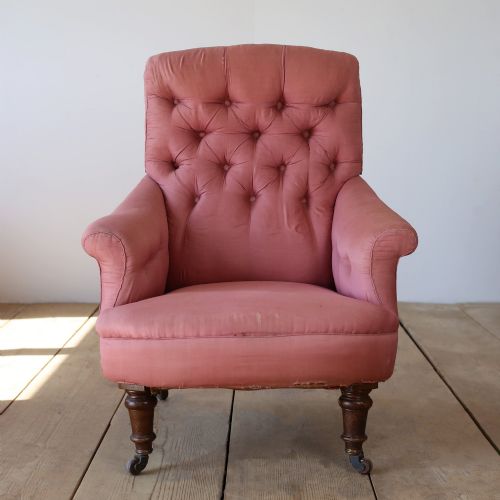
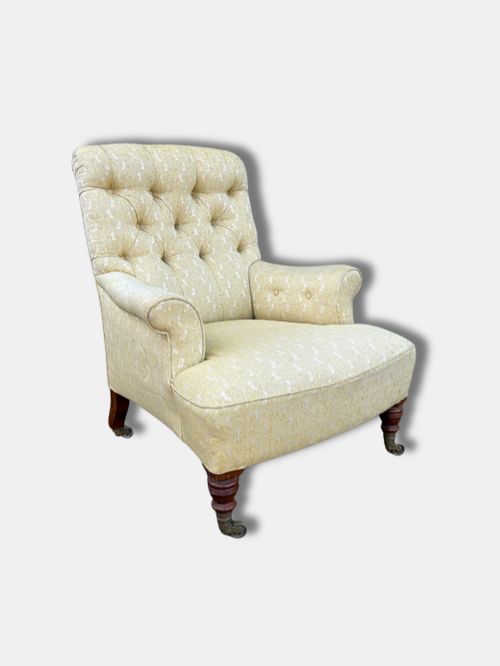
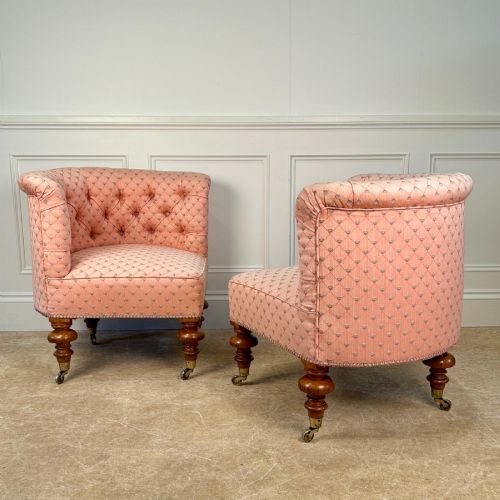
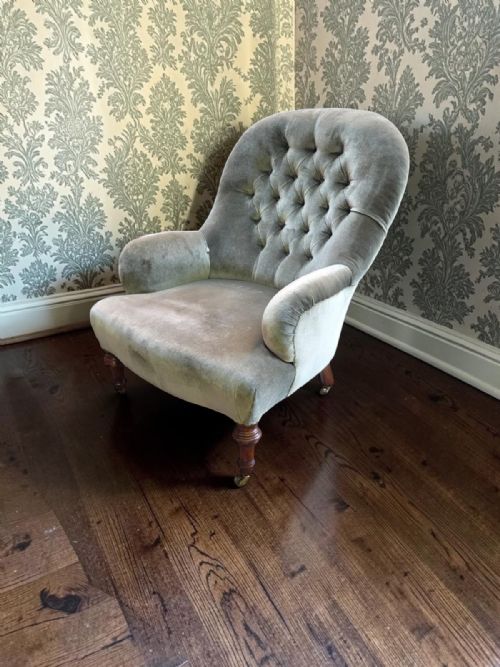
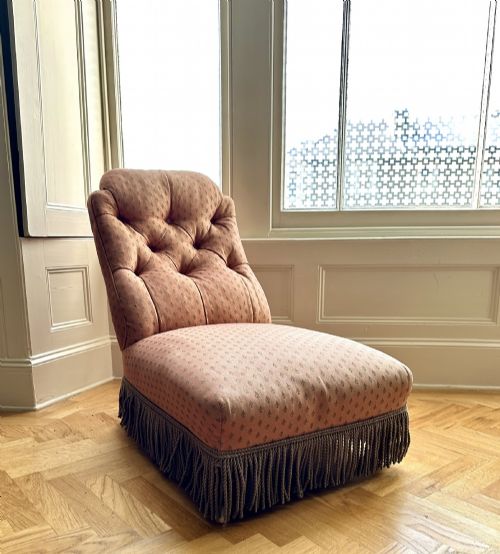


Tufted Low Accent Chair
A tufted low accent chair brings compact, button-backed comfort and period presence to a room.
Tufted Low Accent Chair
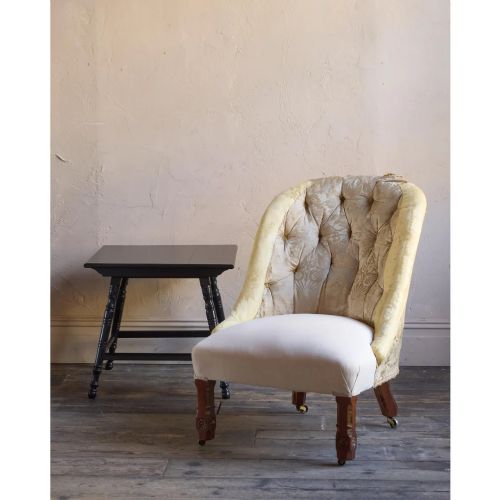
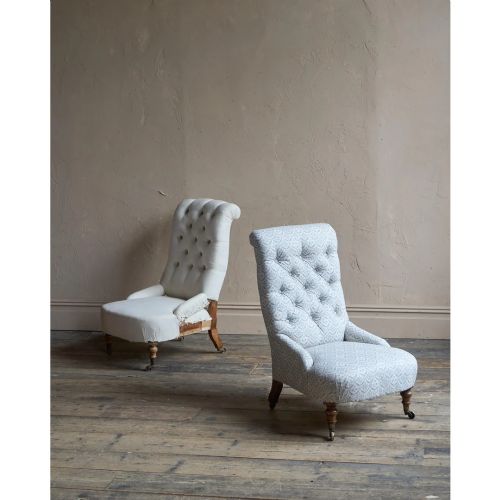
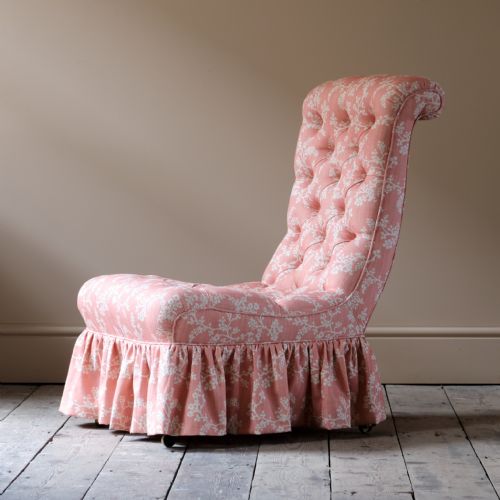
A tufted low accent chair encompasses nineteenth century seating designed for lower postures, drawing rooms and bedrooms. Buyers seeking a tufted low accent chair will frequently encounter Victorian and Edwardian examples including slipper chairs, nursing chairs and low rocking chairs.
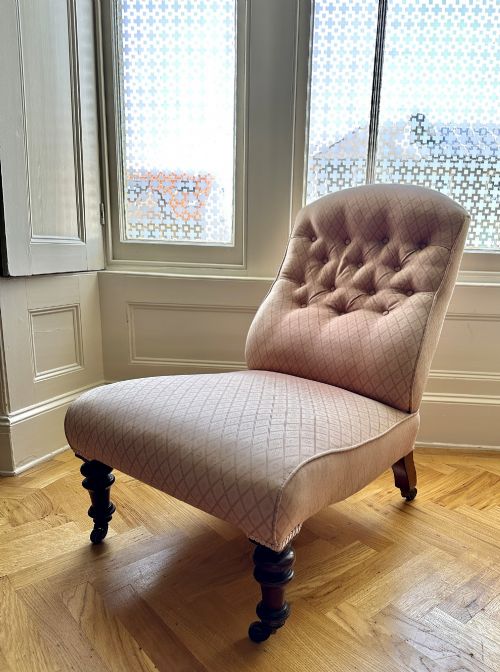
The form relies on a low centre of gravity, often featuring deep button upholstery, exposed wooden frames and short legs with castors. These pieces serve primarily as occasional or bedroom seating, combining decorative carved woodwork with generous padding.
Origins span English cabinet makers and French workshops, encompassing styles from Rococo Revival and William IV to Aesthetic and French Napoleon III designs. Most variations remain compact in scale while offering deep seats and scroll sides.
Materials and construction
Frames rely on timbers such as walnut, mahogany, oak, rosewood and timber, often shaped with carved details or finished with ebonised and gilt treatments. Brass components frequently appear on castors supporting the legs.
Upholstery employs traditional stuffing beneath fabric, velvet, linen, ivory or orange upholstery, secured with deep buttoning and sometimes finished with fringe or ceramic elements.
Low chairs provided nineteenth century ladies a polite refuge from the tyranny of heavy skirts and tight dressing routines.
Judging quality in low seating
Quality rests in the integrity of the timber frame, the crispness of carved rosewood, walnut or mahogany details, and the precision of the button upholstery. Superior pieces maintain robust structural frames beneath the fabric without excessive timber replacement.
Maker attribution elevates desirability, particularly pieces bearing stamps or signatures from noted workshops like Howard and Sons or Gillows. The balance between the carved woodwork and the depth of the sprung seat dictates the overall refinement.
Howard and Sons·Gillows
The Tufted Low Accent Chair Glossary
- Slipper chair
- A low-seated upholstered chair originally designed for bedrooms, allowing ladies to sit comfortably while dressing. It lacks arms to accommodate voluminous nineteenth century skirts.
- Button back
- An upholstery technique where buttons are pulled deep into the padding at regular intervals to create a quilted, patterned diamond effect. This secures the internal stuffing and shapes the profile.
- Prie Dieu chair
- A devotional chair with a high, narrow back often topped by a small shelf, designed for kneeling in prayer. It shares the low proportions and upholstered comfort of Victorian bedroom seating.
- Castor
- A small wheel fitted to the base of furniture legs to aid movement. Nineteenth century examples frequently combine brass fittings with ceramic wheels.
Tufted Low Accent Chair: Frequently Asked Questions
Where should I place a low accent chair?
These compact seats suit bedrooms, dressing rooms and drawing rooms where standard armchairs might overwhelm the floor plan. Their low stature makes them ideal for secondary seating areas or corners.
Because they sit close to the floor, they pair well with low dressing tables or act as decorative occasional pieces against bedroom walls.
How do I date a Victorian button back chair?
Dating relies on timber choices, frame styles and upholstery techniques recorded across the nineteenth century. Walnut and rosewood frames often point toward mid century production, whilst Edwardian examples show lighter proportions.
Examining the turning on the legs and any maker marks helps narrow the decade of manufacture between eighteen fifty and nineteen hundred.
What is the difference between a slipper chair and a nursing chair?
Slipper chairs typically feature armless designs with deep seats intended originally for dressing rooms. Nursing chairs share the low profile but often include a higher, supportive buttoned back suited for holding children.
Both categories utilise nineteenth century button upholstery and low wooden frames, though nursing chairs more frequently display carved walnut or mahogany show-wood.
Can these chairs be used daily?
Historic frames constructed from solid mahogany, walnut and oak remain sturdy for regular sitting when the internal webbing and padding are sound. Many survive in robust condition thanks to nineteenth century joinery methods.
Buyers should ensure the upholstered springs and frame joints have been properly maintained if the seat is intended for frequent daily use.