
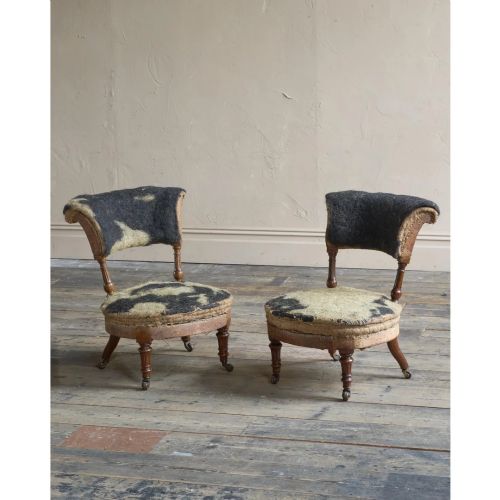
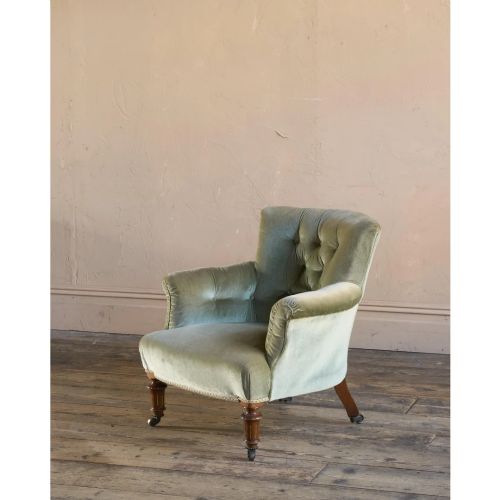
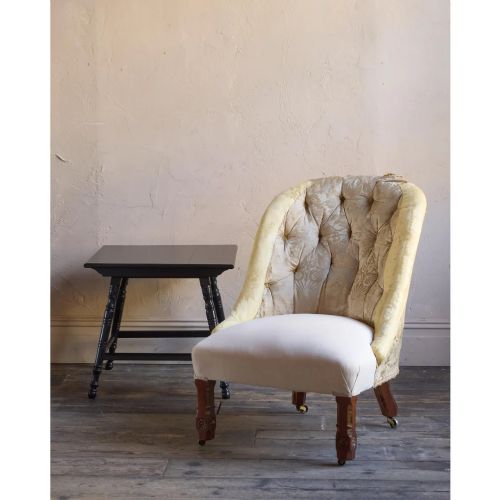
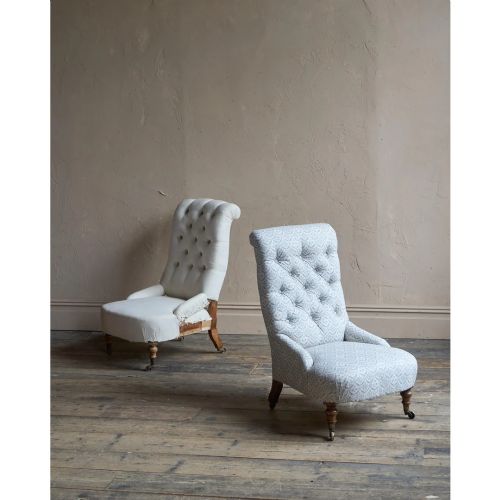
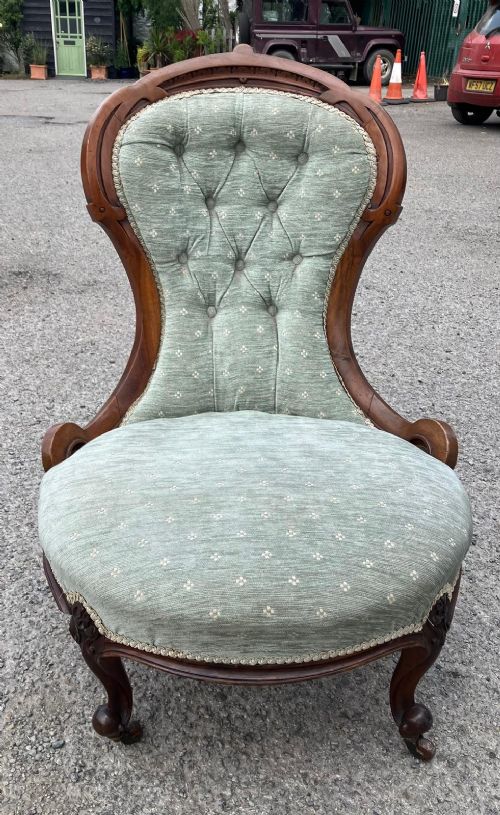
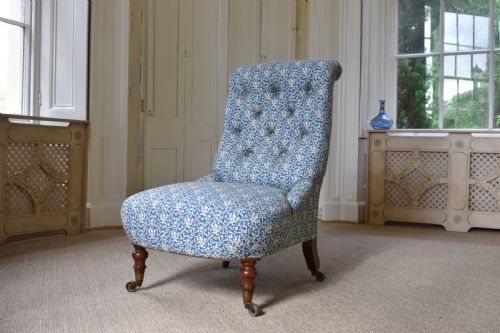
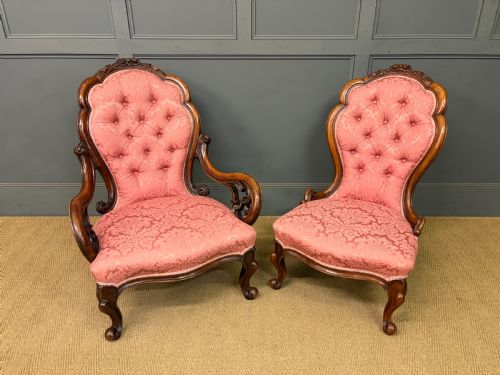
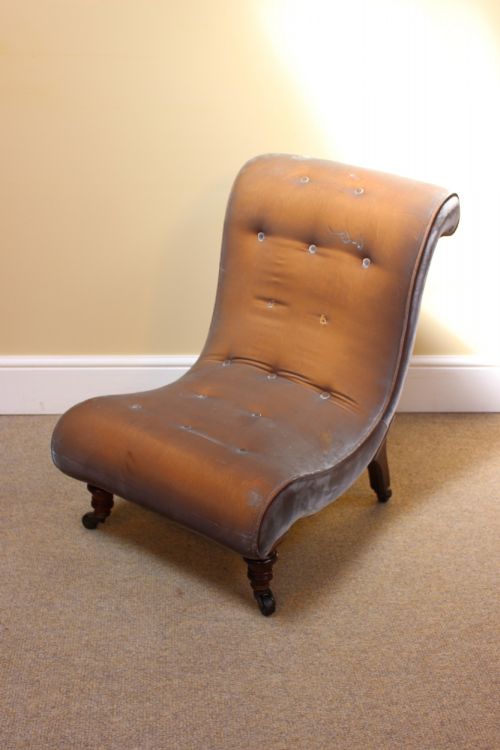
Button Backed Slipper Chair
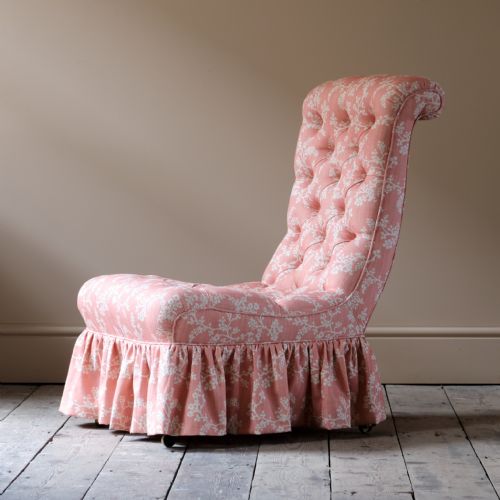
A button backed slipper chair brings low-slung nineteenth-century comfort to a bedroom or parlour, offering deep upholstery and characteristic padded buttons.
Button Backed Slipper Chair
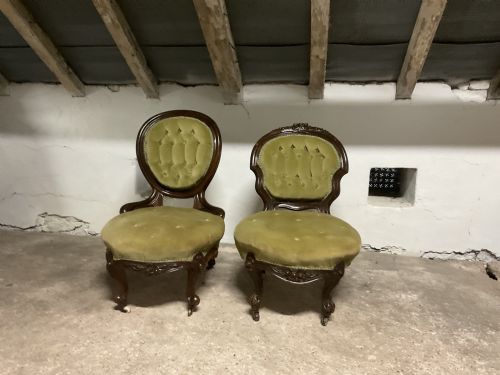
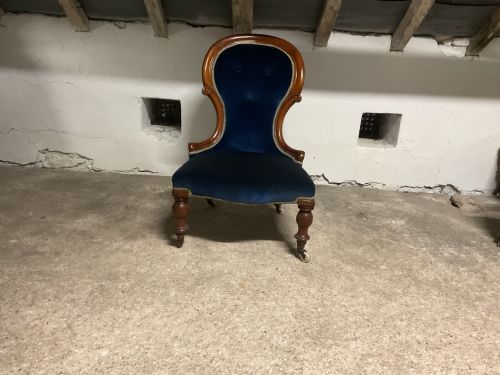
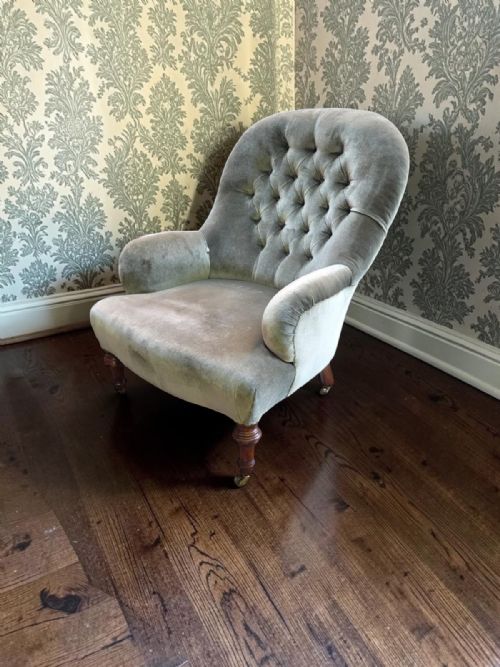
A button backed slipper chair sits low to the floor, designed originally for dressing rooms and bedrooms during the nineteenth century. These low-slung seats appear across Victorian and Edwardian periods, frequently noted as nursing chairs, bedroom chairs, or occasional chairs.
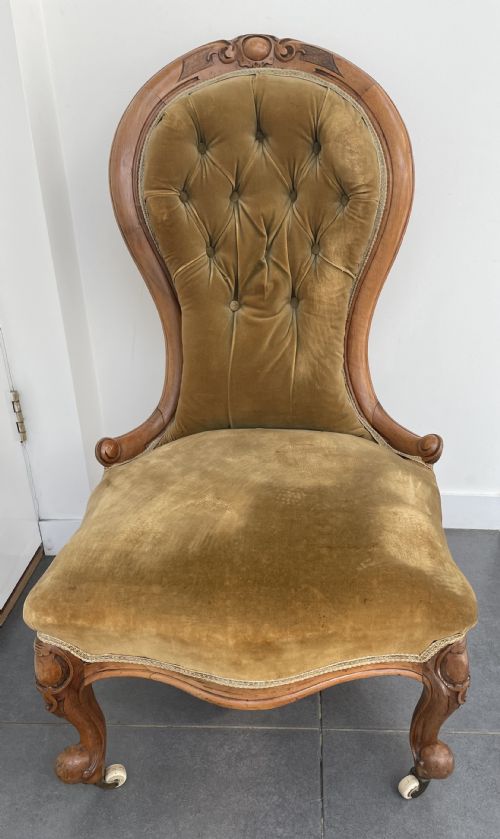
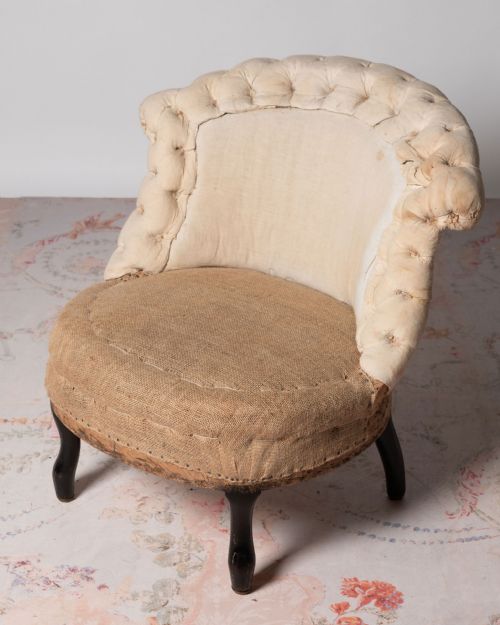
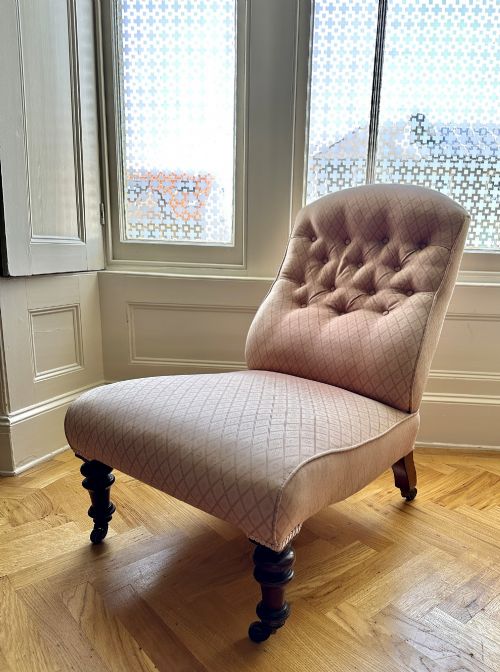
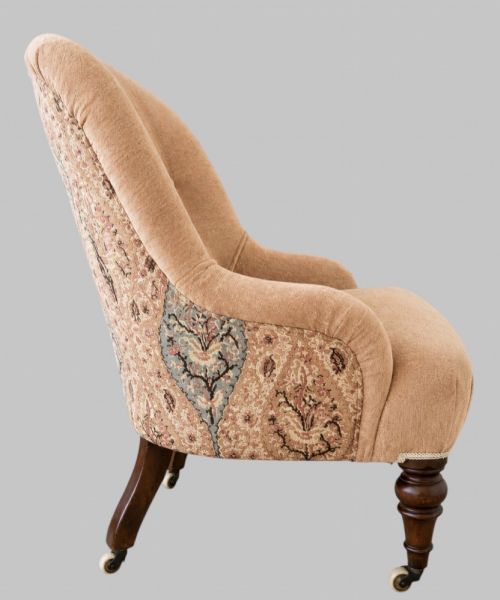
The form relies on a low seat height paired with an upholstered backrest featuring tufted buttons. Walnut and mahogany frame the majority of examples, often supported on wooden legs or brass castors.
Materials and construction methods
Makers shaped frames from solid hardwoods like walnut, mahogany, and timber, sometimes applying ebonised, gilt, or carved finishes. Iron framework appears in specific iron-back variations.
Upholstery relies on fabric, velvet, and leather, secured with deep button tufting and occasionally finished with decorative fringe.
Some diminutive Victorian chairs were built specifically for nurseries, offering children their own miniature button-backed comfort.
Distinctions in quality
Quality rests in the sculptural integrity of the timber frame and the precision of the button upholstery. Superior examples display refined carving to walnut or mahogany structures and robust internal webbing.
Attribution to notable makers elevates an individual piece, alongside the preservation of original upholstery fabrics and structural integrity.
Gillows·Howard and Sons·Holland and Sons·Robert Kime
The Button Backed Slipper Chair Glossary
- Button back
- An upholstery technique where indentations are formed by pulling stitches through padding to secure buttons in a geometric pattern. This method creates the characteristic tufted appearance found on Victorian seating.
- Slipper chair
- An armchair or bedroom chair built low to the ground without arms, originally designed for ladies to sit while putting on shoes. The low profile remains a defining characteristic.
- Nursing chair
- A low-seated nineteenth-century chair intended for feeding infants or general bedroom use. These pieces often share forms with slipper and bedroom chairs.
- Castor
- A small wheel attached to the base of furniture legs to aid movement. Brass castors frequently appear on nineteenth-century upholstered seating.
Button Backed Slipper Chair: Frequently Asked Questions
What is a button backed slipper chair?
A button backed slipper chair is a low-seated nineteenth-century chair featuring a tufted upholstered backrest. These pieces were historically used in bedrooms and dressing rooms.
The low frame allows for comfortable seating close to the floor, distinguishing them from standard parlour armchairs.
How do I date a slipper chair?
Dating relies on timber choices, leg styles, and framing techniques recorded across the Victorian and Edwardian eras. Walnut and mahogany frames with brass castors typically point to mid-nineteenth-century manufacture.
Later Edwardian examples introduce modified carving styles while retaining the traditional low profile and buttoned upholstery.
Where were slipper chairs used?
These seats served primarily private spaces such as bedrooms, dressing rooms, and nurseries. Their compact proportions made them suitable for smaller domestic rooms.
Today, they function effectively as accent or occasional seating in modern living spaces.
Are these chairs comfortable for daily use?
The deep upholstery and angled backrests provide supportive seating despite the low profile. Many historical examples were built with generous proportions for relaxed lounging.
Modern placement often involves pairing them with low tables or placing them in corners as decorative accent pieces.