



Pink French Porcelain Figurines
Pink french porcelain figurines bring romantic charm to a room, combining delicate nineteenth-century modelling with soft glazed colour.
Pink French Porcelain Figurines
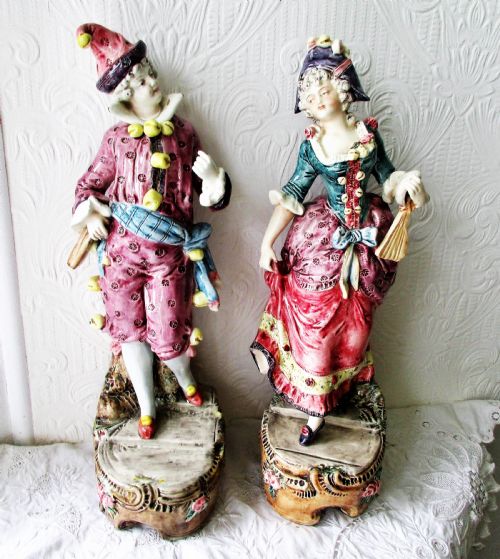
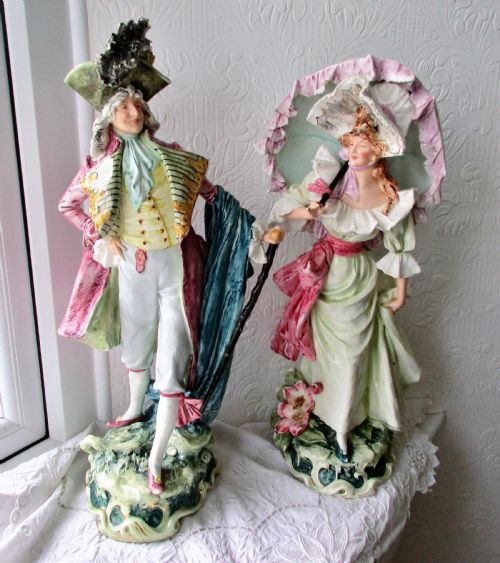
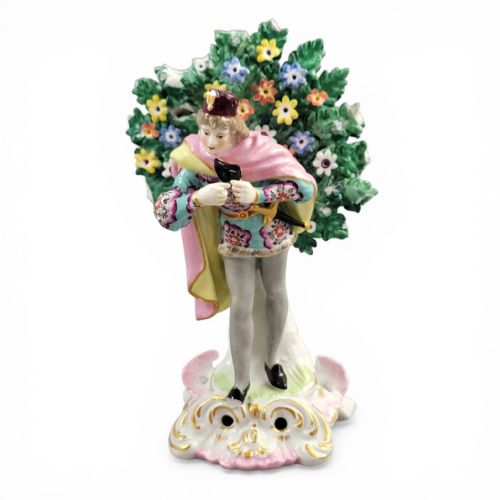
When you search for pink french porcelain figurines, you encounter decorative figures and lamps spanning the nineteenth century, including the Victorian era and vintage twentieth-century pieces. These items take the form of individual figures, pairs of gallants and ladies, or musicians with harps.
The most common examples on this page are nineteenth-century biscuit porcelain and glazed figures influenced by French Rococo styles. Makers such as Bourdois and Bloch and Samson produced these decorative works, alongside pieces in the manner of Vion et Baury and Chantilly.
How they were made
The makers of these pink french porcelain figurines utilised porcelain, earthenware, and faience, shaping them into detailed sculptural forms. Many examples feature delicate enamel colours, glossy glaze, or matte biscuit finishes.
Higher-end pieces incorporate hand-applied gold leaf, gilding, and mounts of gilt bronze to highlight the ornate Victorian and Rococo Revival styling.
The listings on this site feature nineteenth-century and Victorian periods, with materials ranging from porcelain and biscuit to gilt bronze and faience.
What varies in quality
Quality in these figures rests upon the crispness of the modelling and the finesse of the hand-painted details. Finer examples display subtle facial expressions and carefully rendered garments, whereas simpler pieces lack this sculptural depth.
The use of secondary materials also dictates value. Figures enhanced with genuine gilt bronze mounts or intricate porcelain lace represent a higher standard of workshop production than plain earthenware.
Bourdois and Bloch·Edmé Samson·Vion et Baury·Chantilly
The Pink French Porcelain Figurines Glossary
- Biscuit porcelain
- Unglazed porcelain fired to a matte, tactile finish that resembles marble. It was widely utilised in the nineteenth century for figures.
- Faience
- Tin-glazed earthenware produced across France. It offers an opaque, smooth surface for hand-painted decoration.
- Gilt bronze
- Bronze coated with a layer of gold. It appears on nineteenth-century pieces as decorative mounts and lamp bases.
- Rococo Revival
- A nineteenth-century design style reviving the asymmetrical curves and ornate scrollwork of the eighteenth century. Figures in this taste feature flowing drapery and romantic poses.
Pink French Porcelain Figurines: Frequently Asked Questions
What are pink french porcelain figurines?
These decorative works are nineteenth-century and vintage sculptural pieces depicting human figures, actors, and romantic couples. They are modelled in porcelain, earthenware, and faience.
Many reflect French Rococo revival tastes, featuring soft pink tones, delicate glazes, and ornate detailing suited to period interiors.
How were they used?
Historically, these figures served as decorative ornaments on mantelpieces, side tables, and cabinets in grand drawing rooms. They were designed purely for visual display.
Some later nineteenth-century examples were subsequently adapted into functional table lamps, combining sculpture with domestic lighting.
How do I style them at home?
Place these figurines on a wooden mantelpiece, side table, or within a glass-fronted cabinet where their fine details can be appreciated up close. Their soft pink colourways pair well with neutral tones and traditional interiors.
Keep them away from direct sunlight and busy backgrounds so the delicate modelling remains the focal point.
How can I tell periods apart?
Nineteenth-century pieces often rely on crisp biscuit porcelain, hand-applied enamel, and gilt bronze mounts characteristic of Victorian and Rococo revival workshops. Maker marks or stamps can also indicate this period.
Twentieth-century examples, such as vintage earthenware carnival figures, tend to display simpler glazes and heavier bodies without nineteenth-century fineness.