




Antique Porcelain Couples
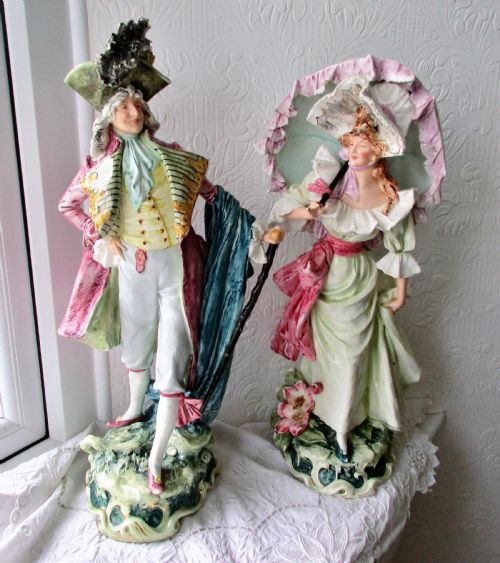
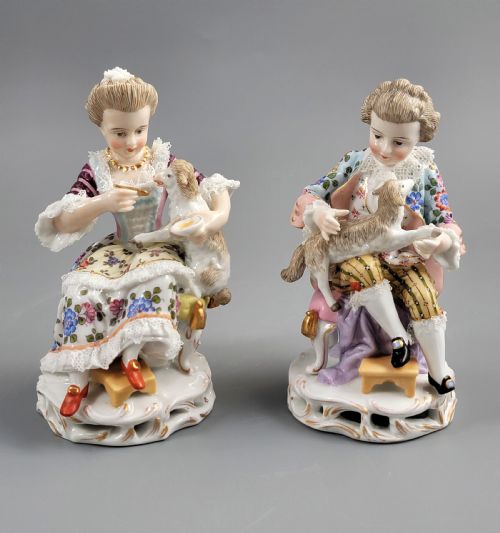
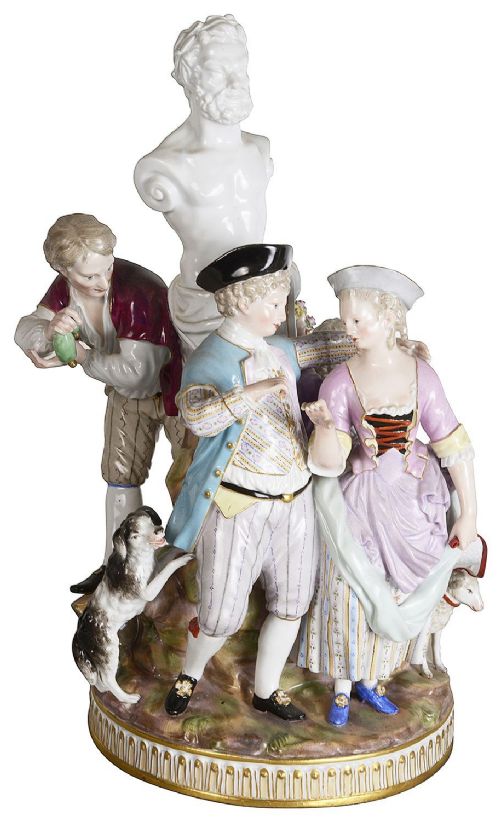
These antique porcelain couples bring romantic figures and pastoral pairs from the nineteenth century into the room, cast in hard-paste or biscuit porcelain.
Antique Porcelain Couples
When you search for antique porcelain couples, you look at pairs of figures, groups, and spill vases depicting romantic partners, gallants, harvesters, musicians, and shepherdesses. These ornamental objects were modelled to sit on mantelpieces, consoles, and parlour tables.
You are most likely to meet nineteenth-century continental examples on this page, including German factory work from Meissen, Sitzendorf, and Volkstedt, alongside French biscuit figures and English Staffordshire pottery pairs.
How they were made
Potters shaped these figures using hard-paste porcelain, earthenware, or unglazed biscuit porcelain, often applying delicate lace details, enamel painting, and gold leaf highlights. Many continental pieces relied on complex moulding techniques before undergoing high-temperature firing in kilns.
Pastoral musicians and harvesters stand frozen mid-tune, immortalised in lace and glaze after centuries of parlour gossip.
What varies in quality
Quality rests upon the crispness of the initial moulding and the finesse of the hand-painting on faces and fingers. Finer pairs display sharply defined facial expressions, delicate lace work, and meticulous detail in costumes, whereas lesser pieces show softer contours and hurried painting.
The prestige of the manufactory, such as Meissen or Chantilly, dictates the desirability of the piece. Preservation of fragile elements like applied porcelain flowers and musical instruments separates ordinary production from exceptional workshop output.
Bourdois & Bloch Paris·Letu & Mauger Paris·Volkstedt Porcelain·C. G. Schierholz·Vion et Baury·Sitzendorf Porcelain·Samson Porcelain·Meissen·Royal Capodimonte Factory·Carl Thieme Potschappel·Triebner Ens & Co·Minton
The Antique Porcelain Couples Glossary
- Biscuit porcelain
- Unglazed white porcelain fired to produce a matt surface that resembles carved marble. It gained popularity in the nineteenth century for figures.
- Hard-paste porcelain
- A durable ceramic composition fired at very high temperatures using kaolin and petuntse. It forms the basis of many continental European figures.
- Spill vase
- A hollow hollowed-out ceramic figure designed to hold taper spills for lighting pipes and candles. They appear frequently in English Staffordshire pottery.
- Faience
- Tin-glazed earthenware produced across Europe. It offers an opaque surface for painted decoration.
- Gold leaf
- Thin beaten gold applied to porcelain details and bases as an accent. It highlights Rococo scrolls and garment trims.
Antique Porcelain Couples: Frequently Asked Questions
How do I identify German porcelain figures?
Look for factory marks on the underside, such as crossed swords or stamped initials, alongside the characteristic vibrant enamel colours used by nineteenth-century Saxon and Thuringian workshops.
German pieces often depict pastoral subjects, musicians, and courtly couples modelled with distinct Rococo revival influence.
What is the difference between biscuit and glazed porcelain?
Biscuit porcelain remains unglazed after firing, offering a smooth, matt white finish that absorbs light like marble. Glazed porcelain receives a glassy coating that provides a shiny, impermeable surface.
Both finishes appear on nineteenth-century figures, with biscuit frequently chosen to highlight delicate facial expressions and garments.
How were spill vases used?
Spill vases served a practical household function beside decorative display by holding thin wood spills used to transfer fire from the hearth to candles and lamps.
Potters incorporated these tubes behind figures of couples and harvesters so the utilitarian object blended into the parlour decor.
Where were these figures displayed?
Victorian and nineteenth-century households placed these figures on mantelpieces, drawing-room tables, and mirrored console brackets where guests could admire them.
Pairs and groups were arranged symmetrically to anchor room displays and reflect the romantic tastes of the period.