



Pink Floral Watercolour Painting
These pink floral watercolour painting works bring quiet nineteenth and twentieth-century gardens indoors through delicate washes of pigment on paper.
Pink Floral Watercolour Painting
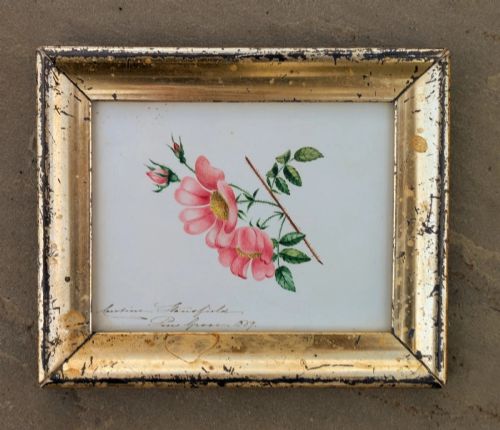
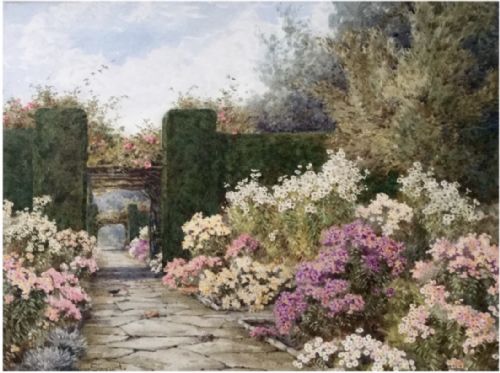
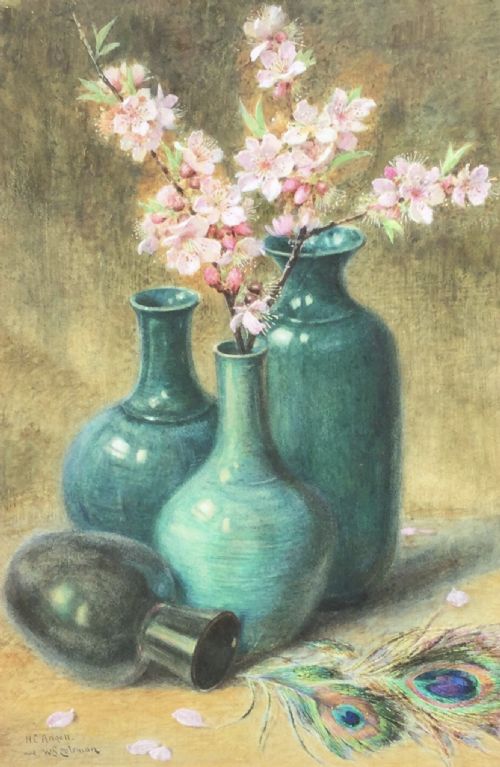
A pink floral watercolour painting captures botanical studies, garden scenes and still-life arrangements of roses, fuchsias and pelargoniums. These works span the Victorian, Edwardian and mid-century periods, capturing flowers with botanical precision or loose impressionist brushwork.
The versions most commonly found here are framed watercolours on paper, often presented behind glass in wood or gilt wood frames. Subjects range from simple single-stem studies to vibrant jugs of summer flowers set against domestic backdrops.
How they were made
Artists applied watercolour pigment and sometimes gouache directly onto paper surfaces, building translucent layers of colour to render delicate petal structures. These works rely on the natural luminosity of the paper shining through thin washes to create light and depth.
Finished paintings are typically housed in wooden frames, frequently finished in gilt, and protected beneath glass to prevent moisture and light damage to the fragile paper beneath.
The listings span the nineteenth century through to the mid-twentieth century, utilising paper, wood, glass and watercolour pigment.
What varies in quality
The distinction between standard and exceptional works rests on the confidence of the brushwork and the preservation of pigment vibrancy. Stronger examples display deft control over translucent washes, capturing accurate botanical detail without stiffness.
Paper condition and framing integrity also influence the overall standard of a piece. Works that retain their original colour without severe fading or foxing demonstrate superior longevity and care.
Lester Sutcliffe·Lilian Stannard·William Hough·Jabez Bligh·Owen Bowen·Charlotte Isa James·Marion Broom·Annie Mary Youngman·Edith Alice Andrews·Helen Cordelia Angell And Wiliam Stephen Coleman
The Pink Floral Watercolour Painting Glossary
- Watercolour pigment
- Finely ground colour particles mixed with a water-soluble binder. This medium allows artists to achieve delicate transparency and soft tonal transitions.
- Gouache
- An opaque water-based paint often used alongside watercolour to add solid highlights and dense colour areas. It provides a flat, matte finish.
- Botanical study
- A detailed painting focused on the accurate representation of plant anatomy. These works served scientific recording as well as decorative purposes.
- Still life
- An artwork depicting inanimate subject matter, typically commonplace objects like jugs and vases holding cut flowers. It emphasises arrangement and light.
- Gilt wood
- Wood coated with a thin layer of gold leaf or metallic paint. It frames many period artworks with a warm, reflective border.
Pink Floral Watercolour Painting: Frequently Asked Questions
How should I hang a watercolour painting?
Watercolours are sensitive to direct sunlight, which causes pigments to fade over time. Position them away from bright windows and damp walls.
Ensure the frame is securely hung from picture hooks rather than adhesive strips to protect the glass and wooden moulding.
Are these paintings original works?
The pieces listed are original hand-painted watercolours on paper rather than modern mass-produced prints. Each exhibits unique brushstrokes and pigment variations.
Artists applied their materials directly to the paper surface, making every composition a singular creation.
What frames are typical for these?
Period pieces frequently retain their original wood or gilt wood frames, which complement the Victorian and Edwardian aesthetics. These frames often include protective glass.
Replacing a period frame is rarely necessary unless the structure has suffered structural damage.
How do I identify a Victorian floral painting?
Victorian examples often combine meticulous botanical accuracy with romantic composition, frequently featuring roses, fuchsias or pelargoniums in decorative jugs. The paper and framing materials generally align with nineteenth-century manufacturing methods.
Signatures, framing styles and paper stamps offer additional clues to dating an individual piece.