






Edwardian Floral Watercolour Painting
These edwardian floral watercolour painting works capture garden scenes and botanical studies on paper, offering a charming glimpse into historic planting.
Edwardian Floral Watercolour Painting
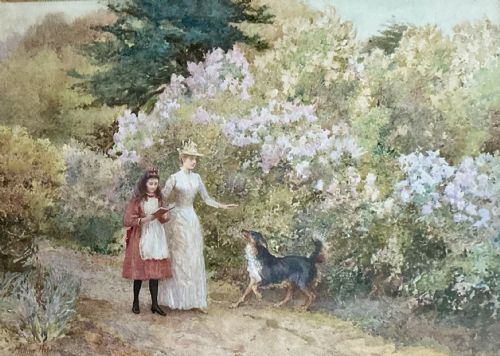
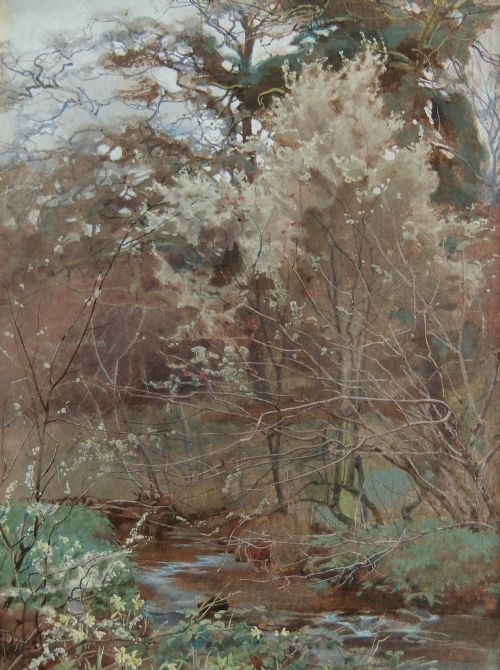
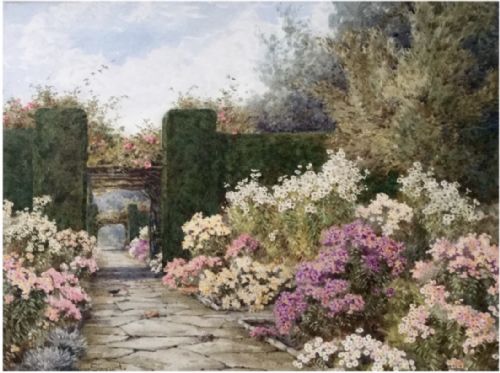
An edwardian floral watercolour painting typically depicts cottage gardens, country house grounds, or detailed botanical studies of seasonal blooms. You will frequently encounter works featuring walled gardens, spring crocuses, and still lifes of summer flowers.
The pieces on this page span the Edwardian era and surrounding decades, incorporating Victorian and British Impressionism styles. Formats focus on wall art paintings executed on paper support.
How they were made
Artists utilised watercolour pigment and watercolour paint applied directly onto paper to build delicate translucent washes and fine botanical details. Many examples are preserved behind glass and housed within wooden frames, sometimes accented with gilt.
The technique relies on the natural brightness of the paper shining through thin layers of pigment to render light in garden settings and interior still lifes.
Current listings span periods from the late Victorian era through the Edwardian years and into the 1930s.
What varies in quality
Quality in an edwardian floral watercolour painting rests on the sureness of the brushwork and the artist's ability to capture natural light and botanical structure. Stronger works display confident handling in complex garden foliage rather than stiff, overly rigid outlines.
Condition also plays a vital role, as works on paper are sensitive to light exposure and dampness over the decades. Well-preserved pigment retention and clean paper supports elevate a piece.
Arthur Hopkins·Theresa Stannard·Lester Sutcliffe·Lilian Stannard·Alfred W Parsons·David Woodlock·Alice Macallan Swan·Annie Mary Youngman·Edith Alice Andrews·Beatrice Parsons·George Frederick Nicholls·Arthur H Buckland·Minnie Smythe
The Edwardian Floral Watercolour Painting Glossary
- Watercolour pigment
- The finely ground coloured powder that forms the basis of the paint. It is mixed with a binder to adhere to the paper surface.
- Gilt
- A thin layer of gold or golden material applied to frames. It adds a decorative metallic finish to the wooden moulding.
- Still life
- A painting featuring inanimate subject matter, such as cut flowers in a vase. In these listings, subjects include anemones, polyanthus, and pelargoniums.
- Impressionism
- An artistic style focusing on light and its changing qualities rather than strict realism. British variations appear among these botanical and landscape works.
Edwardian Floral Watercolour Painting: Frequently Asked Questions
How should I hang an old watercolour?
Keep works on paper away from direct sunlight to prevent the watercolour pigments from fading over time. UV-filtering glass provides an extra layer of protection.
Ensure they are displayed in rooms with stable humidity levels to protect the paper and wooden frames from moisture damage.
Are these paintings original works?
Yes, the pieces listed are hand-painted works on paper created by individual artists rather than mass-produced prints. Each one employs direct brushwork with watercolour paint.
Signatures or inscriptions by artists such as Lilian Stannard or Beatrice Parsons often accompany the compositions.
What subjects do these paintings feature?
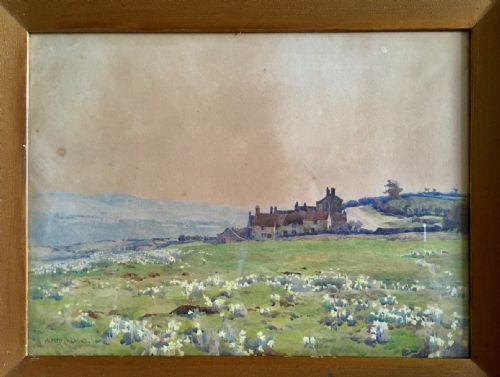
The primary subjects revolve around British gardens, including walled plots, cottage garden paths, and parkland scenes with spring crocuses. Floral still lifes featuring anemones and summer flowers also appear frequently.
Occasional landscape views incorporate country houses and rural settings alongside the predominant botanical focus.
How do I identify the period?
Dating relies on stylistic markers from the Edwardian and late Victorian eras, alongside dates recorded in titles or signatures. The clothing in figurative elements and garden designs offer further clues.
Framing materials and backing papers can also help confirm the age of the piece.