
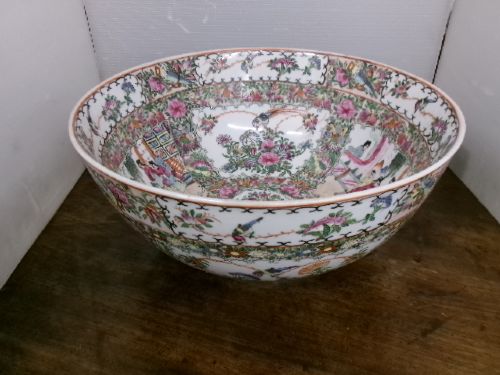
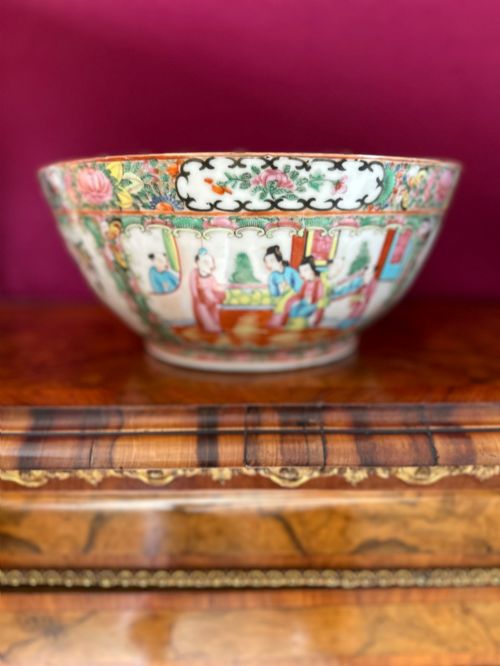
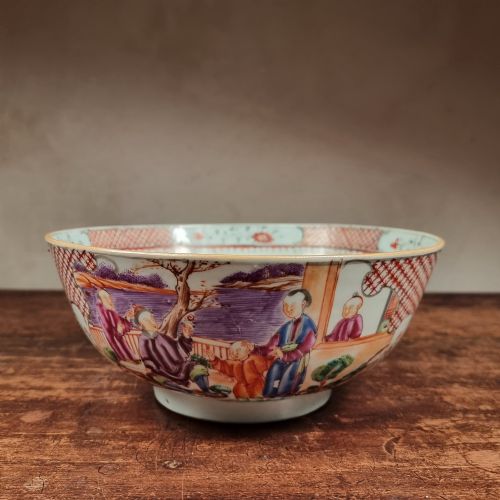


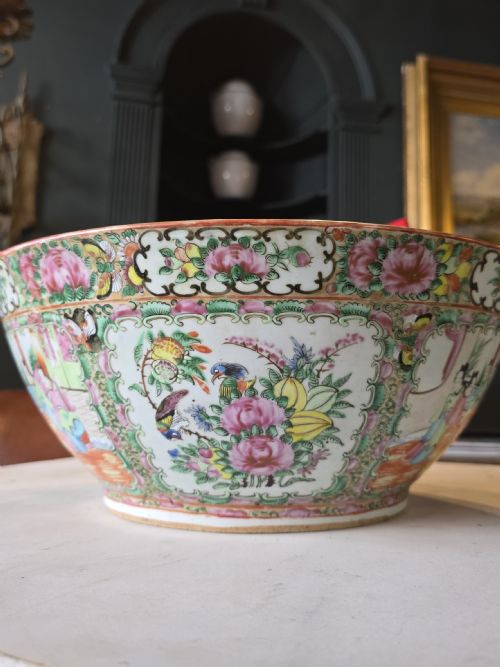


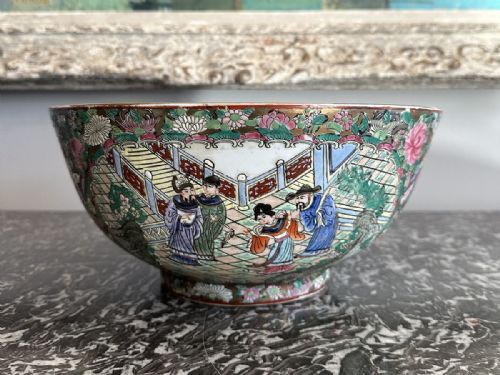
Pink Enamel Ceramic Bowl
A pink enamel ceramic bowl brings hand-painted colour and intricate historical detail straight to your table.
Pink Enamel Ceramic Bowl
A pink enamel ceramic bowl in this selection typically spans the eighteenth and nineteenth centuries, originating primarily from Chinese export kilns or European workshops. Buyers searching for a pink enamel ceramic bowl encounter pieces ranging from large punch bowls and jardinieres down to delicate tea bowls and saucers.
The dominant aesthetic draws heavily on Cantonese Famille Rose and Rose Medallion traditions, alongside eighteenth-century French Limoges pieces and Samson of Paris armorial designs. These items serve as striking decorative vessels, central table displays, or additions to established porcelain collections.
Materials and technique
These vessels utilise porcelain bases decorated with overglaze enamel pigments, often integrating gold leaf and gilding to highlight intricate hand-painted motifs. Copper and brass appear in auxiliary forms or associated mounts, while the ceramic body itself provides a smooth, white canvas for vibrant pink tones.
Artisans applied pigments by hand, executing complex scenes featuring Mandarin palettes, figural acrobatics, or floral motifs before firing the pieces to fix the enamel decoration to the porcelain surface.
Listings feature porcelain pieces spanning the eighteenth and nineteenth centuries, incorporating Chinese Export, Qing Dynasty, and Victorian periods.
Judging quality
Quality rests upon the precision and complexity of the hand-painted brushwork, distinguishing standard decorative wares from exceptional artistic output. Finer examples display crisp detail in multi-figural scenes and controlled application of overglaze enamel and gold leaf.
The depth and preservation of the palette, the symmetry of the porcelain body, and the historical integrity of the specific period decoration further separate the finest pieces from simpler utilitarian wares.
Samson Of Paris
The Pink Enamel Ceramic Bowl Glossary
- Famille Rose
- A major palette of Chinese ceramic glazes introduced in the eighteenth century, distinguished by its predominant use of opaque pink or rose enamel. This colour scheme allowed for subtle tonal gradations in floral and figural depictions.
- Mandarin Pallet
- A style of Chinese export porcelain decoration characterised by detailed panels depicting figures in domestic or courtly settings. These scenes are typically surrounded by dense floral and geometric borders.
- Overglaze Enamel
- A technique where coloured pigments are painted onto a previously fired and glazed ceramic surface, then fixed in a second, lower-temperature kiln firing. This method preserves bright surface colours like pink.
- Rose Medallion
- A specific nineteenth-century Chinese export pattern featuring alternating panels of birds, flowers, and figures arranged around a central medallion. The design is heavily worked in pink enamel and gilt.
- Armorial
- A style of decoration featuring family crests, coats of arms, or heraldic shields painted onto porcelain. European families frequently commissioned these pieces from Chinese export kilns.
Pink Enamel Ceramic Bowl: Frequently Asked Questions
How are these bowls dated?
Dating relies on stylistic markers, palette characteristics, and manufacturing traits associated with specific periods like the eighteenth or nineteenth century. Examining the hand-painted motifs and baseline ceramic body helps determine the era of production.
Changes in export regulations and stylistic shifts between Qianlong, Daoguang, and Victorian eras provide further chronological anchors for each individual vessel.
Were these bowls used for food?
Many larger vessels functioned as punch bowls for communal dining and entertaining in past centuries, while smaller pieces served as tea bowls and salt cellars. Overglaze enamels meant they handled liquid service alongside dry provisions.
Today, collectors generally treat them as decorative display items rather than routine tableware to preserve the delicate overglaze enamels and gilding.
How do I care for my bowl?
Gentle dusting with a soft, dry cloth is sufficient for routine maintenance of antique porcelain and enamel surfaces. Avoid harsh chemical cleaners, soaking, and modern dishwashers entirely.
Keep pieces away from direct, harsh sunlight to prevent any fading of the hand-painted pink enamels and gold leaf highlights over time.
What is Chinese export porcelain?
Chinese export porcelain refers to wares manufactured in China specifically for the European and American markets from the Ming dynasty onwards. These items often combined traditional Chinese forms and techniques with Western decorative preferences.
Armorial designs and specific rose medallion patterns were directly commissioned by foreign buyers through trading ports like Canton.