
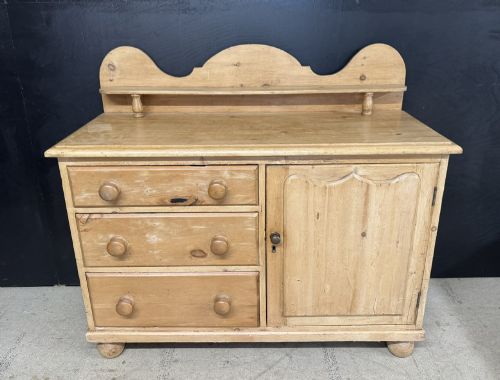
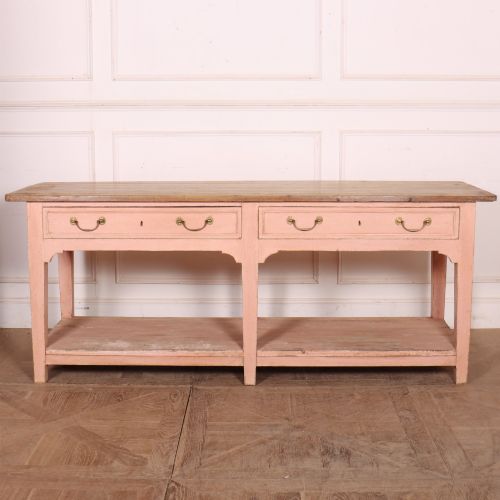
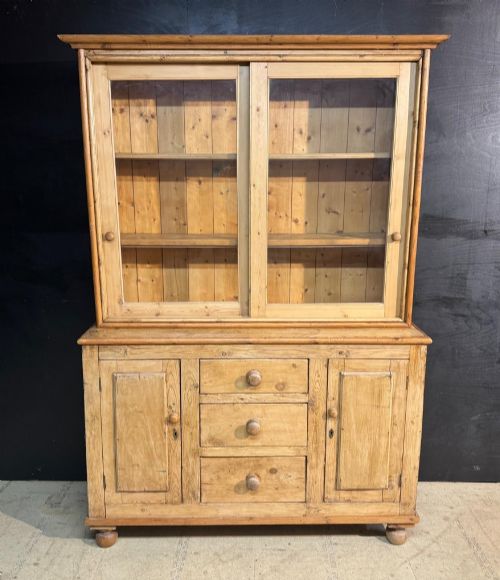
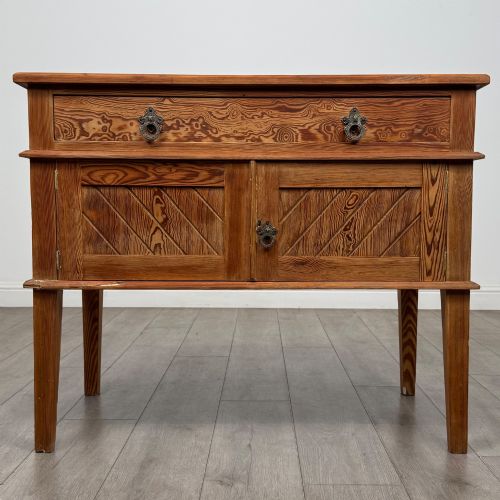
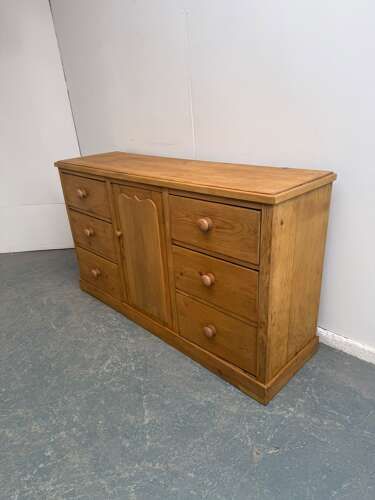
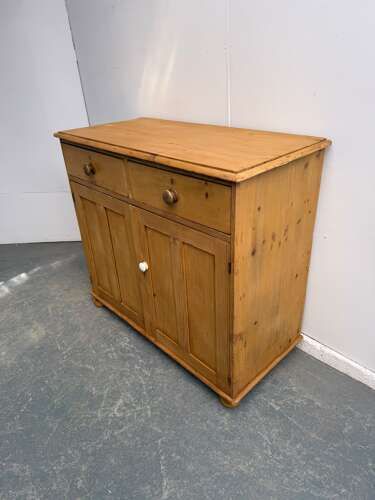
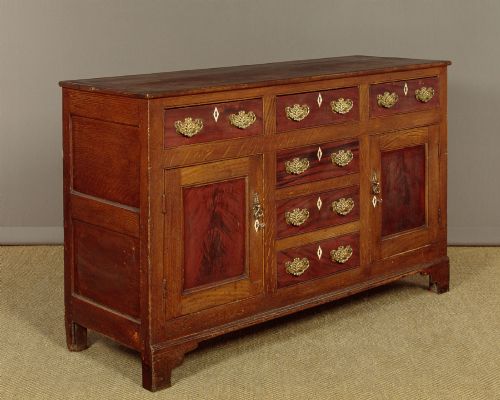
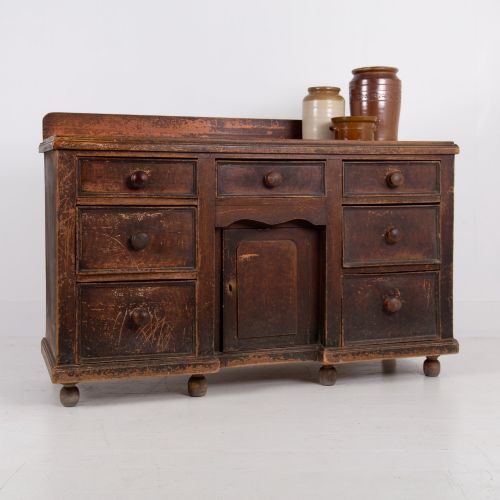
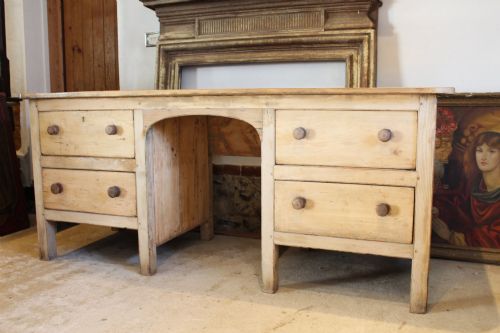

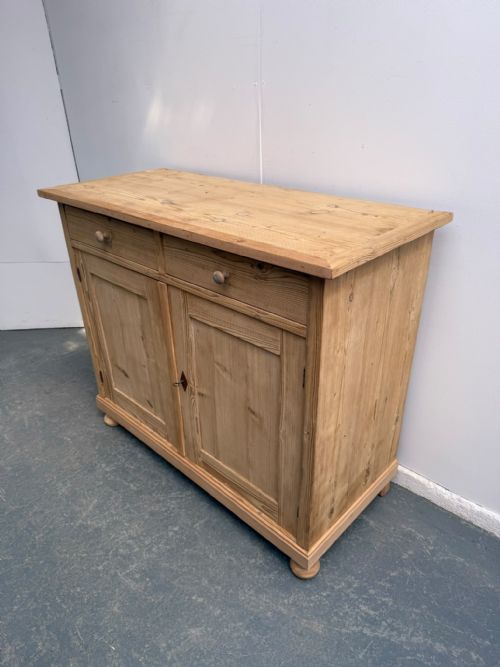
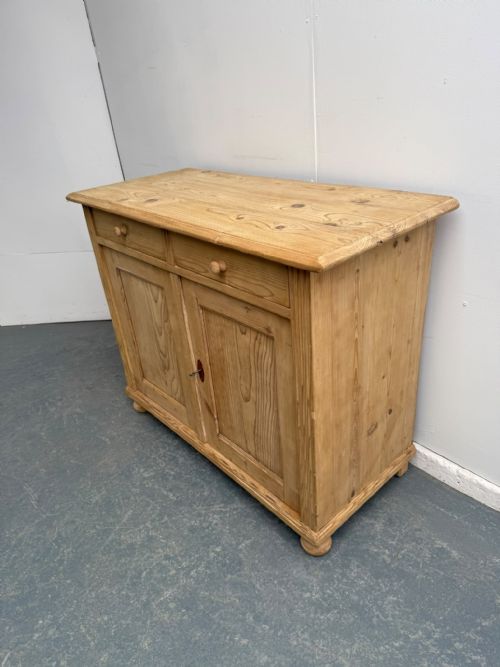
Pine Sideboard Base
A pine sideboard base provides sturdy, utilitarian storage with an honest country character that suits both traditional and modern interiors.
Pine Sideboard Base
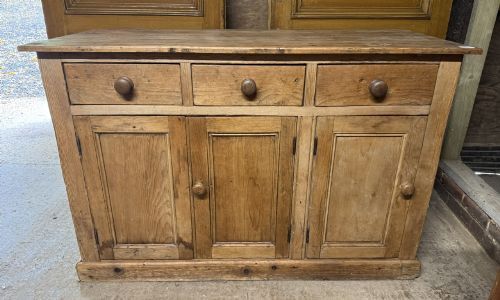
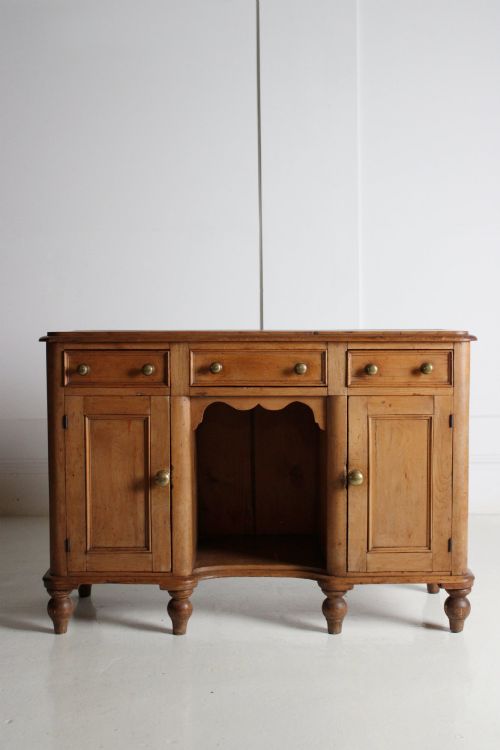
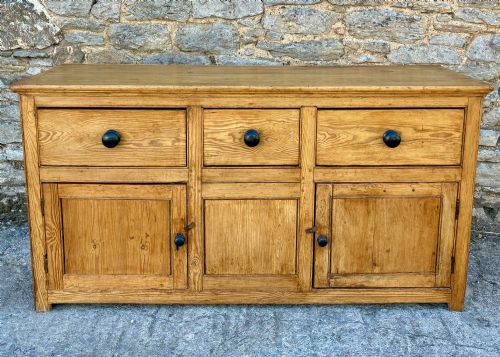
A pine sideboard base is a heavy, functional storage unit designed primarily for domestic workrooms, kitchens, and pantries. These items frequently take the form of dresser bases, low cupboards, potboard units, and chiffoniers derived from domestic service spaces.
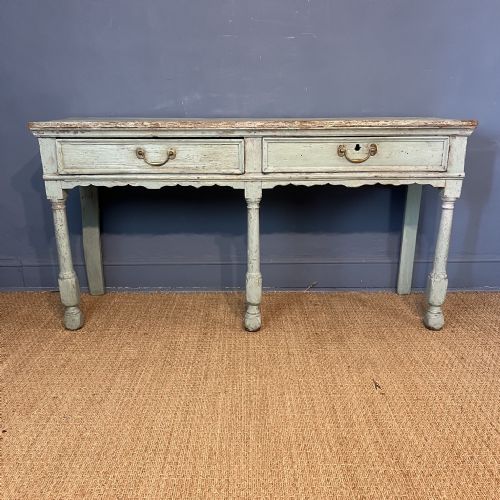
Most examples found here date from the nineteenth and eighteenth centuries, reflecting vernacular traditions across English, Welsh, Scottish, and continental workshops. They range from simple waxed timber to robust items retaining their original coats of paint.
Buyers choose a pine sideboard base for its deep proportions, which offer substantial drawer and cupboard capacity while anchoring a room with historic utility. The typical survivor combines practical daily service with unpretentious rural craftsmanship.
How they were made
Makers built these pieces predominantly from solid pine, occasionally employing pitch pine for durability or incorporating secondary hardwoods like sycamore for specific structural elements. Surfaces were either left plain for natural waxing or finished in oil-based paints that frequently survive in patinated layers.
Construction relied on traditional joinery methods suited to heavy utility, pairing panelled doors and robust drawer boxes with iron or brass hardware. Potboard variants added lower open shelves supported by stout stretchers to hold heavy kitchen ceramics.
Listings feature eighteenth and nineteenth-century examples alongside Victorian and Edwardian variations in painted wood, pitch pine, and brass.
What varies in quality
Quality rests on the integrity of the original construction and the survival of authentic surface finishes, whether mellow wax or period paint. Pieces retaining their initial backboards, drawers, and working hardware command higher regard among collectors.
Proportion and scale also distinguish standard utilitarian workshop pieces from finer country house examples that display more thoughtful detailing, such as carved decoration or balanced symmetry in the door and drawer arrangements.
The Pine Sideboard Base Glossary
- Potboard dresser base
- A low storage unit featuring an open lower shelf, known as a potboard, designed to hold heavy kitchen crockery and vessels off the floor.
- Dog kennel dresser base
- A specialised regional form featuring a central open compartment flanked by banks of drawers or cupboards, historically utilised for utility storage.
- Pitch pine
- A dense, resinous softwood derived from pine species that provides exceptional durability and a pronounced grain pattern.
- Chiffonier
- A compact sideboard or low cabinet equipped with drawers and lower doors, frequently produced during the Victorian period for smaller domestic spaces.
- Waxed finish
- A traditional surface treatment applied to bare timber to nourish the wood and produce a soft, protective sheen over decades of handling.
Pine Sideboard Base: Frequently Asked Questions
How were pine sideboard bases originally used?
These pieces served as heavy-duty work surfaces and storage hubs in domestic kitchens, farmhouses, and service rooms. They held heavy cookware, serving dishes, and daily provisions.
Over time, many transitioned from utilitarian workspaces into display and storage furniture for dining areas and living spaces.
What is the difference between painted and waxed finishes?
Waxed surfaces highlight the natural grain and warmth of the pine timber through repeated applications of traditional wax polishes. Painted examples retain historical colour layers, ranging from simple country hues to decorative floral schemes.
Both finishes reflect different regional traditions and domestic preferences across the eighteenth and nineteenth centuries.
How can I tell an eighteenth-century base from a Victorian one?
Earlier eighteenth-century pieces, including Georgian examples, often display hand-planed surfaces, pegged joinery, and distinct regional construction traits. Victorian items typically feature standardised hardware, machine-sawn components, and heavier proportions.
Examining the internal drawer construction and timber ageing helps clarify the likely period of manufacture.
Are these pieces suitable for modern kitchens?
Their deep proportions and sturdy tops make them ideal as freestanding kitchen islands, sideboards, or storage buffets. They offer substantial interior capacity for modern tableware while introducing historic character.
Many buyers choose to place them in open-plan living spaces to anchor contemporary interiors with traditional craftsmanship.