
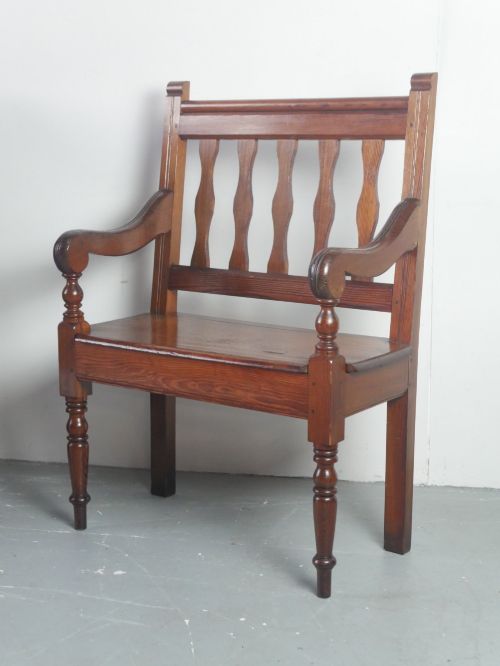
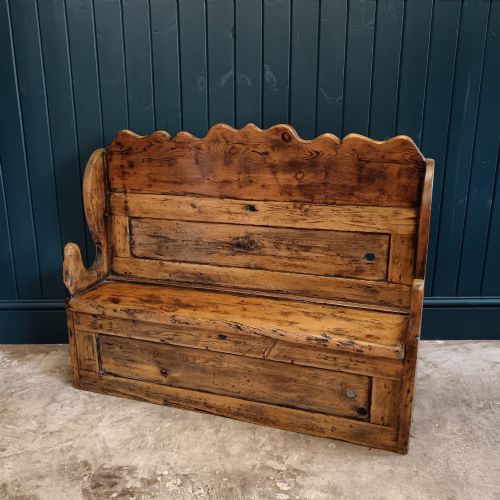

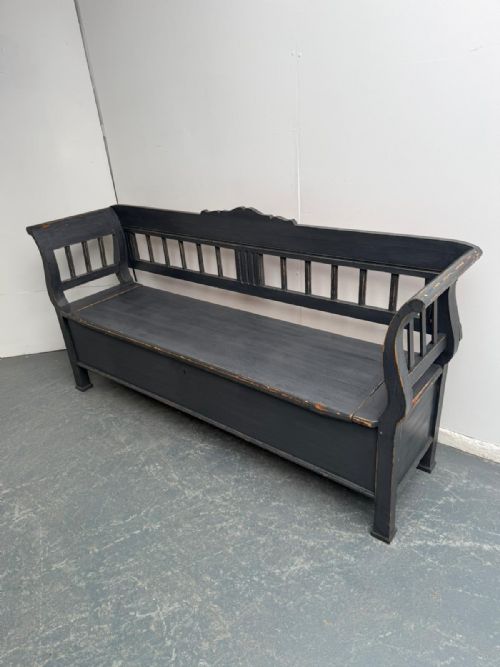

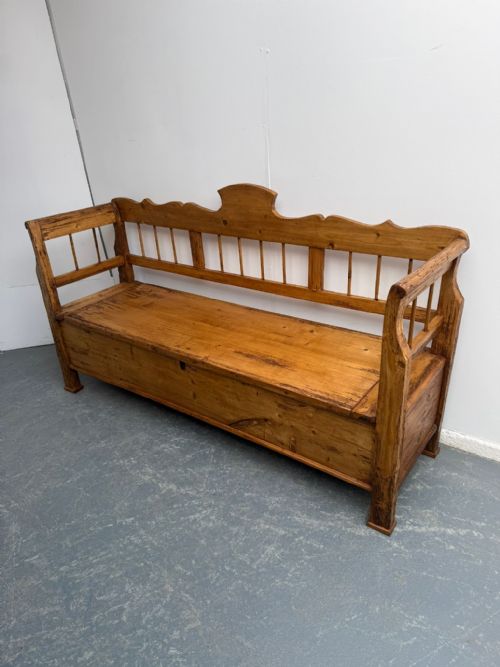

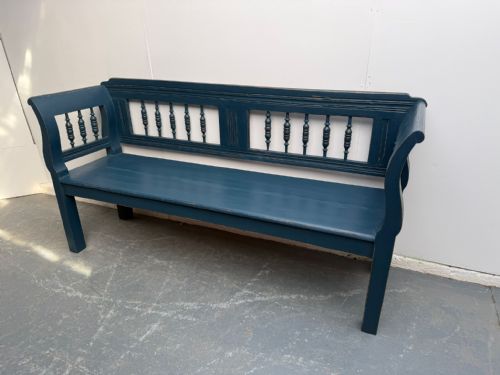


Pine Entry Bench
A pine entry bench offers practical hallway seating with built-in character, combining solid utilitarian timber with regional domestic styles.
Pine Entry Bench
A pine entry bench is a practical seating option found in domestic hallways, featuring regional forms ranging from simple slim hall benches to high-backed settles with integrated storage. These pieces arrive from various European and British traditions, including Hungarian box settles, Swedish painted benches, and English church pews.
Buyers most frequently encounter 19th-century and Victorian examples, often constructed with panelled backs, hinged seats for storage, or open trestle supports. The selection spans straightforward tavern benches and architectural church pews alongside painted continental folk art designs.
The physical scale varies considerably, accommodating narrow corridors with slim hallway benches or providing substantial seating with three or four-seater box settles. Regional variations reveal distinct construction traits, from Welsh panelled forms to Austro-Hungarian painted finishes.
How they were made
Makers utilised straight-grained softwoods, predominantly pine and pitch pine, occasionally combining them with elm for seats or iron hardware for hinges and brackets. Surfaces received either a protective coat of wax to highlight the timber grain or layers of paint in grey, cream, blue, and green.
Joinery techniques relied on traditional panel construction, tongue and groove boards, and pegged joints to handle daily domestic use. Box settles incorporated hinged lids to access internal storage compartments beneath the seat, while pews utilised fixed lengths of timber anchored to sturdy end supports.
Listings feature pine and pitch pine construction, supplemented by elm and iron, across 18th-century, Georgian, and Victorian periods.
What varies in quality
Quality rests in the survival of original painted surfaces, where untouched layers of period pigment distinguish genuine folk art pieces from later decorative updates. The integrity of the timber structure, particularly the original hinges on box settles and the stability of panelled backs, dictates the durability of the bench.
Proportion and execution separate standard utility seating from finer examples, such as benches featuring deliberate architectural mouldings or balanced panel proportions. The presence of authentic regional vernacular details, whether in Welsh panelwork or Hungarian box construction, elevates the character of the piece.
The Pine Entry Bench Glossary
- Settle
- A wooden bench with a high back, solid arms, and often a box base beneath the seat for storage. This form kept draughts away from inhabitants in older properties.
- Pitch pine
- A dense, resinous variety of pine timber known for its durability and prominent grain pattern. It appears frequently in Victorian church pews and heavy hallway seating.
- Box settle
- A specific settle variant featuring a compartment beneath the hinged seat. It served as functional hallway furniture for storing boots and household items.
- Pew
- A long wooden bench traditionally utilised in churches or communal halls. Examples found in domestic settings often exhibit Gothic architectural influences or simple utilitarian lines.
- Folk art
- Decorative or utilitarian items created within a specific regional cultural tradition. Painted continental benches frequently display these vernacular aesthetic choices.
Pine Entry Bench: Frequently Asked Questions
What is a box settle?
A box settle is a wooden bench featuring a high back and a hinged seat that lifts to reveal a storage compartment underneath. These pieces combine seating with practical containment for hallways and living spaces.
They appear in various regional styles across Britain and continental Europe, constructed from pine and other domestic timbers to serve daily household needs.
How do I measure for a hallway bench?
Measure the available floor length and the depth of the corridor to ensure doors and walkways remain unobstructed. Account for protruding armrests, high backs, and any box seat lids that lift upward.
Slim hallway benches and church pews offer narrower footprints, while box settles require additional clearance for their deeper bases and storage lids.
Are these benches painted or waxed?
These pieces feature either original painted surfaces or waxed natural timber finishes. Painted examples often display historical layers of colour such as grey, blue, cream, or green.
Waxed finishes highlight the natural grain of the pine or pitch pine, while painted versions reflect regional folk art traditions from Britain and Europe.
Can I use a church pew in an entryway?
Church pews provide long, sturdy seating solutions well-suited to spacious entryways and corridors. Their fixed backrests and stable timber construction handle frequent daily use.
They generally offer an open base rather than enclosed storage, creating a visually lighter footprint in narrower architectural spaces.