






Pine Coffer Bench
These pine coffer bench pieces combine sturdy seating with practical storage, offering honest utility and rustic charm for any hallway or kitchen.
Pine Coffer Bench
A pine coffer bench functions simultaneously as a seat and a lidded chest, born from utilitarian roots in European and English country homes. When you search for a pine coffer bench, you encounter sturdy pieces designed to store blankets, linens, or household goods while providing a place to sit. These items range from Georgian and Victorian examples to continental farmhouse seating.
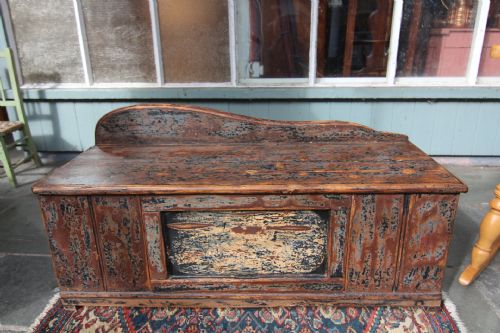
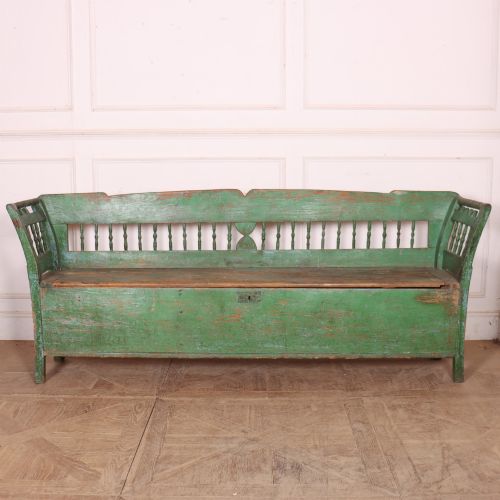
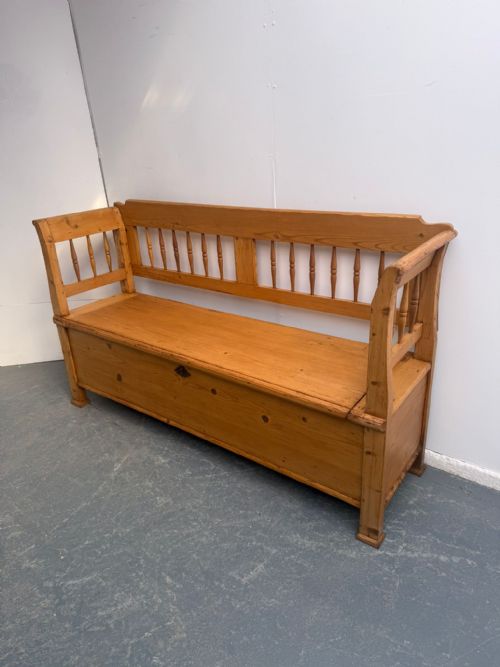
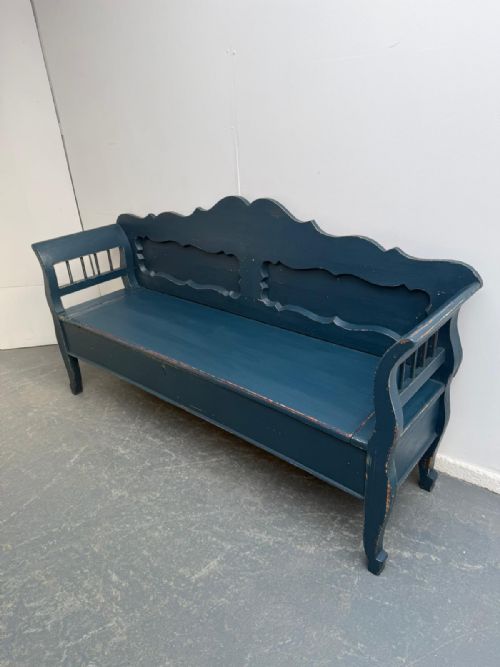
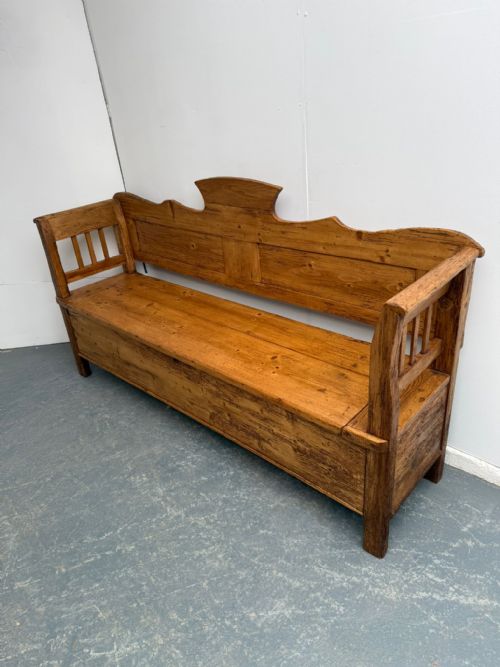
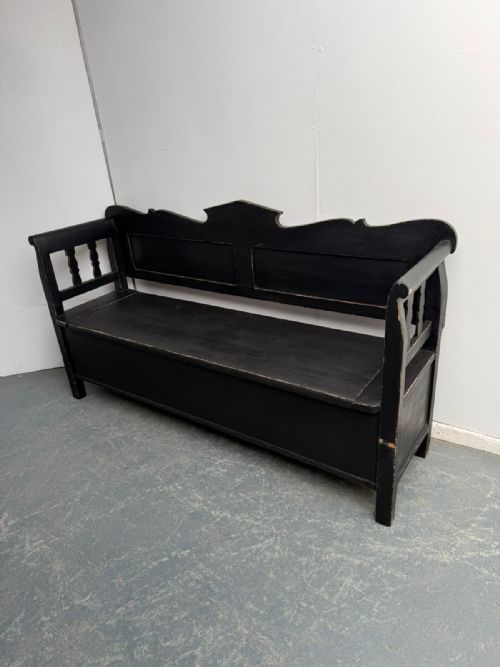
The pieces appearing here include Hungarian settles, Dutch chests, and English storage benches, spanning the eighteenth and nineteenth centuries. You find both long three-seater benches with high panelled backs and simpler box seats painted in original blue or black. Each item reflects the vernacular furniture traditions of its region.
Many surviving examples display rustic country styles, folk art painted finishes, or simple waxed surfaces that highlight the grain of the wood. The forms vary from tavern settles with enclosed bases to panelled hall benches and blanket boxes adapted for seating. Their enduring appeal lies in this practical combination of heavy timber construction and everyday utility.
Materials and construction methods
Makers built these pieces primarily from solid pine, often utilising local softwood timbers joined with pegged mortise and tenon joints to withstand heavy daily use. Wrought iron strap hinges, latches, and occasional locks secured the heavy lids of the coffer bases, while fabric elements sometimes appeared on later upholstered seats. Walnut or other hardwoods occasionally reinforced high-wear structural areas on continental examples.
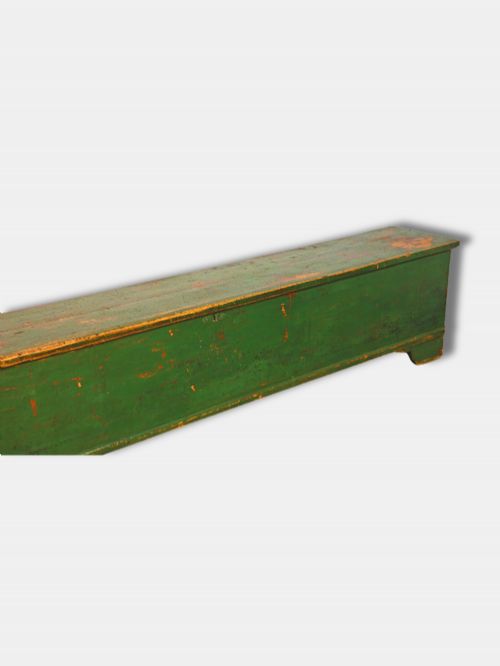
Surface treatments define much of the character in this group, featuring original polychrome or monochrome paint in blue, green, or black alongside traditional clear wax finishes. Over decades of use, the pine developed a distinct patinated surface where layers of paint worn thin or wax built up through handling. Construction remained fundamentally pragmatic, prioritising structural endurance over fine cabinet-making refinements.
Periods represented span from the 18th century through the Victorian era, including dated items from 1800, 1850, and 1880.
Assessing quality and character
Quality in these rural pieces rests on the integrity of the original timber frame and the survival of early or untouched surface finishes. Benches retaining their original paintwork or deep, untouched wax patination hold greater distinction than stripped or heavily restored examples. The presence of original ironwork, such as robust strap hinges and authentic locking mechanisms, further elevates a piece.
Proportion and scale also separate standard utility items from more striking regional examples, particularly where high panelled backs or spindled details remain intact. Structural soundness in the coffer base and seat boards determines the daily viability of the bench. Pieces showing honest domestic wear without extensive modern timber replacement represent the highest standard of survival.
The Pine Coffer Bench Glossary
- Coffer bench
- A dual-purpose seat featuring a box or chest base with a hinged lid beneath the sitting area. This form provided secure storage in crowded domestic spaces.
- Settle
- A wooden wooden bench with a high back designed to block draughts, often incorporating a solid enclosed box seat beneath. They typically stood near hearths in farmhouses and taverns.
- Patination
- The surface alteration of wood and paint caused by age, light, and handling over generations. A desirable surface shows deep, honest signs of domestic history.
- Blanket box
- A large lidded chest intended for storing textiles and bedding away from damp floors. Some examples were later converted or built with attached seating.
- Vernacular furniture
- Everyday objects made by regional craftsmen for local use rather than following high-style academic designs. These pieces utilise locally available timbers like pine.
Pine Coffer Bench: Frequently Asked Questions
Where did these benches stand originally?
These pieces traditionally occupied farmhouses, rural cottages, and tavern halls where space was at a premium. They sat near hearths or in hallways to catch drafts and store heavy textiles.
Over time, their practical storage and robust wooden construction made them versatile additions to mudrooms and large kitchens in country homes.
How do I care for waxed pine surfaces?
Maintain waxed pine by applying a traditional beeswax polish sparingly and buffing it gently with a soft cloth. Avoid placing these benches near direct heat sources or strong sunlight to prevent the timber from drying out.
Regular light dusting preserves the historic patination without stripping away the accumulated character of the wood.
Can I use a coffer bench for daily seating?
Most of these pieces were built robustly from solid pine and remain entirely suitable for everyday sitting. The heavy timber frames and pegged joints provide surprising strength after centuries of use.
It is wise to check the condition of the seat boards and internal hinges before subjecting older pieces to heavy daily loads.