
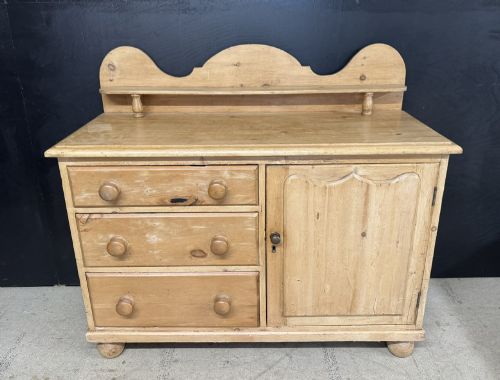
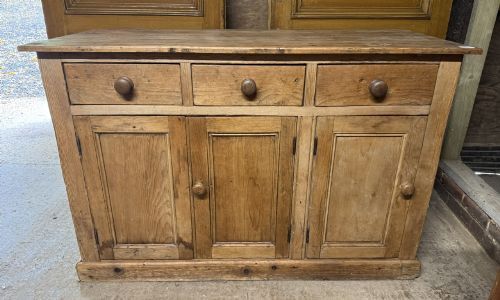
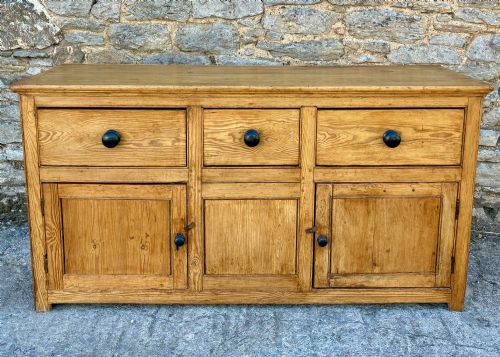
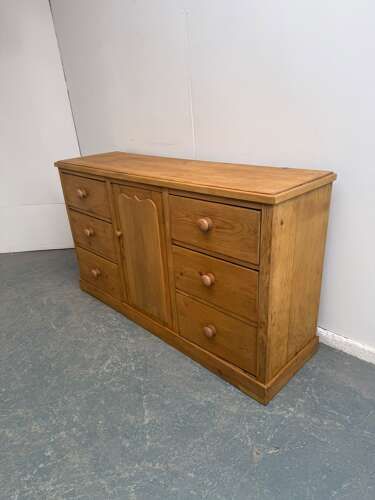

Pine Buffet Cabinet
These pine buffet cabinet pieces bring domestic storage utility and rustic charm to kitchens, appearing frequently in nineteenth-century country forms.
Pine Buffet Cabinet
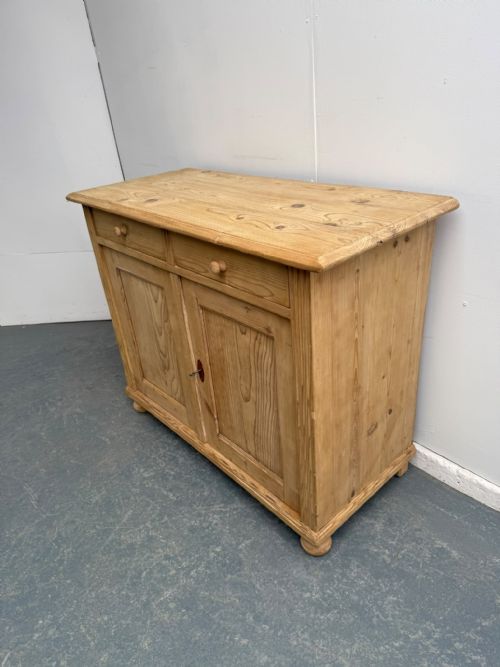
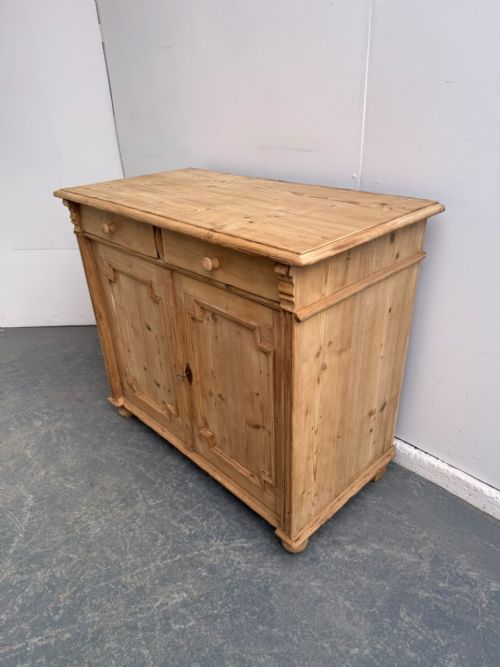
When you search for pine buffet cabinet, you find a range of practical utility furniture intended for domestic storage and food preparation. The listings comprise kitchen dressers, dresser bases, cupboards, and sideboards originating from various regional traditions.
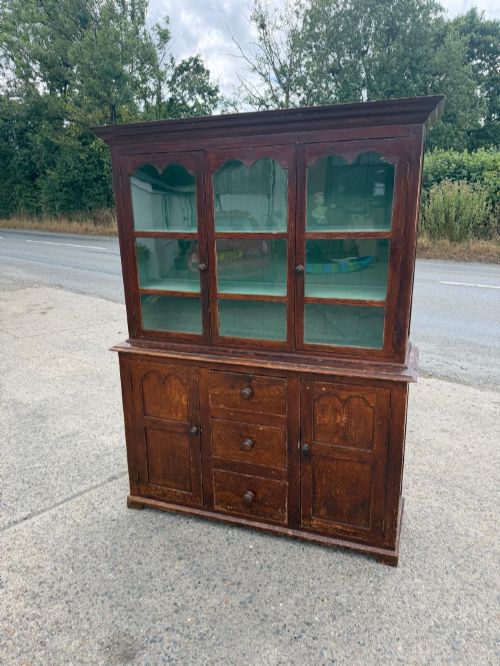
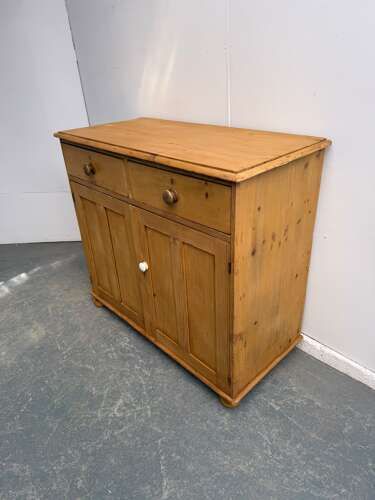
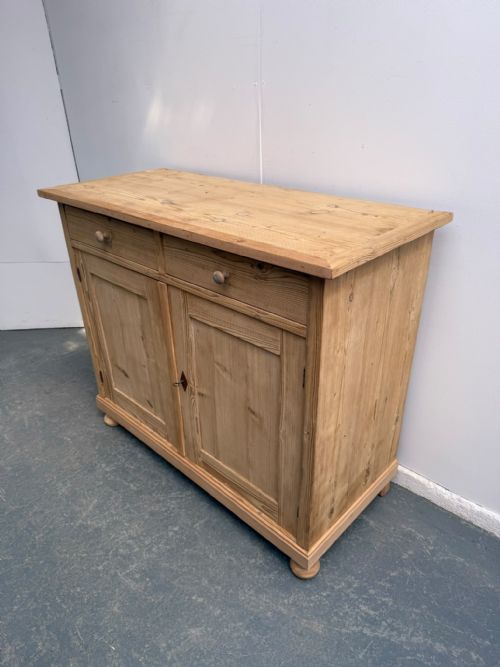
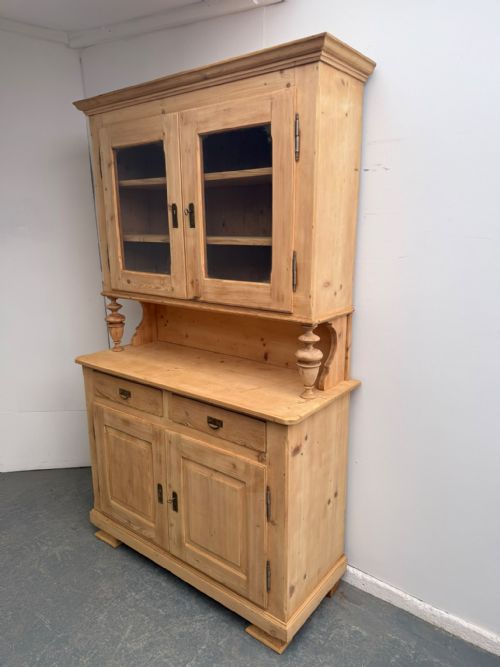
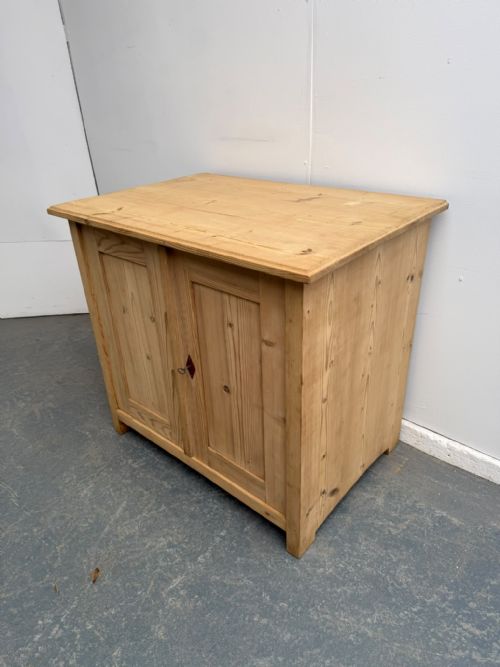
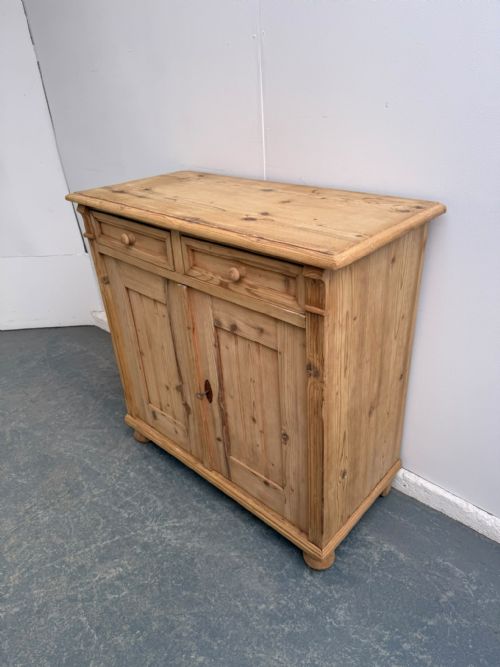
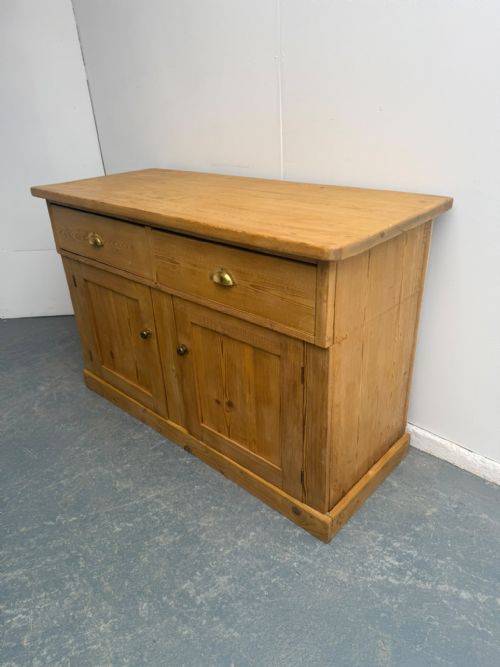
The most common form encountered on this page is the nineteenth-century pine dresser base or kitchen cupboard. These items typically feature configurations of two doors and two drawers, alongside occasional glazed upper sections or open shelves.
Origins span English, Welsh, Scottish, and West Country workshops alongside continental examples from Sweden, France, and Hungary. Stylistic variations include Victorian Country, Scandinavian Country, and Rustic Farmhouse aesthetics.
How they were made
Construction relies primarily on solid pine timbers, complemented by subsidiary materials such as oak, ceramic, glass, brass, and iron for hardware and structural details. Wood is joined using traditional carpentry techniques suited to domestic utility furniture.
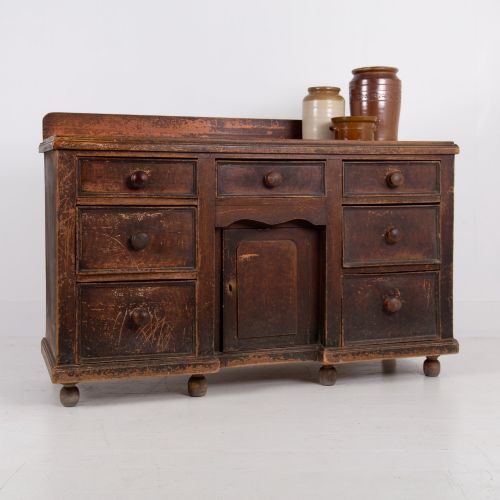
Surfaces demonstrate distinct historical treatments, appearing either with a waxed finish highlighting the grain or retaining original painted and scraped paint schemes. Certain examples incorporate glazed doors, bread slides, or tiled sections reflecting their specific domestic function.
Regional styles include English, Welsh, Scottish, Swedish, French, and Hungarian country traditions.
What varies in quality
The distinction between pieces rests upon the integrity of the original construction and the preservation of historical surfaces. Items retaining their original paint finishes or untouched scraped paint layers hold particular interest compared to those stripped down for modern waxing.
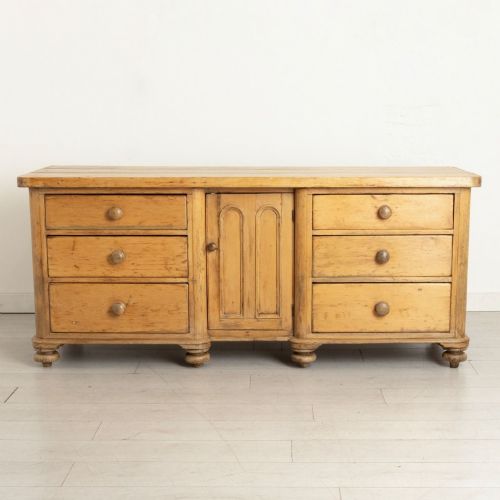
Proportions, scale, and regional detailing also determine the character of each piece. Larger architectural forms, carved ornamentation, and specialised internal fittings like bread slides separate standard utilitarian cupboards from more substantial regional dressers.
The Pine Buffet Cabinet Glossary
- Dresser base
- A low storage unit typically comprising cupboards and drawers beneath a flat top surface. This form served as a functional workspace in domestic kitchens.
- Bread slide
- A pull-out wooden shelf integrated into the cabinetry. It provided a ventilated surface for cooling or preparing bread.
- Chiffonier
- A low sideboard cabinet equipped with enclosed storage below. This form developed during the early nineteenth century for dining and living spaces.
- Breakfront
- A cabinet design where the central section projects forward from the flanking cupboards. It creates depth and architectural variation in larger case pieces.
- Scraped paint
- A surface condition where layers of historic paint are partially revealed through scraping. This technique exposes the chronological depth of the finish.
Pine Buffet Cabinet: Frequently Asked Questions
What is a pine buffet cabinet used for?
These cabinets serve as practical storage furniture for kitchenware, tableware, and provisions. Their flat top surfaces also provide useful space for food preparation or display.
Historically, they functioned as the central workstation and storage hub in country kitchens. Today, they adapt easily to modern dining rooms and kitchens for tableware storage.
How do I date a pine cupboard?
Dating relies on construction methods, timber characteristics, and hardware styles observed across the piece. Nineteenth-century examples often display hand-cut joints and original surface patination.
Regional variations and specific stylistic markers, such as Arts and Crafts tile inserts or Victorian proportions, help narrow down the period of manufacture.
Should I keep the original paint?
Retaining original or early scraped paint preserves the historical character and material integrity of the furniture. Many collectors value untouched paint surfaces for their authenticity.
Alternatively, pieces designated for waxing offer a clean pine aesthetic that suits various interior schemes. The choice depends on personal preference and the existing finish condition.
What is the difference between a dresser base and a full dresser?
A dresser base consists solely of the lower cupboard and drawer section with a flat top. It functions similarly to a modern sideboard.
A full dresser includes an upper section with shelves or glazed cabinets mounted above the base for displaying ceramics and glassware.