
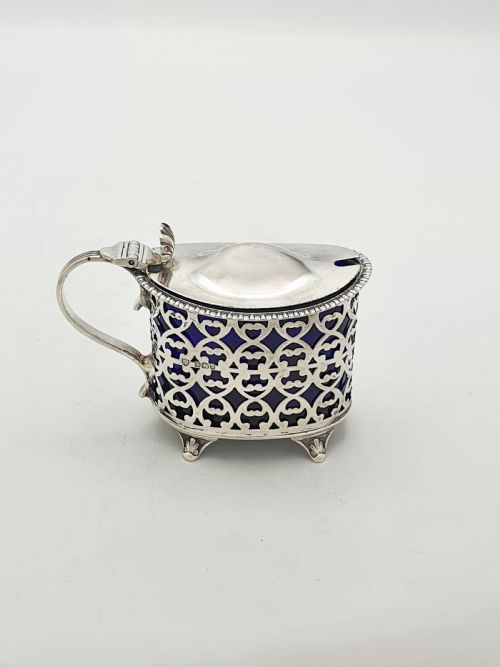


Pierced Silver Mustard Pot
These pierced silver mustard pots combine functional tableware with intricate metalwork, offering collectors a classic dining accessory.
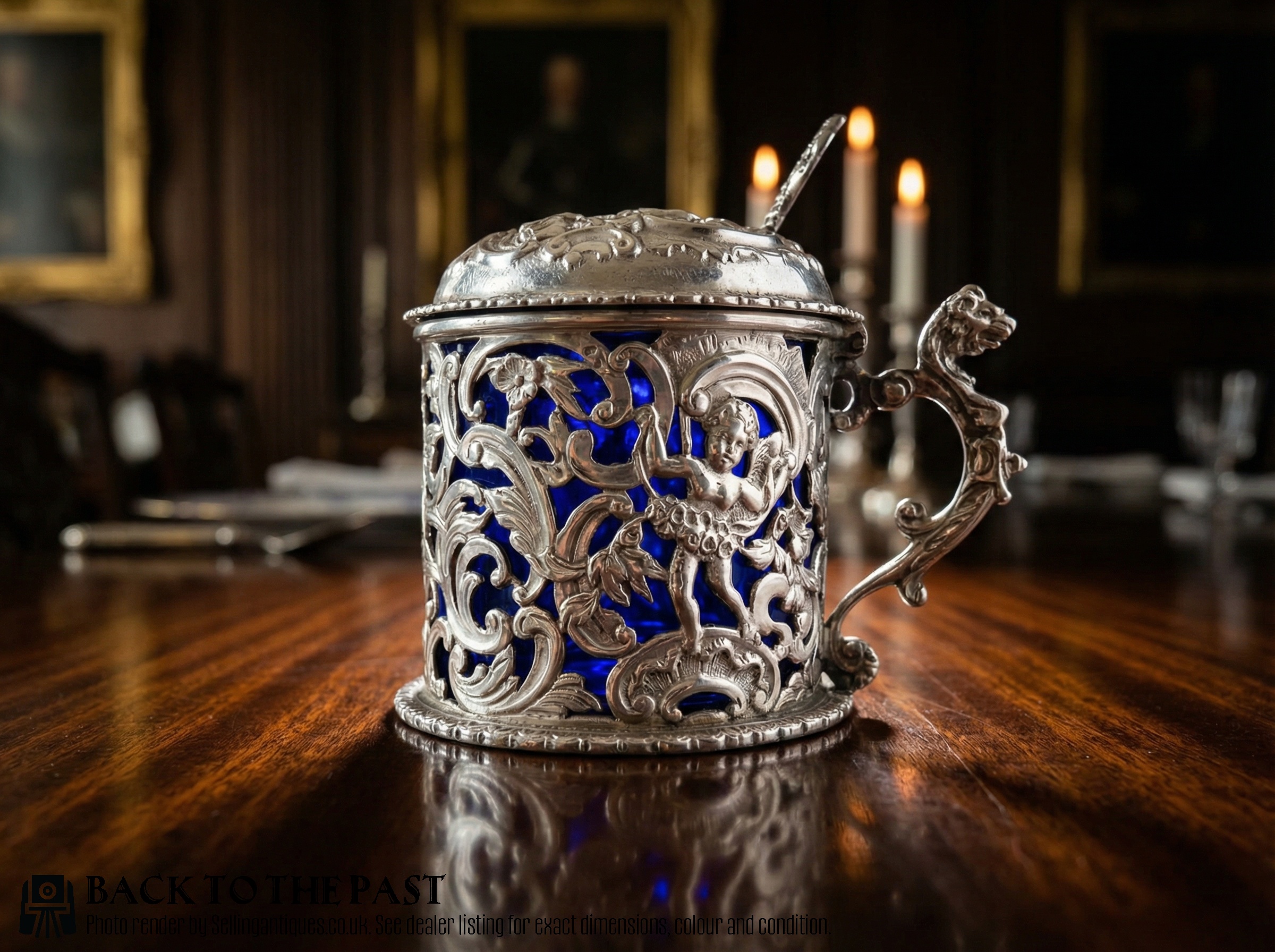
Pierced Silver Mustard Pot
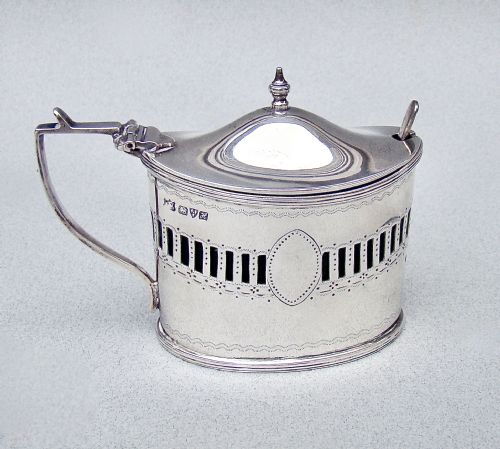
When you search for a pierced silver mustard pot, you encounter dining vessels designed to hold prepared mustard on the table. The form appears frequently across the Victorian and Edwardian periods, as well as in George III and George V examples, reflecting changing dining fashions.
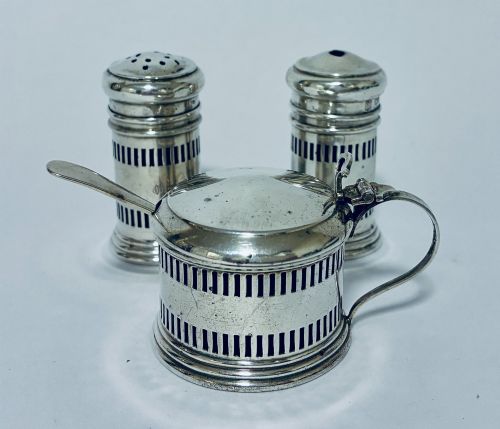
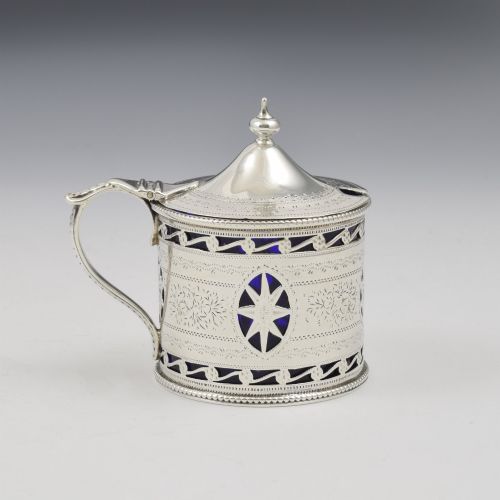
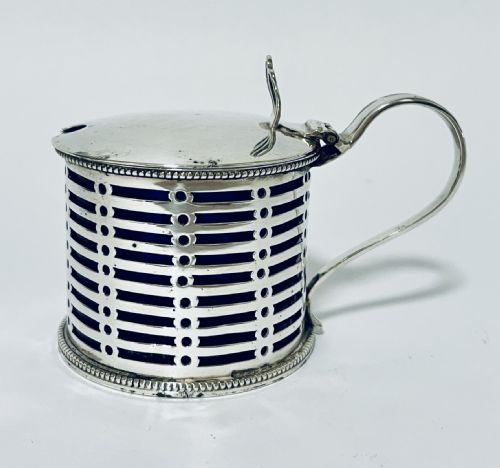
The most common version met on this page is the drum-shaped mustard pot, often accompanied by a handle and hinged lid. Makers also produced oval and octagonal variations, sometimes forming part of larger cruet sets or cruet stands.
How they were made
Silversmiths constructed these pots primarily from sterling silver, employing piercing techniques to cut decorative patterns directly into the metal body. Artisans also utilised casting and hammering methods to shape the drum, oval, or octagonal forms.
Each piece typically incorporates a fitted glass liner, frequently cast in cobalt blue glass, cobalt glass, blue glass, or ruby red glass. This liner protected the silver from the corrosive properties of mustard while adding a vibrant splash of colour behind the pierced silverwork.
Pierced Silver Mustard Pot Retail Price Guide 2026
Typical asking prices for pierced silver mustard pot among the pieces listed under this phrase on Sellingantiques today, from the lower quarter to the upper quarter. They describe what is for sale here now, not the wider market.
Some Victorian mustard pots feature hidden cherubs and birds peering out through the intricate pierced silverwork.
What varies in quality
The crispness and depth of the piercing separate standard examples from finer works, particularly where silversmiths chased additional details like birds, flowers, or cherubs into the metal. The quality of the original glass liner also matters, with matching coloured glass adding considerable appeal.
Maker marks and clear hallmarks contribute to desirability, as pieces produced by notable workshops exhibit superior weight and balance. The durability of the hinged lid and the precise fit of the handle further indicate the standard of craftsmanship.
Alfred Marston·Nathan & Hayes·Charles Stuart Harris·Omar Ramsden·William Hutton & Sons·The Atkin Brothers·The Haseler Brothers·Joseph Rodgers & Sons·Goldsmiths & Silversmiths Co
The Pierced Silver Mustard Pot Glossary
- Pierced silver
- Metalwork decorated by cutting patterns through the sheet silver, allowing light and colour to pass through. This technique defines the visual style of these condiment pots.
- Cobalt glass
- A deep blue glass used to line silver pots. It provides a striking visual contrast against the polished silver exterior.
- Cruet set
- A matched collection of condiment containers used at the dining table. Mustard pots often formed part of these larger table settings.
- Hallmark
- A series of official marks stamped on precious metals indicating standard, place of assay, and date letter. These stamps help verify the origin of the silver.
- Drum mustard pot
- A cylindrical form of mustard pot resembling a small drum. This shape appears regularly in Victorian and Georgian designs.
Pierced Silver Mustard Pot: Frequently Asked Questions
What was a pierced silver mustard pot used for?
These pots held prepared mustard on the dining table, serving both a functional and decorative purpose during meals.
The pierced design allowed diners to see the coloured glass liner contained within, adding visual interest to the table setting.
How do I identify the date of a silver mustard pot?
You can determine the period by examining the hallmarks stamped onto the silver body and lid, which indicate the assay office and year.
Stylistic elements like drum shapes or decorative motifs such as cherubs also point towards specific eras like the Victorian or Edwardian periods.
Why do these pots have coloured glass liners?
The glass liner protected the sterling silver from the corrosive nature of mustard, which could otherwise tarnish or pit the metal.
Coloured glass, particularly cobalt blue or ruby red, also created an attractive visual effect showing through the pierced silver patterns.
How should I care for an antique silver mustard pot?
Regular, gentle cleaning with a specialist silver cloth helps maintain the shine without wearing down the engraved details or hallmarks.
Removing the glass liner for washing prevents moisture from becoming trapped between the glass and the silver interior.