

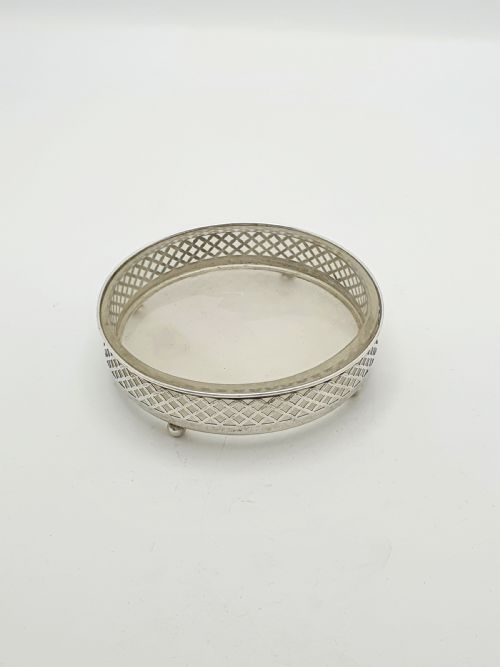


Pierced Silver Coasters
Pierced silver coasters protect polished dining tables while displaying intricate metalwork around fine wine bottles.
What pierced silver coasters are
The selections encountered here span the Victorian, Edwardian, and Regency periods, stretching from the mid-nineteenth century into the early twentieth century. These dining items reflect changing tastes in table service across the decades.
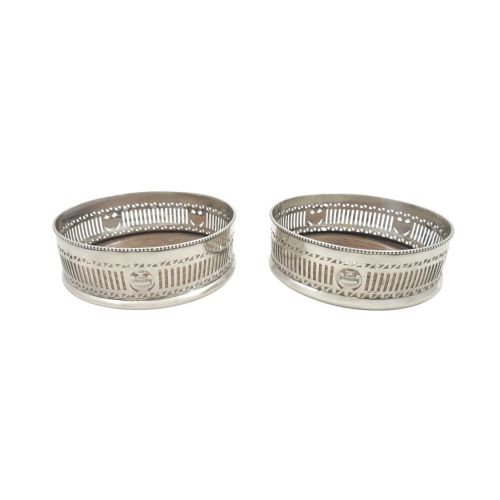
The form typically combines a metal gallery with an internal base, allowing the grain of the underlying material to remain visible beneath the bottle. Most examples follow a low, rounded profile suited for sliding across mahogany surfaces.
How they were made
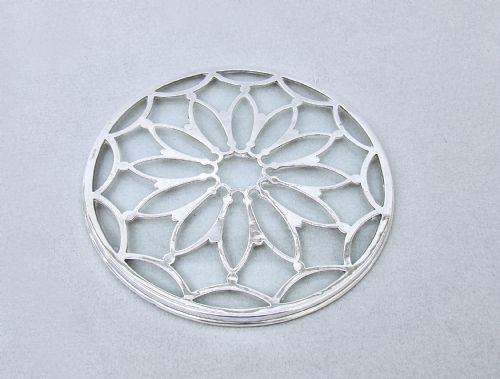
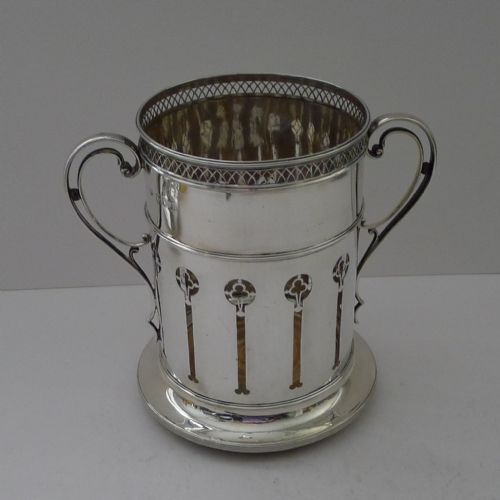
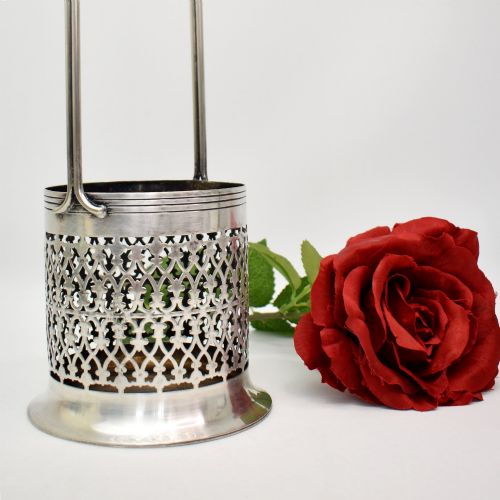
Makers produced these galleries using piercing and reticulated techniques to cut decorative patterns directly into sheet metal. Common motifs include scrollwork, bars, and grape and vine designs that lighten the visual weight of the metal.
Many examples combine silver plating or solid sterling silver walls with turned wood bases, often utilising pale turned mahogany. Some heavier specimens integrate hallmarked solid silver centres directly into Old Sheffield Plate bodies.
The listings here include items from the nineteenth and twentieth centuries, featuring both sterling silver and silver plate over wood.
What varies in quality
Quality rests upon the crispness of the pierced gallery work and the depth of the metal walls. Finer examples display meticulous piercing free of distortion, paired with robust turned wooden inserts that fit snugly.
The presence of distinguished maker marks and secondary decorative details, such as applied grape and vine motifs, elevates the status of a pair. Weight and structural integrity separate standard utility pieces from high workshops.
Mappin and Webb·James Dixon and Son
The Pierced Silver Coasters Glossary
- Gallery
- The upright decorative wall surrounding the base of the coaster. This pierced or reticulated band keeps the bottle contained while revealing the label.
- Old Sheffield Plate
- An early fusing technique where a thin sheet of silver is fused to a thicker copper base before shaping. This method creates a distinct edge where the base metal shows through wear.
- Reticulation
- A network of interconnected openings cut into the metal wall to form geometric or naturalistic patterns. It lightens the silver border.
- Turned mahogany
- Wood shaped on a lathe to form the flat internal floor of the coaster. This material protects table surfaces from condensation.
- Sterling silver
- A silver alloy containing a specific proportion of pure silver and other metals for durability. Items made to this standard often bear government hallmarks.
Frequently Asked Questions
What are pierced silver coasters used for?
These pieces serve to hold wine bottles and decanters safely on dining tables during meals. They prevent moisture and condensation from reaching polished wood surfaces.
Historically, they also allowed servants to slide bottles smoothly across the table between guests without lifting heavy decanters.
How do I clean my silver coasters?
Cleaning requires a soft cloth and a gentle silver polish suitable for plated or sterling surfaces. Care must be taken around wooden bases to avoid excess moisture.
Regular light dusting maintains the shine of the pierced gallery without wearing down the underlying metal plating.
Are these coasters sold in pairs?
Most examples recorded in this category appear as matched pairs intended for symmetry on the dining table. Single pieces do occasionally surface from earlier collections.
Pairs allow hosts to circulate different wine selections simultaneously during dinner parties.
How can I tell the period?
Dating relies on stylistic clues within the pierced patterns, such as Regency simplicity, Victorian vine motifs, or Edwardian scrollwork. Hallmarks and maker stamps provide definitive manufacturing dates.
Construction methods, including Old Sheffield Plate versus later electroplating, also indicate the era of production.