
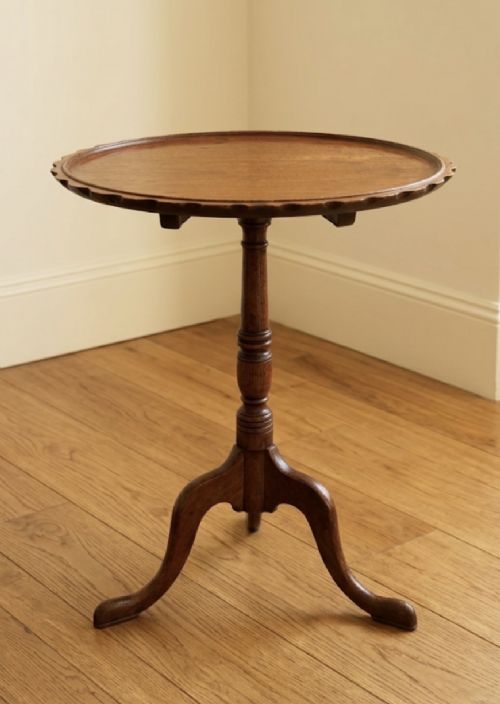


Piecrust Edge Wine Table
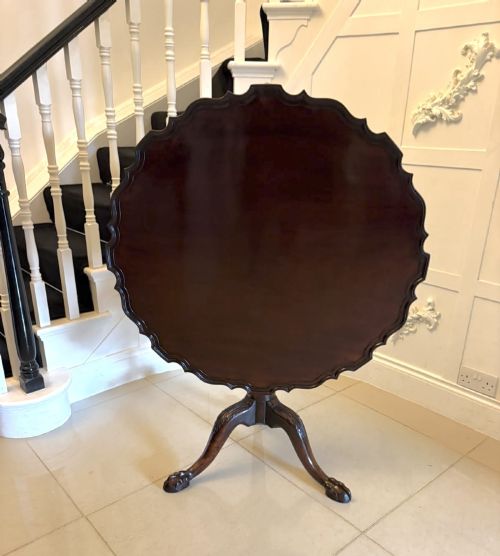
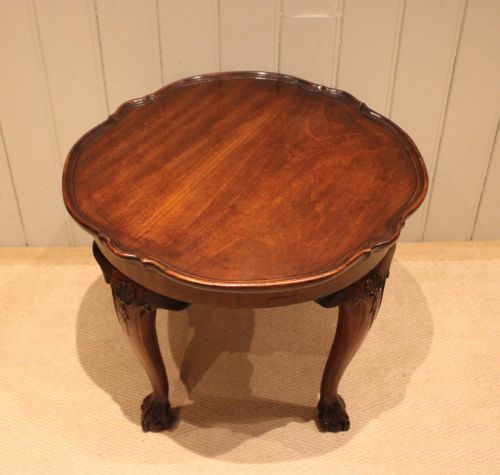
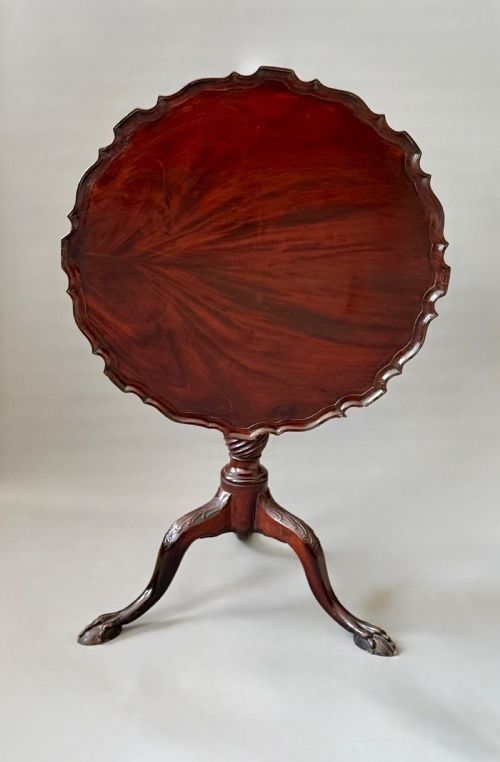
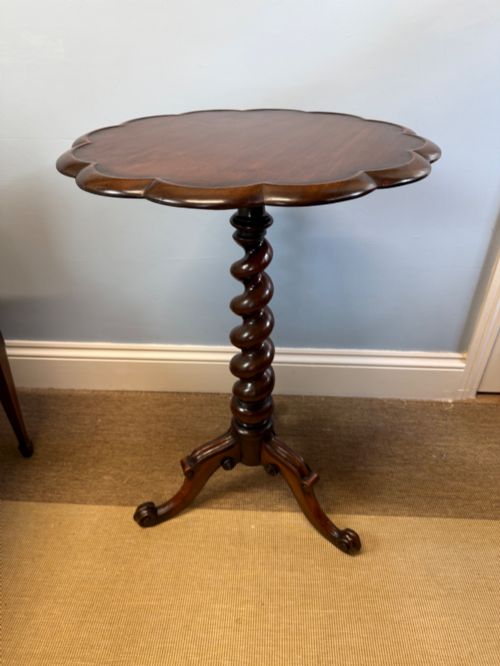
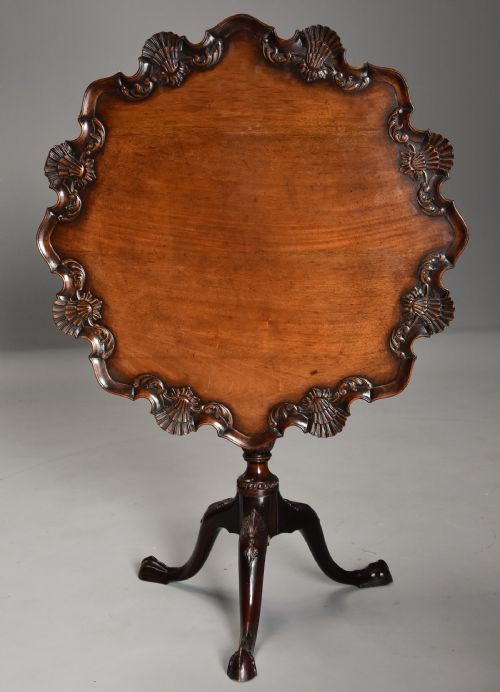
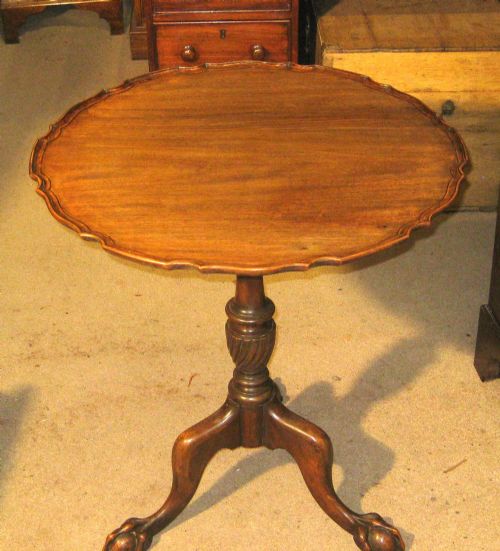
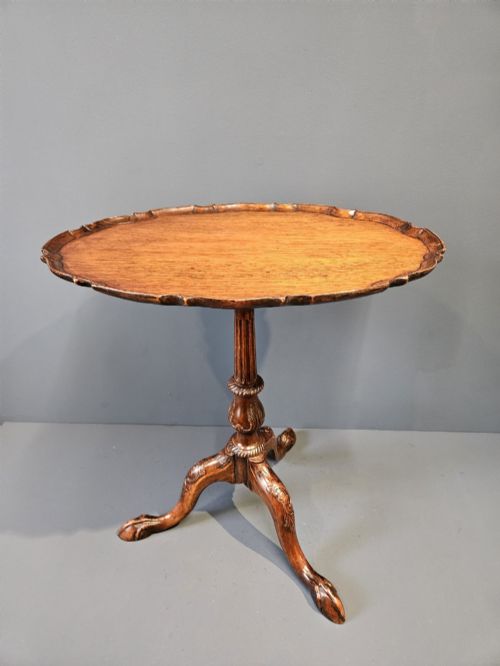
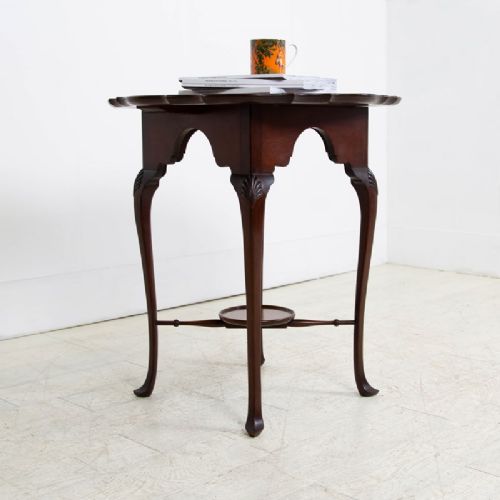
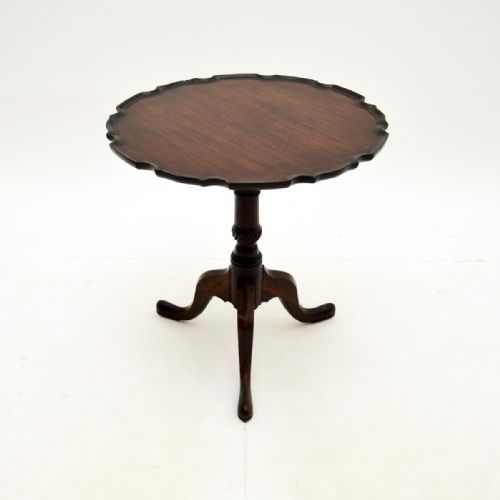
A piecrust edge wine table offers a raised, scalloped rim atop a tripod base, designed to hold glasses securely while adding classic proportion to a room.
Piecrust Edge Wine Table
A piecrust edge wine table is most frequently encountered as a tripod table resting on a central pedestal with three legs. The form dates back to the Georgian era and the eighteenth century, continuing into the nineteenth and twentieth centuries through revival styles.
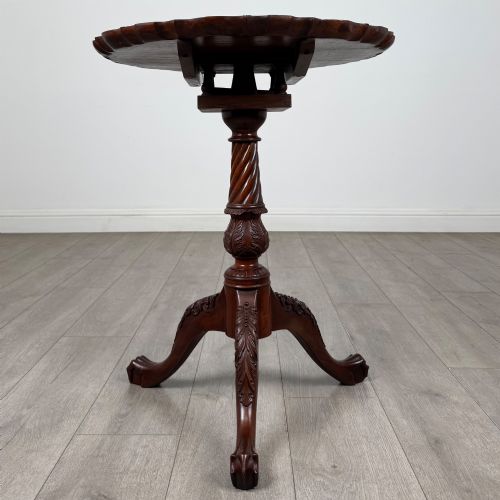
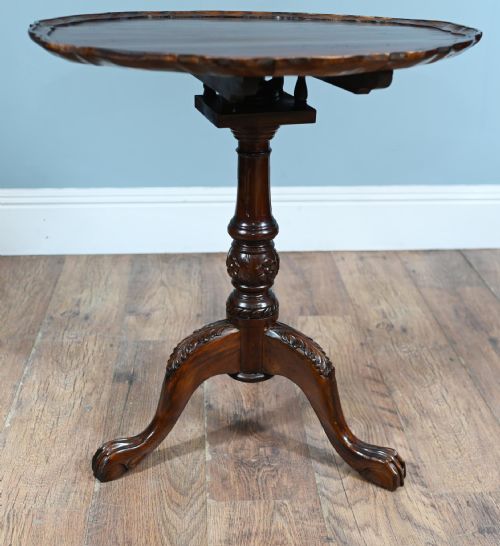
Makers produced these pieces in forms such as occasional tables, side tables, and tilt-top tables, often incorporating a birdcage mechanism beneath the surface to allow the top to rotate and fold vertically when not in use.
Materials and construction
Craftsmen built these tables primarily from mahogany, alongside walnut, burr walnut, figured walnut, solid walnut, oak, satinwood, and brass hardware. The defining raised rim was typically carved directly from a solid timber blank rather than applied as a separate moulding.
The characteristic top connects to a turned pillar and a three-legged tripod base, sometimes utilising a birdcage mechanism of wood and brass components to enable the tilting action.
Some tables tilt so neatly you might suspect they are secret sun-dials, though they were merely dodging the housemaid.
Judging the execution
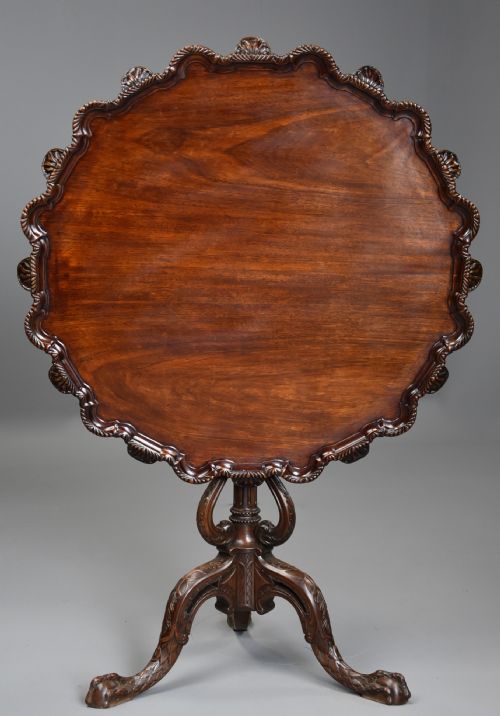
The standard of the carving on the scalloped rim and the legs separates standard production from finer examples. Crisp, deeply undercut moulding on the edge demonstrates superior bench work compared to softer, shallower profiles.
Proportion and timber selection also determine the standing of a piece. Well-figured mahogany or walnut paired with a slender, finely turned column and neat pad or claw feet represents the higher tier of these tables.
Shapland and Petter·S and H Jewell London
The Piecrust Edge Wine Table Glossary
- Piecrust edge
- A raised, carved rim with a scalloped outline resembling pastry work. This feature prevented glasses and decanters from sliding off the surface.
- Tilt-top
- A hinged table top that pivots to a vertical position. This allowed the furniture to be stored flat against a wall when not in use.
- Birdcage
- A timber framework beneath the table top that permits the surface to both rotate and tilt. It sits between the top and the central column.
- Tripod base
- A support structure comprising three legs radiating from a central pillar. It provides stability on uneven floors.
- Occasional table
- A small, movable table designed for a specific, intermittent use in a principal room.
Piecrust Edge Wine Table: Frequently Asked Questions
What is a birdcage mechanism?
A birdcage is an assembly of small wooden turnings and a block fitted beneath the table top. It allows the surface to rotate horizontally and tilt vertically.
This functional detail enabled owners to tuck the table away compactly against a wall when the room was needed for other purposes.
How do I spot an 18th-century piece?
Eighteenth-century examples typically display dense mahogany with rich patination and hand-carved details on the tripod base. The timber grain shows deep integration and wear consistent with age.
Later revival pieces from the nineteenth and twentieth centuries often present machine-finished joints or timber selections that differ from the older Georgian stock.
Were these used only for wine?
Despite the name, these tables served multiple domestic purposes in period interiors. They held tea equipment, books, or lighting alongside glasses and wine.
The portable tripod design allowed servants to move them easily around the drawing room as guests required.
How do I care for a tilt-top table?
Keep the table away from direct heat sources and strong sunlight to prevent the timber from warping or splitting. Apply natural wax polish occasionally to maintain the finish.
Support the top firmly when operating the tilt mechanism to avoid placing undue stress on the central pivot joint.