
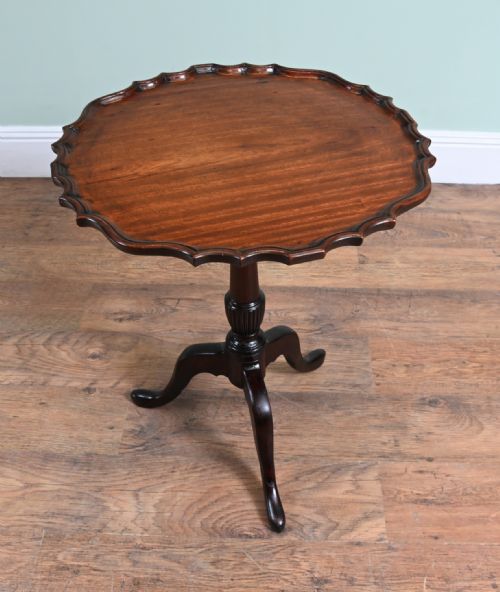


Pie Crust Tripod Table
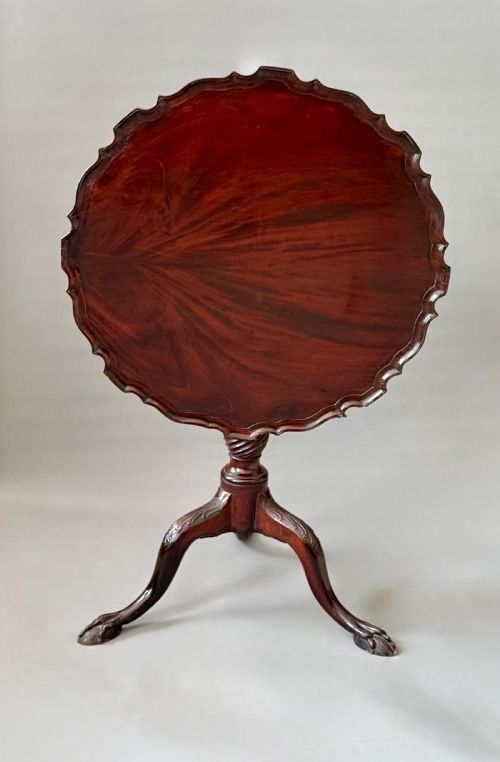
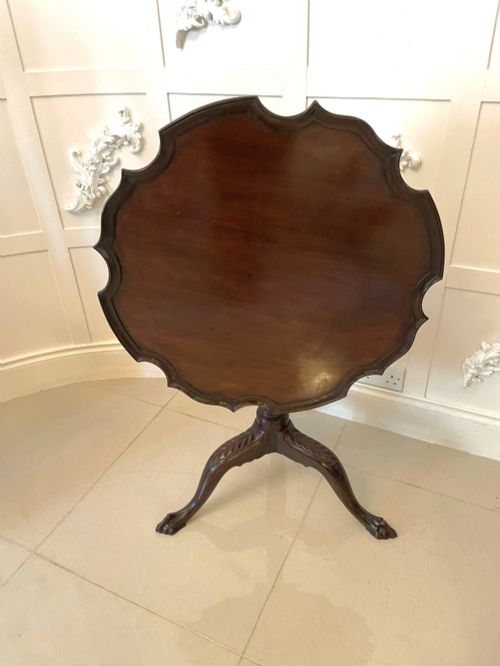
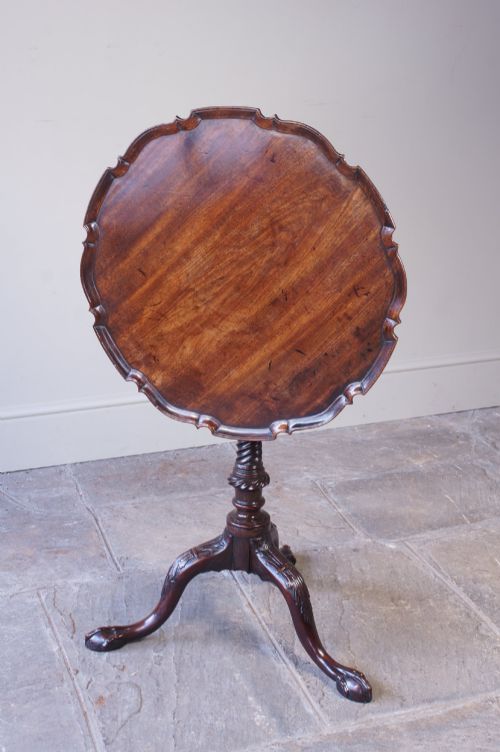
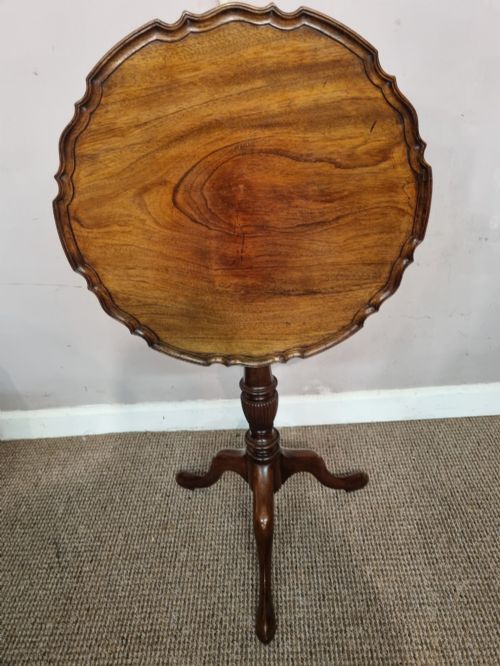
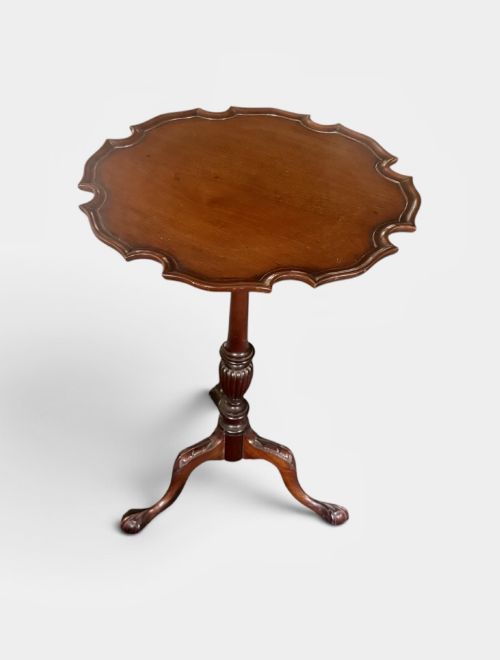
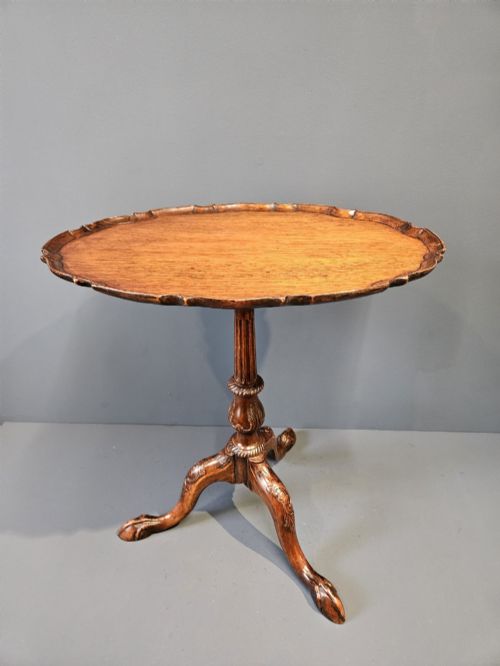
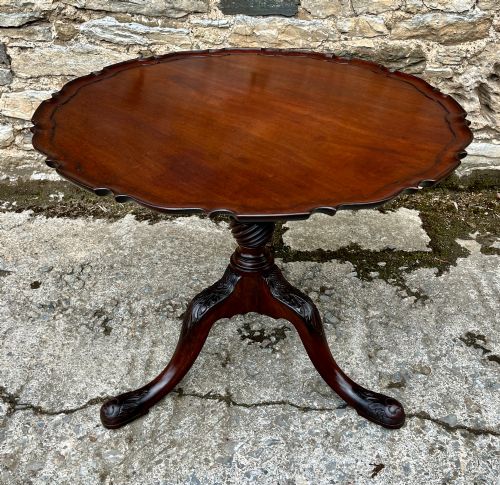
When you search for a pie crust tripod table, you are looking at circular occasional furniture defined by raised, carved rims.

Pie Crust Tripod Table
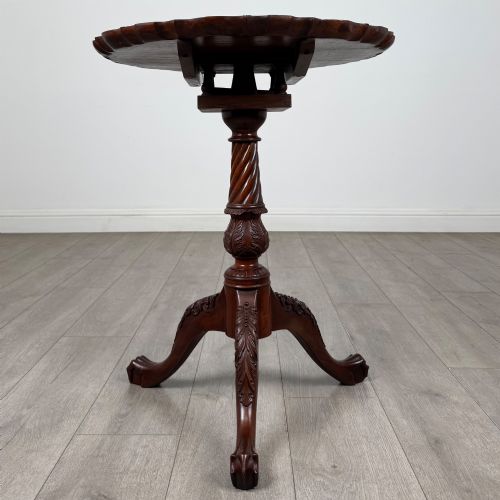
A pie crust tripod table is a compact occasional piece featuring a circular top with a moulded, scalloped edge resembling pastry crimping. These tables stand on a central pedestal supported by three legs, forming a stable tripod base that often incorporates a tipping or tilt mechanism.
The version you are most likely to meet on this page is the Georgian mahogany example, frequently dating from the eighteenth century or associated later revivals. They appear as wine tables, tea tables, and supper tables designed to be moved easily around a room as needed.
Makers produced these forms in various scales, from small kettle stands to larger supper tables. Alongside eighteenth-century originals, the evidence includes nineteenth-century pieces, Edwardian interpretations, and later twentieth-century revivals.
How They Were Made
Joiners fashioned the characteristic tops from solid timber, predominantly mahogany, along with walnut, oak, ebonised timber, and goncalo alves. Carvers shaped the raised rim directly from the thick board of the top rather than applying a separate moulded edge, requiring considerable skill to follow the grain safely.
The pedestal construction unites a central column with three shaped legs, frequently joined by a birdcage mechanism that allows the top to rotate and tilt. Brass components appear selectively for hinges, catches, and castors on specific formats.
Listings feature timbers including mahogany, walnut, oak, goncalo alves, and ebonised wood across Georgian, Victorian, and Edwardian periods.
What Varies In Quality
Quality rests in the crispness of the carved rim and the proportion between the top and the supporting tripod base. Finer examples display deep, well-defined moulding along the edge and smooth articulation in the tilt mechanism.
Material selection also divides the range, with dense, finely figured mahogany or walnut timbers achieving a superior surface finish. The integration of the pedestal legs and the subtlety of the turning on the central column further distinguish workshop standards.
Wylie & Lochhead of Glasgow·Gillows
The Pie Crust Tripod Table Glossary
- Pie crust edge
- A raised, scalloped rim carved around the perimeter of a circular table top. This decorative moulding echoes traditional pastry crimping.
- Tripod base
- A support structure consisting of three legs radiating from a central pillar. This arrangement provides stability on uneven floorboards.
- Tilt-top
- A hinged table top that pivots to a vertical position when not in use. This mechanism allowed tables to be stored flat against a wall.
- Birdcage
- A timber framework beneath the table top that permits rotation and tilting. It connects the top to the central column via small spindles.
- Snap top
- An alternative term for a tilt-top table utilising a spring catch to secure the surface horizontally. It locks the top firmly in place during use.
Pie Crust Tripod Table: Frequently Asked Questions
What is a pie crust tripod table?
A pie crust tripod table is a small circular table featuring a raised, scalloped edge carved to resemble pastry. It rests on a central column supported by three legs.
These pieces function primarily as occasional, tea, or wine tables. Their design allows them to be positioned easily beside seating.
Why do some tables tilt?
The tilt mechanism allows the circular top to pivot vertically against the central column. This engineering enabled historic households to store the furniture flat against walls when not in use.
Many examples include a catch or birdcage mechanism to secure the top in either position. This feature distinguishes occasional tables intended for flexible placement.
How do I date a mahogany table?
Dating relies on timber characteristics, construction methods, and stylistic cues like carving depth and leg profile. Eighteenth-century pieces typically show different joinery details compared to later nineteenth-century or Edwardian revivals.
Examining the underside reveals tool marks and wear patterns that indicate age. Comparing the turning of the central pedestal to known period examples clarifies the timeline.
Where should I place it?
These tables suit corners, beside armchairs, or as lamp and wine surfaces in living spaces. Their compact footprint and circular top make them adaptable to narrow wall spaces.
Because the top often tilts, avoid placing heavy items on unstable mechanisms. Position the tripod base where all three feet rest evenly on the floor.