


Pie Crust Top Table
A pie crust top table brings a sculpted, raised edge to a traditional round surface, offering both stability and decorative detail.

Pie Crust Top Table
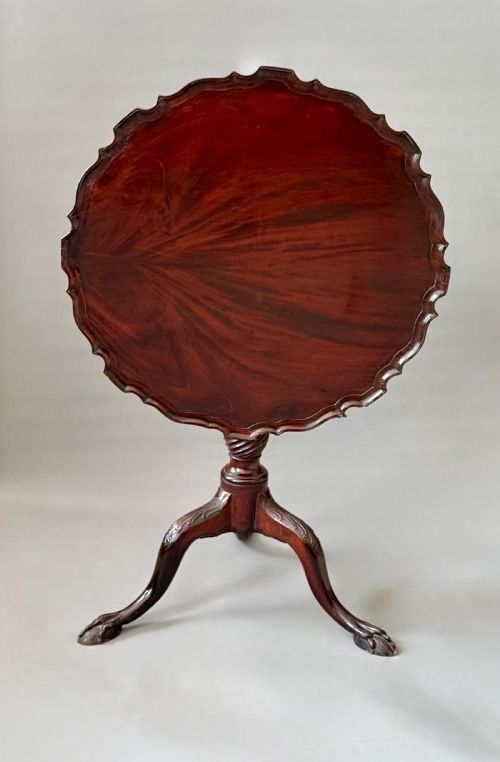
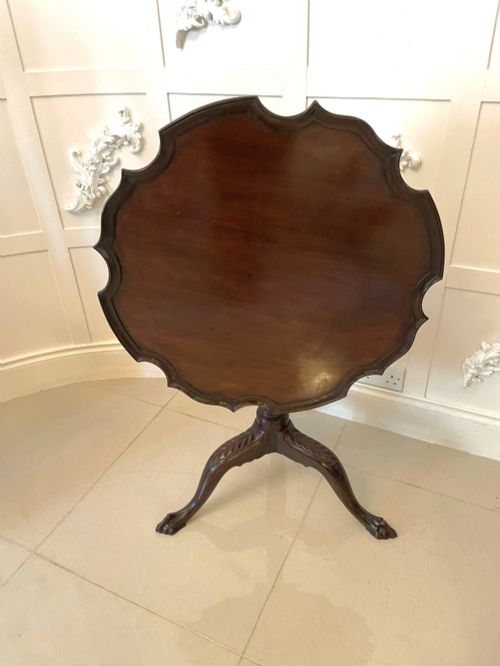
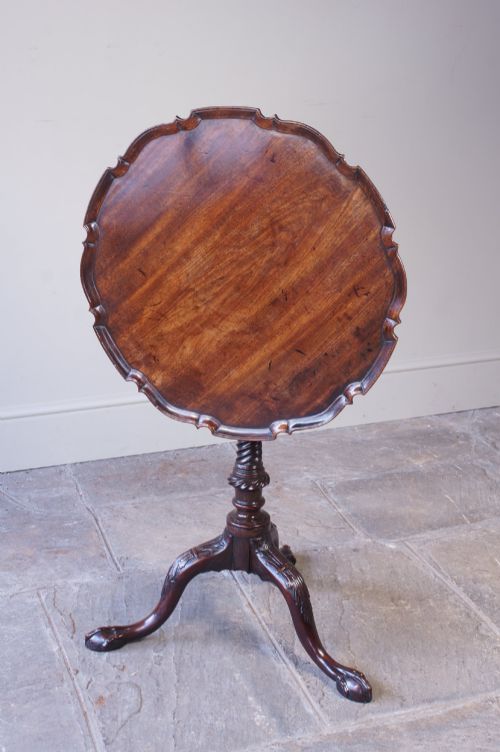
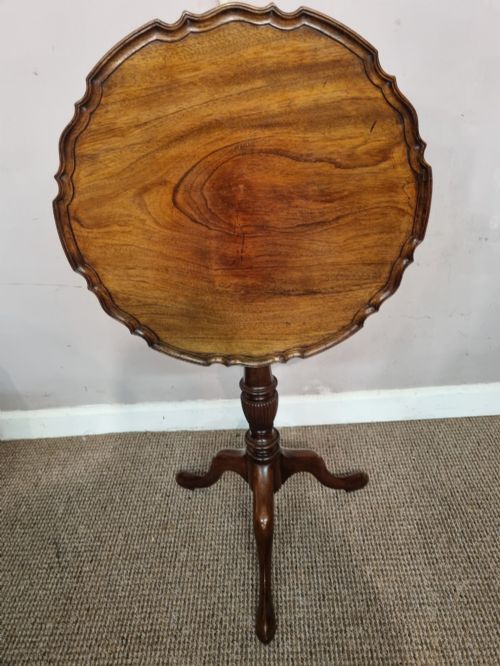
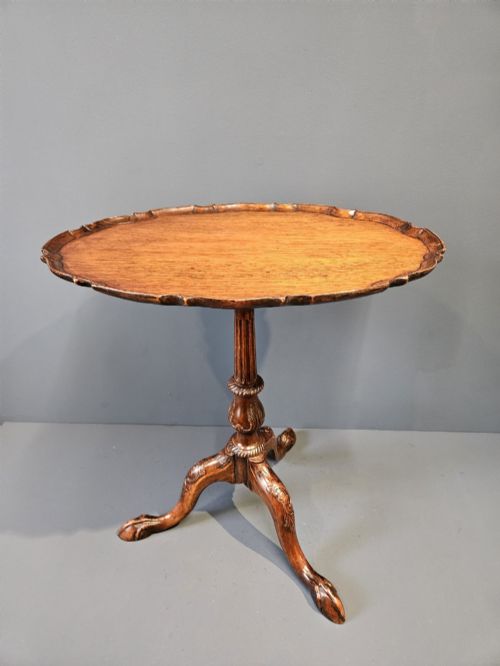
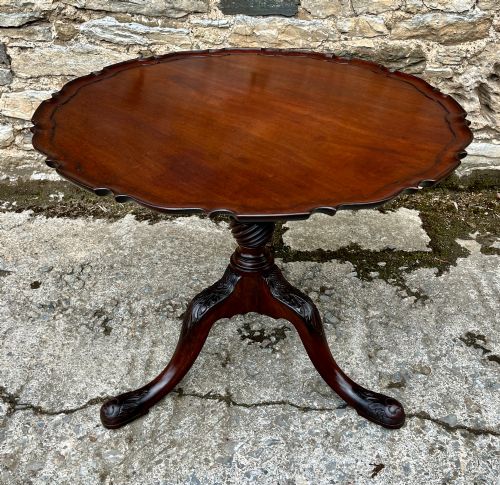
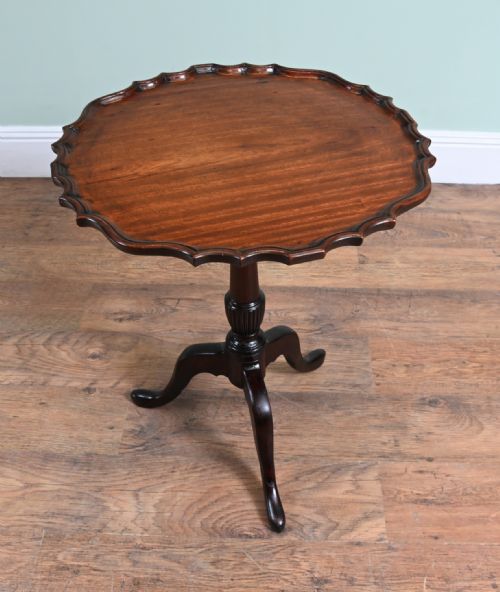
A pie crust top table is a circular small-scale table defined by its moulded, scalloped rim, which resembles pastry crimping. These forms appear predominantly as tripod tables, wine tables, and tea tables, designed for easy movement around a room.
The version most commonly met on this page is the Georgian or George III mahogany tilt-top table, often standing on a pillar and three-leg base. Alongside these, buyers encounter later Victorian interpretations, Edwardian pieces, and revival examples from the early twentieth century.
Functionally, these pieces serve as occasional tables, side tables, and supper tables, with many incorporating a tilting mechanism to save space when not in use.
How they were made
The distinctive raised rim of a pie crust top table is typically carved directly from a single thick solid timber blank rather than applied as a separate moulding. Mahogany dominates the record, supplemented by walnut, oak, and occasional ebonised timber.
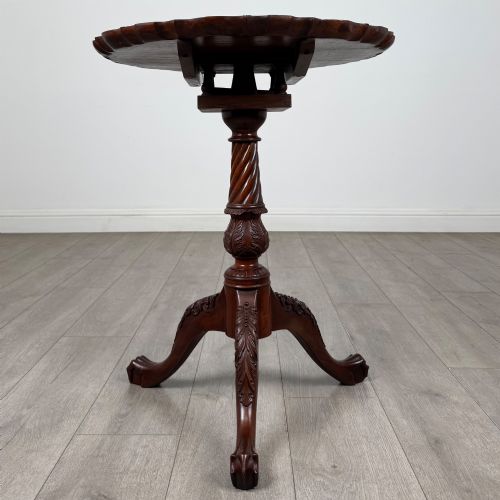
Many examples utilise a birdcage mechanism beneath the top, allowing the surface to both rotate and tilt. This mechanism connects to a turned pillar supported by three cabriole legs terminating in pad, claw and ball, or spade feet.
Listings feature periods spanning the Georgian era, the 19th Century, and 1920s revivals, predominantly constructed from mahogany and walnut.
What varies in quality
Quality in a pie crust top table rests largely on the crispness and depth of the carved rim, where sharper, more articulate scalloping indicates superior craftsmanship. The timber selection also dictates grade, with finely figured mahogany and burr walnut commanding attention over plain planks.
The integrity of the tilting mechanism and the proportion of the tripod base relative to the top determine structural success. Stronger pieces maintain a seamless transition from the carved edge down to the carved knees of the cabriole legs.
The Pie Crust Top Table Glossary
- Pie crust edge
- A raised, scalloped perimeter carved into the tabletop to resemble pastry crust. This decorative moulding prevents items from sliding off the surface.
- Tilt-top table
- A table featuring a hinge mechanism that allows the circular top to pivot into a vertical position. This design enables compact storage against a wall when the table is idle.
- Birdcage
- A timber framework beneath the tabletop that permits both rotation and tilting actions. It sits atop the central pillar.
- Tripod table
- A small occasional table supported by three legs radiating from a central column. This arrangement ensures stability on uneven floors.
- Chippendale style
- A mid-eighteenth-century design influence characterised by carved cabriole legs, claw and ball feet, and intricate edge detailing. Revivals of this style recur frequently in later periods.
Pie Crust Top Table: Frequently Asked Questions
What is a pie crust top table used for?
These tables function primarily as occasional, tea, or wine surfaces for holding small items in reception rooms. Their compact size allows them to sit beside seating or in corners.
Historically, larger versions served as supper tables that could be tilted upright and stashed against the wall when meals concluded.
How do you operate the tilt top?
A catch or wooden peg beneath the surface releases the top from its horizontal locking position against the central column. This lets the surface pivot flat.
In tables equipped with a birdcage, the mechanism also permits the top to rotate freely in the horizontal plane.
Are these tables solid mahogany?
The majority of pieces use solid timber for the tops, particularly when carved from a single thick board to form the raised edge. Walnut and oak also appear as solid primary woods.
Turned pillars and legs are turned or carved from matching solid hardwoods to bear the weight of the tilting top.
How can I tell an 18th-century table from a revival?
Eighteenth-century examples display natural timber oxidation, hand-carved tool marks, and construction methods appropriate to the period, such as pegged joints. Revival pieces from the Victorian era or the 1920s often show different patination and machine assistance.
Examining the underside and the wear around the pivot mechanism helps clarify the age of the piece.