


Georgian Style Snap Table
A georgian style snap table is a tilt top occasional piece designed to save space, and you buy one for its crisp tripod action and rich timber.

Georgian Style Snap Table
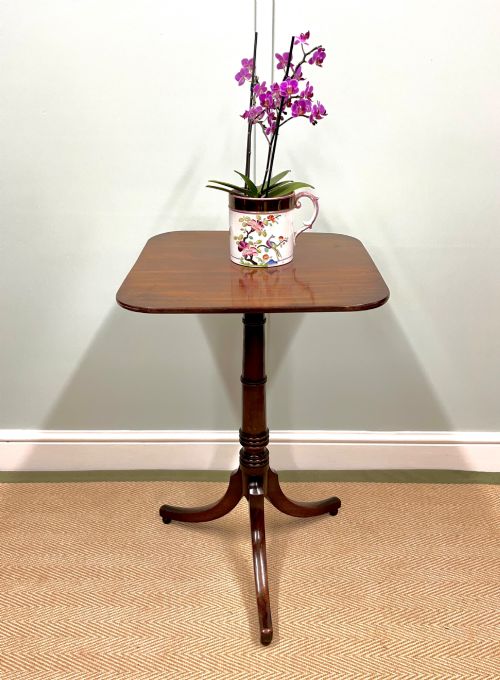
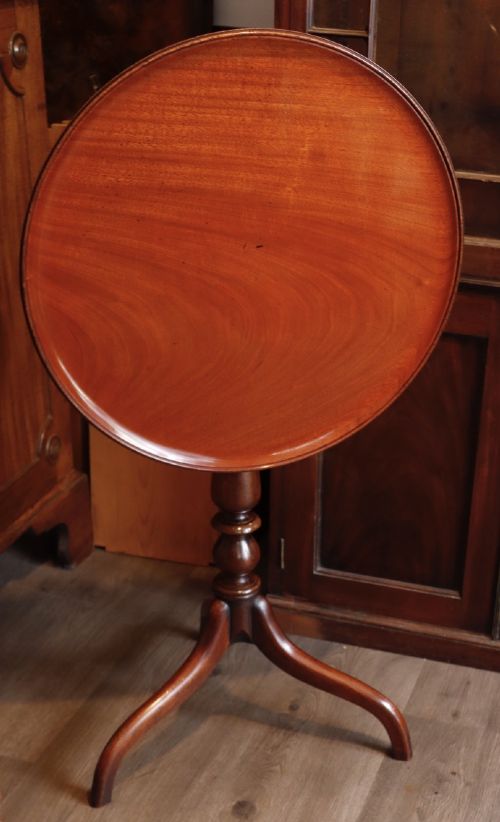
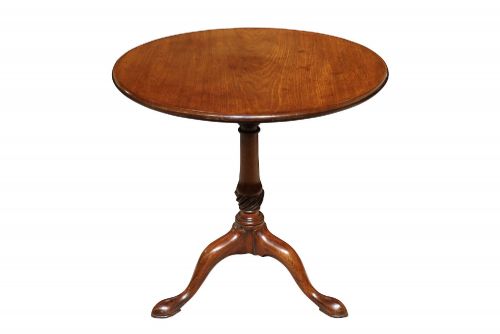
When you search for a georgian style snap table, you are looking at circular timber tables with a pivoting top and a central pillar supported by three legs. The examples seen on this page span from the 18th century through the Victorian period, Edwardian era, and into the 19th and early 20th centuries. You will find them described variously as tripod tables, tilt top tables, supper tables, and occasional tables.
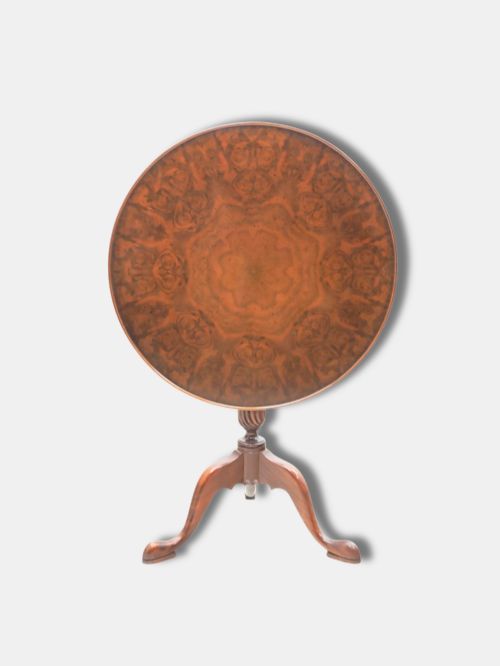
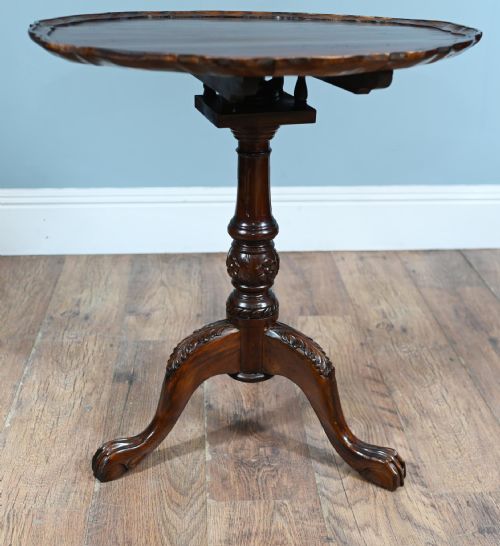
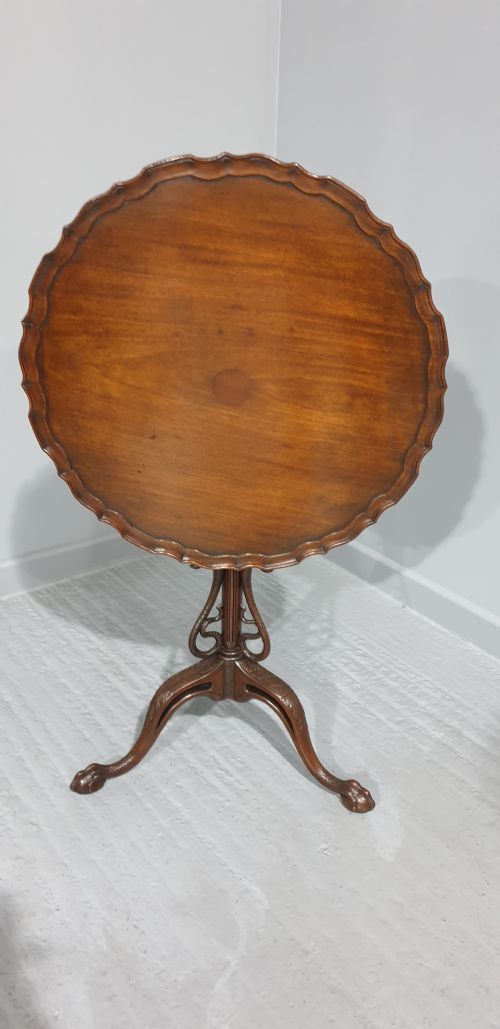
The forms range from plain tops to pie crust edges and scalloped outlines, sometimes incorporating clever birdcage mechanisms beneath the surface. Materials vary from dense mahogany and figured burr walnut veneer to oak, pine, iron, and occasional lacquer finishes. Styles stretch from strict Georgian and Chippendale revival to rustic farmhouse, Regency, and 18th century Italian interpretations.
On this page, the most frequent version you will meet is the mahogany occasional or supper table dating from the 19th century or the Georgian Revival period. These versatile small tables suit sitting rooms and dining spaces alike, pivoting vertically when not in use to stand flat against a wall.
How they were made
Cabinet makers relied predominantly on solid mahogany, walnut, and oak for these tables, often selecting burr walnut veneer for figured surfaces. Pine and iron also appear in utilitarian or regional variations, alongside japanned lacquer finishes on specific English items.
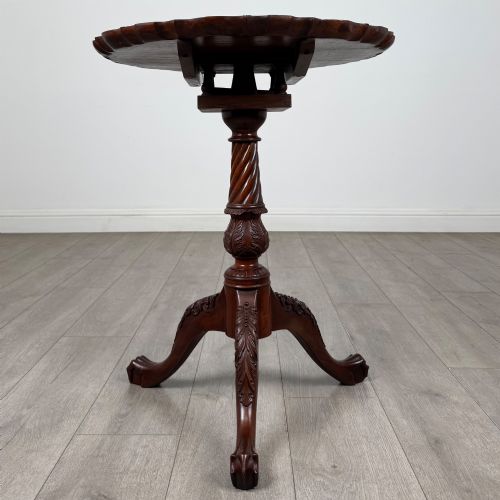
Construction centres on a sturdy central pedestal or tripod base connected to the tabletop via a hinged block or birdcage mechanism. This allows the top to snap or tilt into a vertical position for storage.
Some tabletops swivel on secret birdcages just so they can hide politely against the parlour wall.
What varies in quality
The distinction between ordinary and superior pieces rests on the choice of timber and the crispness of the carving on the tripod legs and edges. Tables featuring finely figured mahogany or burr walnut veneer alongside elaborate pie crust rims sit comfortably at the upper end.
Mechanism design also dictates distinction, particularly where complex birdcage components allow smooth rotation and secure locking. Simpler pine or plain oak variants offer a more rustic character rather than refined cabinet making.
The Georgian Style Snap Table Glossary
- Snap top
- A table mechanism allowing the surface to pivot upright and lock flat against the central column when not in use. This clever hinge system saved precious floor space in period rooms.
- Tripod base
- A three-legged support structure radiating from a central pedestal pillar. It ensures stability on uneven historical floors.
- Birdcage
- A rotating wooden frame situated beneath the tabletop that allows the surface to both tilt and revolve. This feature is typically found on finer examples.
- Pie crust edge
- A raised, scalloped tabletop border carved into undulating curves resembling traditional pastry work. It prevented cups and plates from sliding off during supper.
- Japanned
- European lacquerwork imitating Asian export screens and panels through layered varnishing and metallic decoration. It brings a glossy, decorative surface texture to the piece.
Georgian Style Snap Table: Frequently Asked Questions
What is a snap table used for?
These pieces served primarily as supper tables, tea tables, or occasional surfaces in period drawing rooms.
When finished with the meal, the top snapped into a vertical position so the furniture could be pushed against the wall.
How do I identify a Georgian style snap table?
Look for a circular timber top supported by a central pillar and three curving legs.
Key indicators include tilt mechanisms, tripod bases, and optional decorative borders such as pie crust edges.
What is the difference between 18th century and revival pieces?
Eighteenth century examples display the original patination and timber shrinkage of the period in which they were first made.
Georgian revival pieces, built later in the 19th or 20th centuries, copy those earlier proportions using traditional cabinet-making methods.
How do I live with a tilt top table?
Position the table beside a chair or sofa where its compact footprint can handle everyday cups and books.
You can keep the top tilted against a wall when you need extra floor space in smaller rooms.