


Pie Crust Tea Table
A pie crust tea table brings centuries of British cabinet-making directly to your room, defined by its raised, carved edge and tilting top.
Pie Crust Tea Table
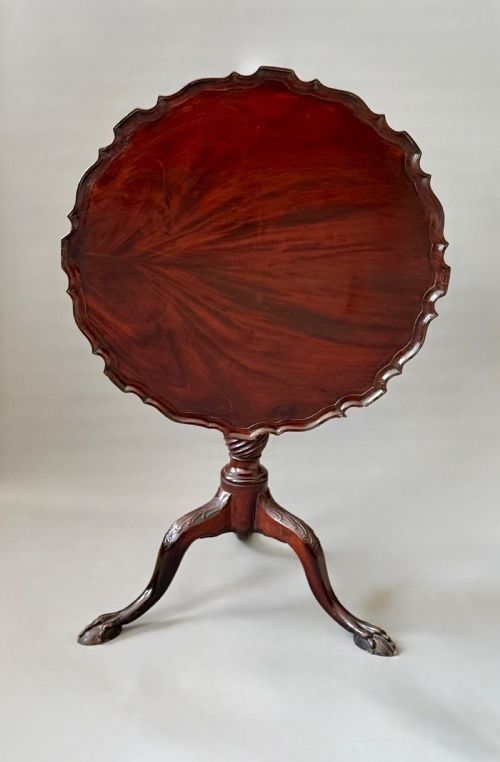
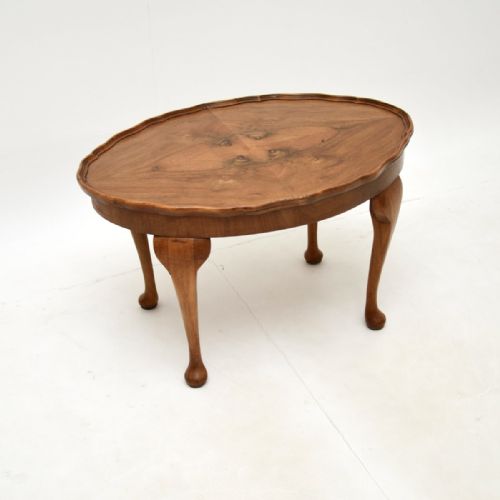
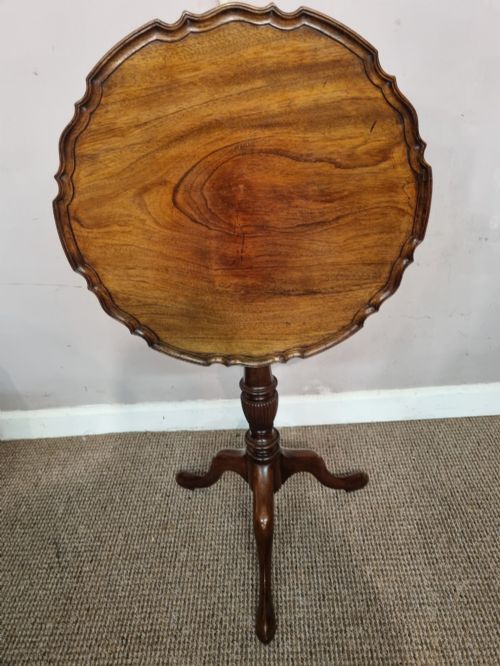
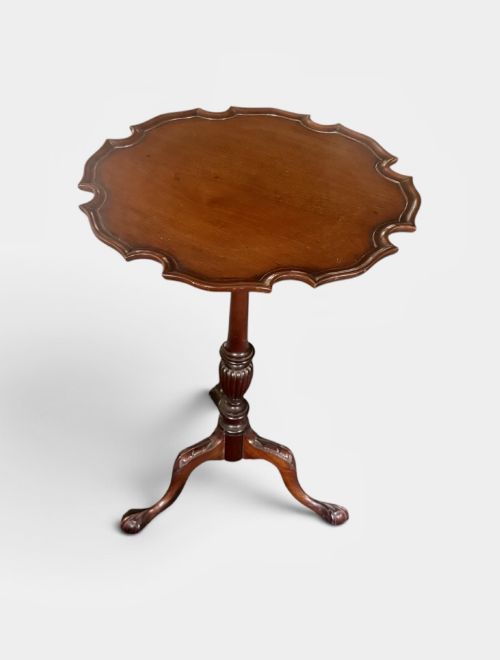
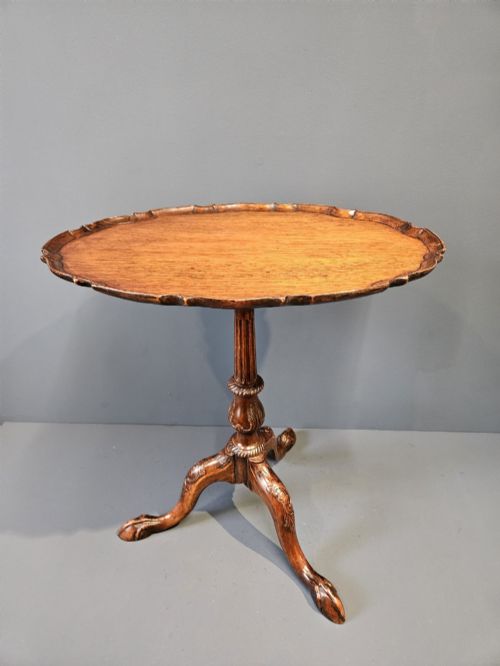
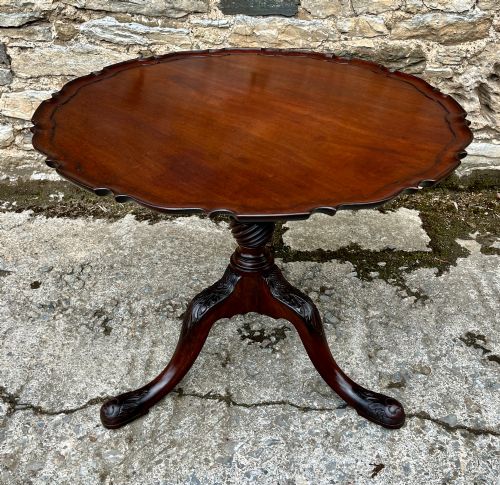
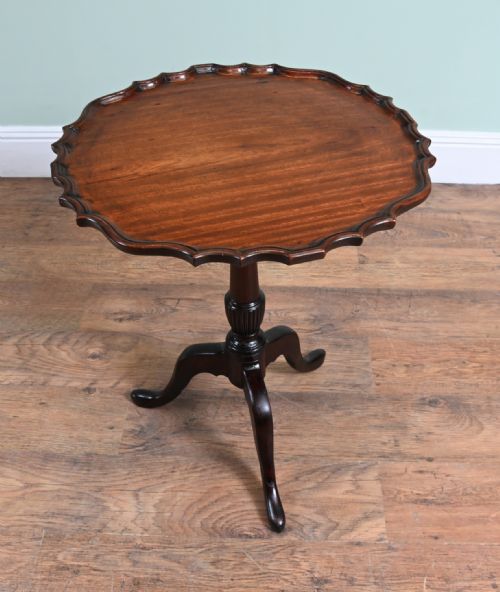
A pie crust tea table is a small, versatile surface designed for intimate service, most frequently encountered in mahogany and walnut across this selection. These tables typically feature a circular or oval top raised on a central pillar with tripod legs, serving as wine tables, occasional tables, or compact coffee tables.
The defining characteristic is the shaped, scalloped rim carved directly into the solid timber or raised in imitation of pastry crimping. Examples range from eighteenth-century George III originals to later Edwardian revivals, nineteenth-century adaptations, and twentieth-century interpretations.
Buyers looking for a pie crust tea table will find both tilt-top mechanisms that allow the surface to pivot upright against the pillar and fixed-top variants suited for daily placement.
Materials and construction
Cabinet-makers relied heavily on dense hardwoods, employing solid mahogany and rich walnut alongside figured walnut veneers to achieve smooth, gleaming surfaces. The characteristic raised rim required meticulous hand-carving from a thick plank of timber, following the contours of the circle or oval without splitting the grain.
Tripod bases and pedestals often incorporate turning and subtle carving, joined securely to the top via birdcage mechanisms or hinged blocks that enabled the surface to tilt or snap shut when not in use.
Listings span from the Georgian period through Victorian designs to Edwardian and 1930s revivals in mahogany, walnut, and oak.
Judging quality
Quality rests primarily on the crispness and depth of the carved rim, where sharp, evenly spaced lobes separate superior hand-carved pieces from softer, later reproductions. The choice of timber also dictates the visual weight, with richly figured walnut and dense, patinated eighteenth-century mahogany holding greater presence than plainer secondary woods.
The integration of the tilt mechanism reveals the maker's care, showing tight joints and stable movement where the column meets both the legs and the underside of the top.
The Pie Crust Tea Table Glossary
- Pie crust edge
- A raised, scalloped rim carved around the perimeter of a table top to resemble pastry work. This decorative moulding kept cups and small items from sliding off.
- Tilt-top table
- A table designed with a hinged mechanism allowing the top to pivot to a vertical position. This saved valuable floor space in smaller rooms when the table was not in use.
- Tripod base
- A pedestal support resting on three spreading legs, commonly terminating in pad or claw feet. It offered maximum stability on uneven floors.
- Birdcage
- A wooden framework beneath the table top that connects it to the central pillar, allowing the surface both to rotate and to tilt. It is typical of finer eighteenth-century examples.
- Snap top
- A spring-loaded or latched catch securing a tilting table top in the horizontal position. It prevents the surface from pivoting unexpectedly during use.
Pie Crust Tea Table: Frequently Asked Questions
What is a pie crust tea table used for?
These pieces served historically for pouring tea, holding wine, or playing games in the parlour.
Today, they function as compact side tables, lamp stands, or low coffee tables in living spaces.
How do you spot a genuine eighteenth-century piece?
Examine the timber for deep patination, shrinkage marks, and hand-carved details on the rim and tripod legs.
Older examples often feature peg construction and birdcage supports beneath the tilting top.
Why does the top tilt?
The tilting mechanism allowed historical households to tuck the tables flat against the wall when not needed for tea.
This space-saving design makes modern placement flexible in hallways and tighter corners.
Are walnut and mahogany the only woods?
Mahogany and figured walnut dominate the selection, offering rich brown and amber tones with distinct grain patterns.
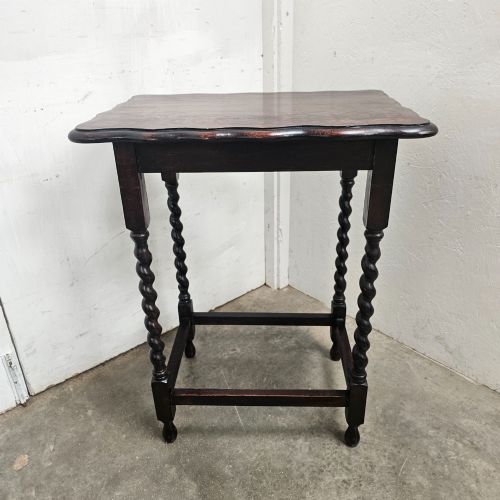
Occasional pieces appear in English oak, sometimes featuring turned barley twist supports.