






Pictorial Needlework Panel
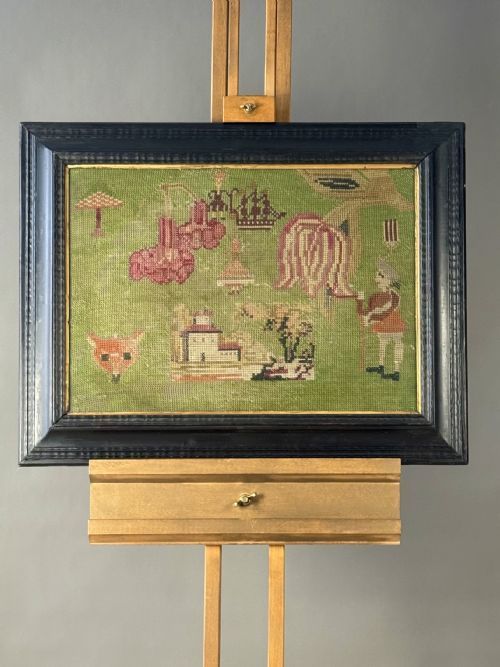
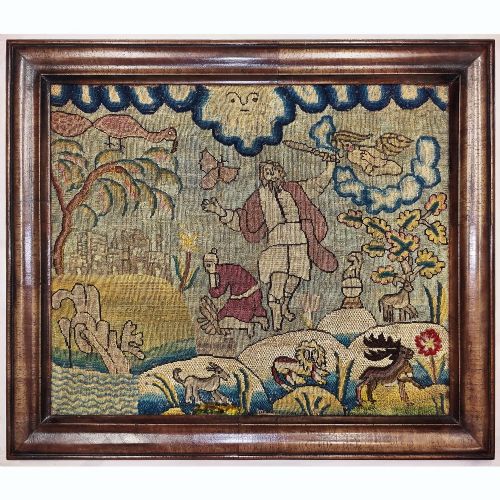
These pieces of pictorial needlework panel bring centuries of textile art into a room, offering stitched scenes that range from Stuart subjects to Victorian samplers.
Pictorial Needlework Panel
A pictorial needlework panel represents a specific form of textile art designed primarily as wall art, capturing figurative scenes, historical narratives, and classical motifs. Buyers seeking a pictorial needlework panel will encounter diverse formats, from framed embroidery to tapestry cushion covers and needlework pictures.
The selection on this page spans several distinct eras, notably the seventeenth century, eighteenth century, and the Victorian period. Pieces range from large European tapestries and Dutch silk embroidery to detailed English needlework pictures and dated samplers.
Origins vary across European traditions, including English, French, Italian, and North German workshops. Forms include wool and silk embroidery, beadwork fragments, and textile samplers preserved behind glass in period frames.
Materials and construction
Makers constructed these panels using foundational textiles such as linen, worked over with wool, silk, and metal thread. Many works incorporate specialised techniques like beadwork, utilising glass beads to render detailed pictorial scenes.
Framing materials reflect the period of use, incorporating wood, gilt wood, and rosewood. These textiles frequently survive mounted behind glass for protection, while others take the functional form of upholstered cushion covers.
Pictorial Needlework Panel Retail Price Guide 2026
Typical asking prices for pictorial needlework panel among the pieces listed under this phrase on Sellingantiques today, from the lower quarter to the upper quarter. They describe what is for sale here now, not the wider market.
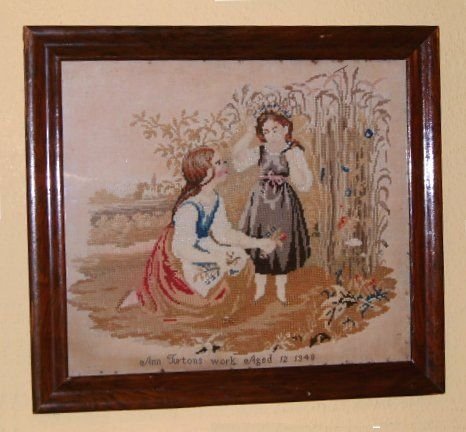
Sarah Anne Hudson stitched her name and the year 1855 into a sampler, leaving her needlework permanently signed for future centuries.
Assessing quality and preservation
Quality in a pictorial needlework panel rests upon the intricacy of the stitching, the survival of delicate materials like silk and metal thread, and the clarity of the pictorial design. Early examples that retain their original colouring and structural integrity demonstrate superior craftsmanship.
The condition of the textile and its accompanying frame determines much of the distinction between pieces. Intact mounting, minimal thread loss, and the survival of secondary elements such as glass beads or rosewood frames elevate the standing of an individual work.
The Pictorial Needlework Panel Glossary
- Needlework picture
- A decorative textile created with thread on a fabric ground, designed specifically for display as art rather than for practical utility.
- Metal thread
- A fine thread made of beaten metal or metal-wrapped core fibres, utilised in embroidery to add reflective highlights and texture.
- Tapestry
- A form of textile art woven on a loom rather than embroidered with a needle, often depicting narrative or landscape scenes.
- Sampler
- A piece of needlework produced to demonstrate skill in various stitches, frequently including alphabets, dates, and maker names.
- Baroque
- A stylistic period characterised by ornate detail, drama, and grandeur, visible in seventeenth and eighteenth-century European textiles.
Pictorial Needlework Panel: Frequently Asked Questions
What is a needlework picture?
A needlework picture is an embroidered textile created for visual display rather than clothing or furnishings. These pieces utilise various stitches to render pictorial scenes, figures, and landscapes.
Historically mounted and framed, they functioned as wall art in domestic interiors, preserving detailed needlecraft across centuries.
How are antique tapestries constructed?
Antique tapestries are woven on looms by interlacing warp and weft threads to build up a pictorial image. Makers combined wool, silk, and sometimes metal threads to create complex, durable hangings and furnishings.
Unlike embroidery stitched onto a pre-made ground cloth, tapestry weaving builds the design simultaneously with the textile structure itself.
How do I care for antique textiles?
Antique textiles require protection from direct sunlight, which fades delicate silk, wool, and metal threads over time. Maintaining stable indoor humidity prevents the dry rot of historic linen and backing fabrics.
Displaying pieces behind glass shields them from atmospheric dust and physical handling while preserving the fragile fibres.
What distinguishes a sampler?
A sampler is a specific type of needlework created to practice and display different stitches, patterns, and alphabets. They often include the maker's name and a date, providing a documented record of the needleworker.
Later Victorian examples frequently incorporate symmetrical borders, pious verses, and illustrative motifs alongside traditional lettering.