





17th Century Embroidery
These pieces of 17th century embroidery carry tangible history in silk, wool, and metallic thread, offering collectors rare panels and framed needlework to live with today.
17th Century Embroidery
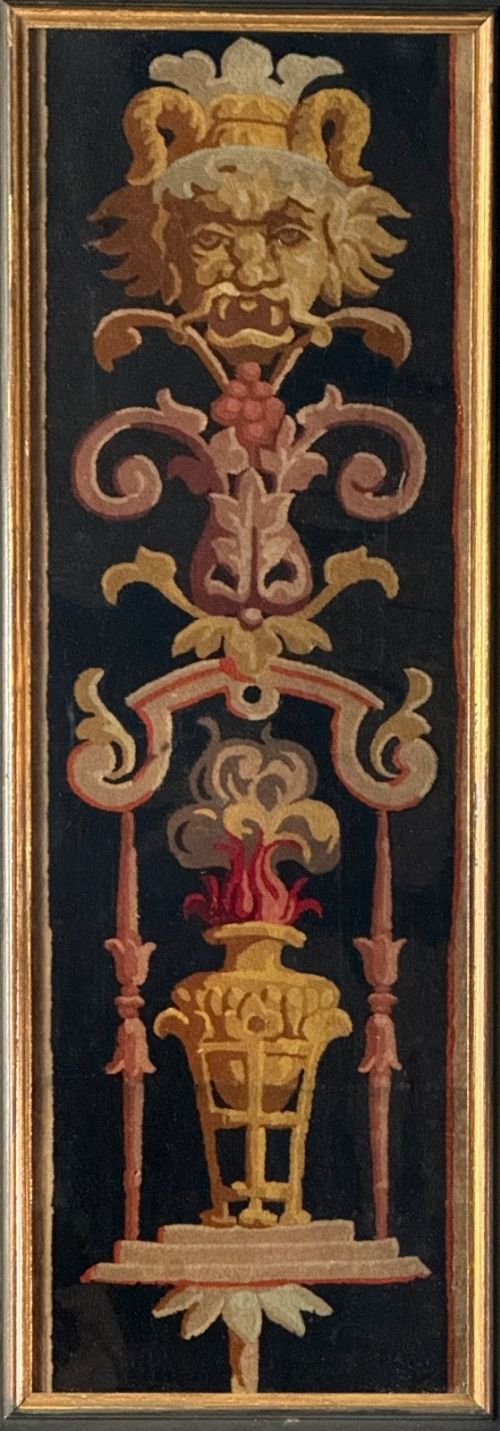
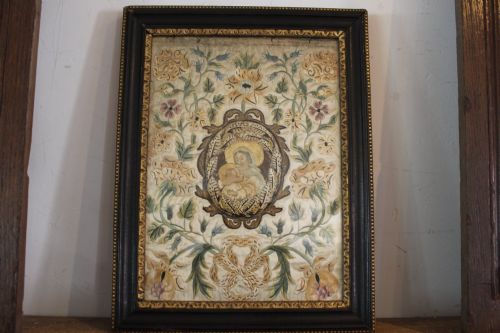
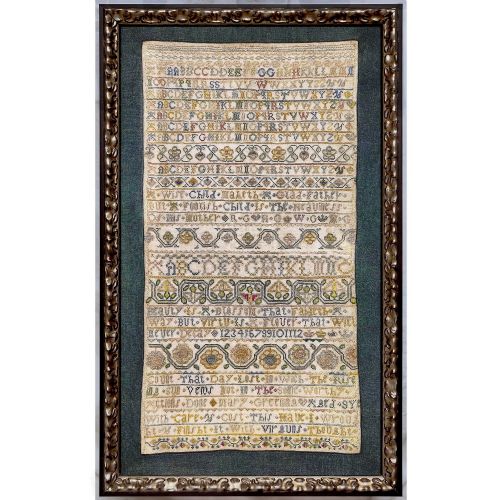
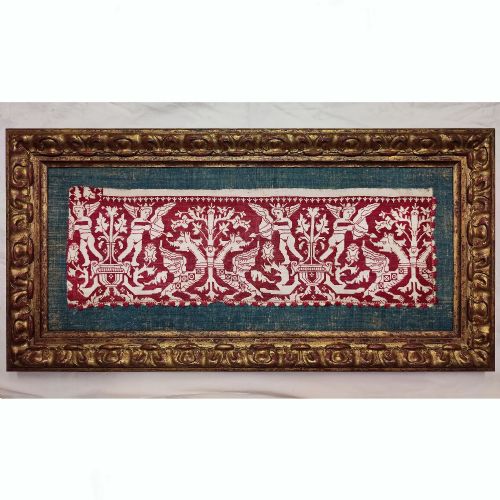
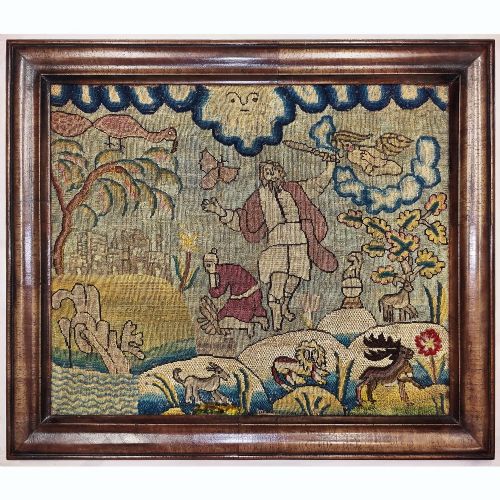
When you search for 17th century embroidery, you encounter textile art spanning English and continental workshops, ranging from Stuart stumpwork panels to Italian borders. The versions most likely to meet you on this page are framed needlework pictures, embroidered panels, and band samplers executed in silk and wool.
The material evidence shows works originating from the Stuart and Baroque periods, alongside Jacobean styles and continental classical pieces. These objects include framed textile art depicting royal figures, mythological scenes, and intricate floral motifs upon linen grounds.
Surviving examples frequently present as fragments, coifs, or complete framed panels housed within period wooden frames. They connect modern interiors directly to seventeenth-century needlework traditions through tangible physical survival.
How they were made
The makers of these textiles relied primarily on linen grounds worked with silk, wool, and metallic thread to build pictorial and geometric surfaces. Artisans incorporated raised stumpwork techniques, glass beads, and crewelwork stitching to create texture and depth within the composition.
Many surviving panels utilise padded elements and couching stitches to elevate figures and architectural details above the fabric base. These complex stitches demand meticulous hand execution, uniting diverse fibres onto woven foundations.
17th Century Embroidery Retail Price Guide 2026
Typical asking prices for 17th century embroidery among the pieces listed under this phrase on Sellingantiques today, from the lower quarter to the upper quarter. They describe what is for sale here now, not the wider market.
The listings here feature works spanning the 17th and 18th centuries, utilising silk, wool, linen, glass, and metallic thread.
What varies in quality
Quality across these textiles depends upon the preservation of the delicate fibres, the tightness of the stitch work, and the complexity of the figural or botanical design. Superior examples retain their original metallic sheen and the rich polychrome tones of the silk threads.
The degree of survival in raised stumpwork faces and costume details distinguishes finer pieces from heavily worn fragments. Well-preserved framing and stable linen grounds further elevate the standing of an individual work.
The 17th Century Embroidery Glossary
- Stumpwork
- A raised embroidery style popular in the seventeenth century, utilising padding, wooden moulds, and wire cores to create three-dimensional figures and motifs. It often depicts royal personages and biblical scenes.
- Crewelwork
- Embroidery executed with wool yarn on a linen or cotton-linen twill fabric, frequently seen in large-scale decorative hangings and panels. The technique allows for dense, varied stitches.
- Band sampler
- A long, narrow strip of linen worked with various decorative embroidery stitches and pattern bands, often used by young stitchers to practice and record designs.
- Coif
- A close-fitting cap worn in the seventeenth century, frequently decorated with delicate whitework or coloured silk and metallic thread embroidery.
- Couching
- An embroidery technique where laid threads are fastened to the surface of the fabric by smaller stitches crossing them at right angles, commonly employed with metallic threads.
17th Century Embroidery: Frequently Asked Questions
How should I hang 17th century embroidery?
Keep framed textile art away from direct sunlight and strong artificial light sources to protect fragile silk and wool fibres from fading. Maintain stable room humidity to prevent the underlying linen and wood frames from degrading.
Ensure that framing utilises conservation-grade materials with UV-filtering glass and non-acidic backing boards. Professional framing safeguards the textile structure while allowing you to display the piece safely on an interior wall.
What is Stuart stumpwork?
Stuart stumpwork is a distinctive form of raised embroidery produced during the seventeenth century under the Stuart monarchs. These panels frequently feature high-relief figures of kings, queens, and courtly attendants surrounded by flora and fauna.
The technique combines flat stitches with padded elements, beadwork, and wire-supported forms to achieve a striking three-dimensional effect. Such works served as displays of skill and political allegiance in period homes.
Are these embroideries fragile?
Seventeenth-century textiles are inherently delicate due to the age of organic materials like silk, wool, and linen. Metallic threads can tarnish and silk threads may weaken after centuries of exposure to air and handling.
Despite this fragility, stable mounting and protective framing allow these pieces to endure for daily appreciation. Gentle handling during placement is essential, avoiding any direct contact with the textile surface.
How do I identify a band sampler?
A band sampler typically presents as a horizontal strip of linen displaying horizontal rows of distinct embroidery patterns and alphabets. Young needleworkers created them to preserve stitch dictionaries and ornamental designs for future reference.
These works show chronological evolution through their choice of motifs and lettering styles, often including the maker's name and dates. Their narrow format distinguishes them from larger pictorial needlework panels.