




Antique Petit Point
Antique petit point brings dense, fine needlework into your rooms, offering small stitches that capture intricate detail in wool, silk, and linen.
Antique Petit Point
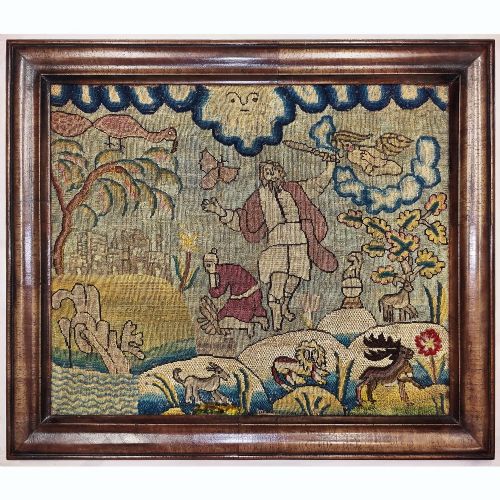
When you search for antique petit point, you are looking at finely worked needleart on canvas or linen mesh, executed with small tent stitches that allow for delicate shading and intricate pictorial detail. The pieces available span several centuries, reaching from seventeenth-century Stuart work and eighteenth-century panels down to nineteenth-century Victorian furnishings.
The forms vary widely across the inventory, appearing as framed wall art, textile pictures, and evening purses alongside larger functional seating. You will regularly encounter armchairs, salon chairs, and footstools upholstered in these elaborate tapestries, as well as wall-hanging pictures housed in rosewood frames.
Origins stretch across English, French, and Italian workshops, reflecting diverse stylistic revivals from French Rococo and Louis XV to Baroque and Georgian aesthetics. These items bring historical textile craftsmanship directly into domestic spaces, serving as both decorative wall art and functional antique furniture.
How antique petit point was made
Frames made from walnut, rosewood, and brass often house the flat textile panels and pictures to protect the edges and display them as wall art. For furniture pieces, the completed tapestries were stretched over wooden frames for armchairs, salon chairs, and small footstools.
Antique Petit Point Retail Price Guide 2026
Typical asking prices for petit point among the pieces listed under this phrase on Sellingantiques today, from the lower quarter to the upper quarter. They describe what is for sale here now, not the wider market.
Courtly maidens and tiny evening purses prove that historical stitchers possessed infinite patience.
What varies in quality
The fineness of the stitch count dictates the clarity of the design, with denser, smaller stitches producing sharper contours and more nuanced facial expressions in figural scenes. Superior execution relies on tight, even tension across the canvas, preventing distortion in the pictorial composition.
Material choice and framing also define the grade of a piece, as lustrous silk highlights contrasted against wool work indicate a higher tier of production. Original frames in rosewood or walnut, paired with well-preserved textile grounds, elevate the historical integrity of the piece.
The Antique Petit Point Glossary
- Petit point
- A fine needlepoint stitch worked over a single thread of canvas mesh. This technique allows for exceptional detail and shading in antique textile art.
- Gros point
- A coarser needlepoint stitch worked over multiple threads of canvas mesh. It is frequently found combined with finer petit point work on larger upholstery projects.
- Needlework
- A general term for decorative sewing and textile craft executed by hand with a needle. This encompasses both flat wall art and upholstered furnishings.
- Rosewood
- A dense, heavily grained dark wood used for framing pictures and mirrors. It provides a durable and decorative border for nineteenth-century textile panels.
- Tapestry
- A form of textile art traditionally woven on a loom or worked by hand with needle and thread. In this context, it refers to pictorial wall hangings and furniture covers.
Antique Petit Point: Frequently Asked Questions
What is antique petit point?
Antique petit point is a very fine style of needlework created using tiny stitches on a canvas or linen ground. It allows for intricate pictorial details, portraits, and floral motifs.
These textile works appear as framed pictures, decorative panels, evening purses, and upholstery on chairs and footstools.
How do I care for needlepoint?
Keep textile art and upholstered furniture out of direct sunlight to prevent the wool and silk threads from fading. Dust pieces gently with a soft brush.
Avoid placing them in damp rooms, as natural fibres like wool and linen absorb moisture over time.
Are these pieces framed?
Many flat textile works and wall art pieces are housed in their original wood frames, such as rosewood. Others are mounted directly onto furniture frames.
Check individual listings to see whether a piece is preserved as a framed picture or utilised as upholstery.
What periods do these pieces span?
The available items span from the seventeenth century through the eighteenth and nineteenth centuries. You will find examples reflecting Georgian, Victorian, and various revival styles.
Each period brings distinct colour palettes and subject matters, from courtly scenes to floral patterns.