





Antique Wool Sampler Picture
An antique wool sampler picture brings centuries of domestic needlework to the wall, offering textured scenes and verses stitched by hand.
Antique Wool Sampler Picture
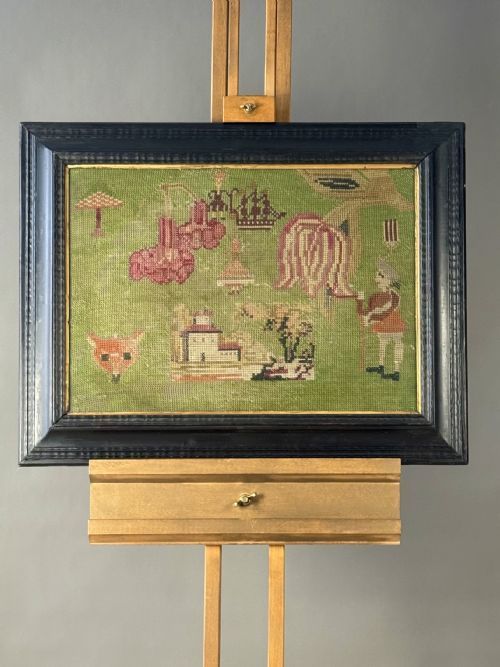
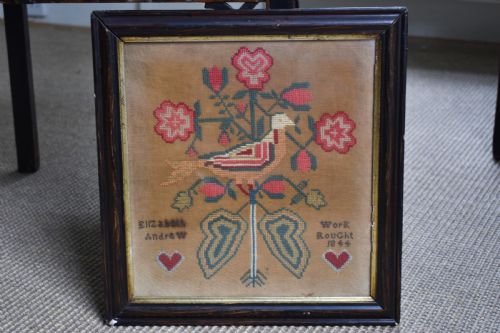
When you search for an antique wool sampler picture, you are looking at textile art and needlework created to demonstrate skill or record household motifs. These pieces range from formal religious subjects to folk art and botanical studies.
The versions you are most likely to meet on this page span the eighteenth century and the Victorian period, including nineteenth century gros point and petit point wool work.
Most examples arrive framed in wood or rosewood, sometimes protected behind glass, preserving the original linen or canvas ground and wool thread stitching.
Materials and construction
These works rely on wool thread, silk, and sometimes cotton stitched onto a foundation of linen or canvas. Makers utilised various stitch types, including gros point and petit point, to build up dense pictorial surfaces and lettering.
Surviving pieces are typically housed in period wooden frames, such as rosewood, which often feature glass to protect the delicate textile art from dust and moisture.
Antique Wool Sampler Picture Retail Price Guide 2026
Typical asking prices for wool sampler picture among the pieces listed under this phrase on Sellingantiques today, from the lower quarter to the upper quarter. They describe what is for sale here now, not the wider market.
St Peter stands eternally with the keys to heaven, stitched securely in wool for anyone needing divine entry.
Factors that define quality
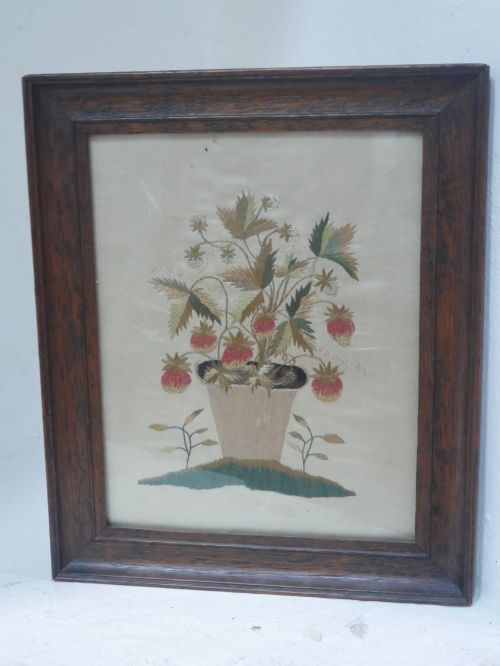
Quality rests upon the fineness of the stitching and the complexity of the design, with petit point work allowing for greater detail than coarser folk art execution. The sophistication of the composition, whether a pot of strawberries or a narrative scene like St Peter holding the keys of heaven, dictates visual impact.
The condition of the wool thread and the ground linen, along with the retention of an original period frame such as rosewood, elevates an example above simpler or heavily repaired pieces.
The Antique Wool Sampler Picture Glossary
- Sampler
- A piece of needlework produced as a demonstration or test of skill in various stitches. They frequently include alphabets, numerals, and decorative motifs.
- Gros point
- A coarse counted-thread embroidery stitch worked on canvas. It creates a durable, bold texture often seen in nineteenth century wool work.
- Petit point
- A fine tent stitch worked on canvas, allowing for high detail and shading. It appears in more intricate pictorial needlework.
- Canvas
- An open-weave foundation fabric used for needlepoint and tapestry. It provides the grid structure for wool thread stitching.
- Rosewood
- A dense, dark timber utilised for nineteenth century frames. It provides a rich border for framed textile art.
Antique Wool Sampler Picture: Frequently Asked Questions
How are antique needlework pictures framed?
Many examples are set within period wooden frames, such as rosewood, often protected behind glass. This framing helps shield the delicate wool and linen from environmental wear.
Original frames are valued for maintaining the historical integrity of the piece, though some works have been reframed over the centuries to ensure proper preservation.
What subjects appear in these works?
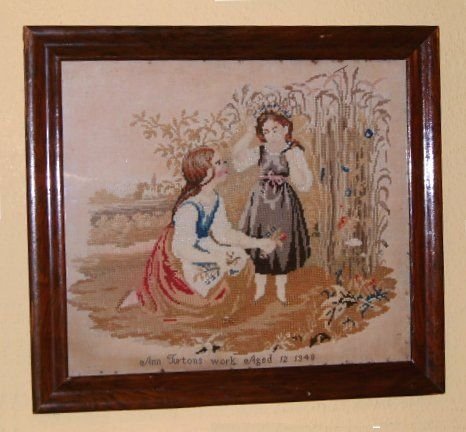
The imagery ranges from traditional lettering and alphabets on early samplers to pictorial scenes like religious figures, botanical studies of strawberries, or figures feeding swans. Folk art examples often display charmingly naive compositions.
Each subject reflects the aesthetic and domestic interests of the period in which the maker lived.
How do I date a wool sampler?
Dating relies on stylistic clues, framing materials, and the types of stitches and wool thread utilised. Eighteenth century pieces often show different colour palettes and canvas structures compared to Victorian or nineteen-hundreds examples.
In some instances, makers stitched dates or names directly into the textile, providing a clear point of origin.
Are these pieces meant for wall display?
Yes, nearly all surviving examples function as wall art, framed artwork, or needlework pictures designed for interior display. They were mounted to showcase domestic accomplishment and adorn home interiors.
Protecting them from direct sunlight ensures the wool thread colours remain vibrant over time.