
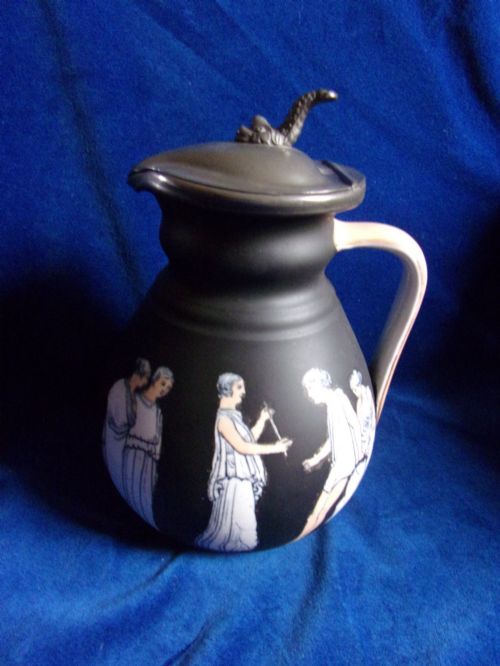
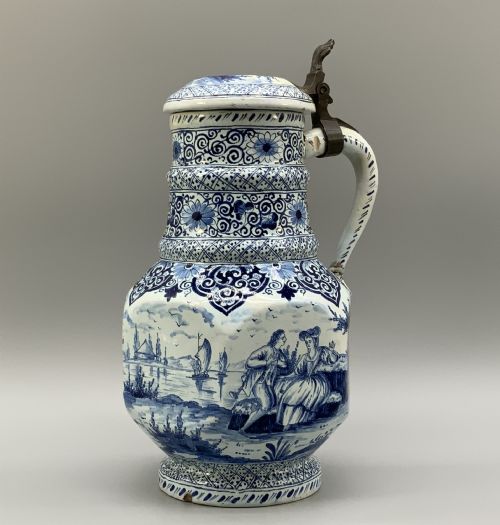
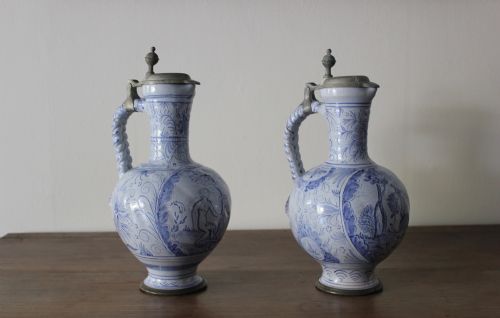
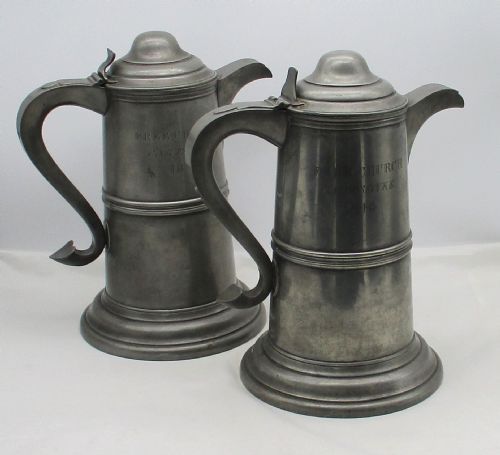
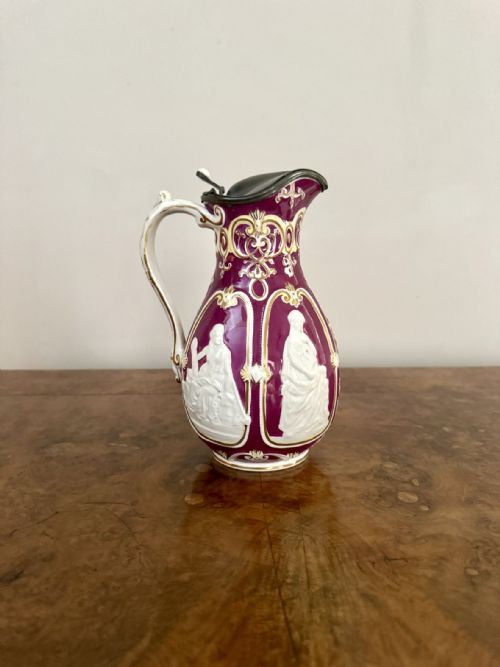


Pewter Lidded Pitcher
These pewter lidded pitcher pieces bring enduring utility to a room, offering heavy metal and ceramic bodies topped with secure metal lids.
Pewter Lidded Pitcher
A pewter lidded pitcher is a vessel designed for holding liquids, combining a durable body with a hinged metal lid to secure the contents. When you search for pewter lidded pitcher, you encounter examples ranging from metal flagons to glazed earthenware and porcelain jugs.
The pieces on this page span several centuries, including eighteenth-century Dutch Delftware, Georgian flagons, and nineteenth-century Victorian water jugs. Forms include tall church flagons, spired vessels, and large beer flagons decorated with hops or relief moulding.
Origins stretch across England, Scotland, Ireland, Germany, Jersey, and Guernsey. Buyers frequently meet regional measures and ecclesiastical flagons alongside domestic jugs made from pewter, stoneware, and tin-glazed earthenware.
Factors of quality
Quality rests on the crispness of the casting in metal pieces and the definition of the relief moulding in ceramic bodies. Heavy gauge metal and well-fitted lids that align properly with the handle indicate superior execution.
The clarity of makers' marks or touchmarks stamped into the pewter adds significant interest for collectors. Painted decoration on tin-glazed earthenware and porcelain varies in hand-painted detail and depth of colour.
A Scottish pint capacity flagon known as a Tappit Hen waits to serve history enthusiasts.
JOHN HEANEY·ROBERT ILES·CHARLES MEIGH·JOHN DE ST CROIX
The Pewter Lidded Pitcher Glossary
- Flagon
- A large vessel with a handle and lid, frequently used for ecclesiastical or domestic service. These pieces often feature flat or spired lids.
- Tappit Hen
- A traditional Scottish form of pewter measure with a distinct lid and knob, produced in specific capacity sizes. This form represents a notable regional style.
- Tin-Glazed Earthenware
- Pottery covered with an opaque white tin glaze that accepts painted decoration, commonly seen in Dutch Delftware production. It provides a smooth surface for cobalt blue designs.
- Salt Glaze
- A ceramic finish achieved by throwing common salt into the kiln during high-temperature firing, creating a textured, pitted surface resembling orange peel. This technique protects stoneware water jugs.
- Touchmark
- A stamp impressed by a metalworker or guild onto pewter wares to indicate the maker and standard of the alloy. Finding a clear mark helps identify the origin and workshop.
Pewter Lidded Pitcher: Frequently Asked Questions
What is a pewter lidded pitcher?
A pewter lidded pitcher is a vessel made from metal or ceramic featuring a fitted metal lid, used historically for serving liquids.
These pieces include domestic water jugs, large beer flagons, and church vessels designed to hold specific liquid measures.
How do I date a pewter lidded pitcher?
Dating relies on stylistic clues, historical forms, and stamped touchmarks left by the original metalworkers or potteries.
Evidence on this page points to periods from the early eighteenth century through to the late Victorian era and Art Nouveau movement.
Were these pitchers used for beer or water?
Historical uses varied widely depending on the specific form, capacity, and origin of the individual vessel.
Examples include church flagons for religious services, tavern beer flagons decorated with hops, and domestic water jugs for daily dining.
How do I care for a pewter lidded pitcher?
Caring for these mixed material items involves gentle cleaning and avoiding harsh chemical polishes that might damage historic metal or glaze.
Maintaining a stable indoor environment protects both the soft pewter alloy and the fragile ceramic bodies from unnecessary wear.