
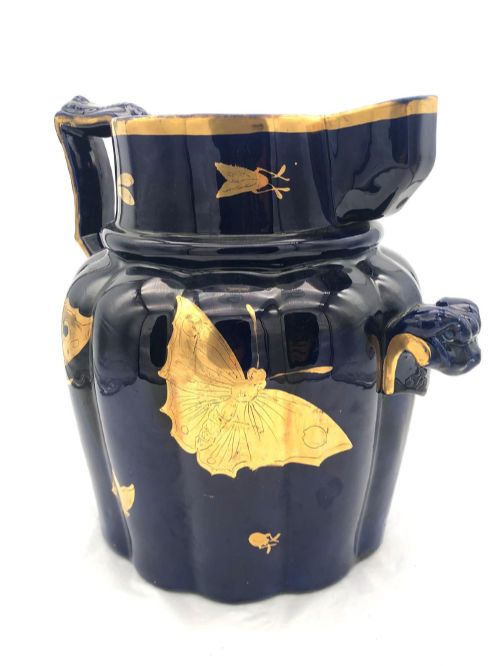
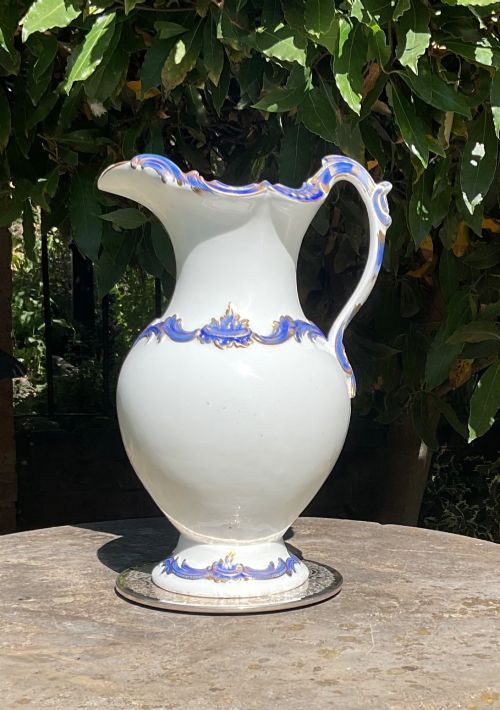
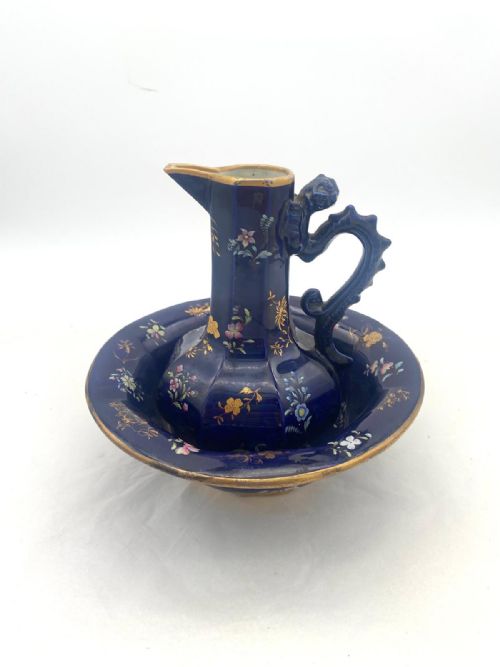
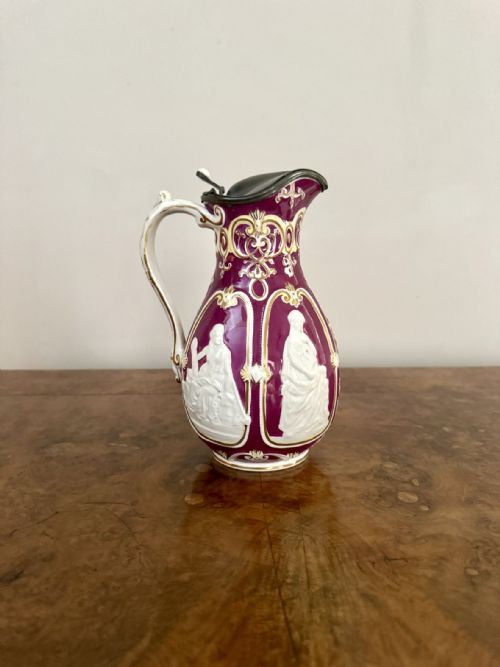
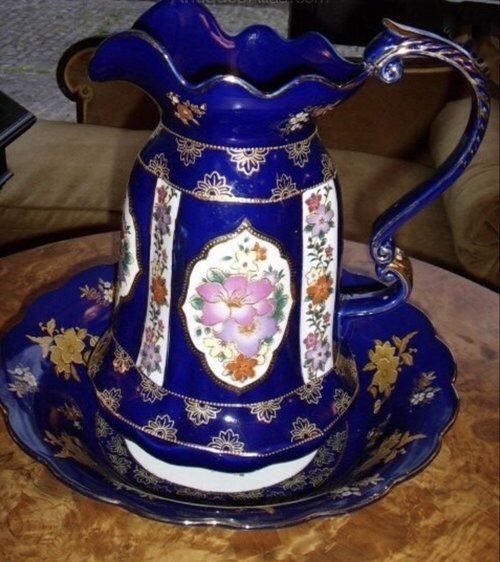
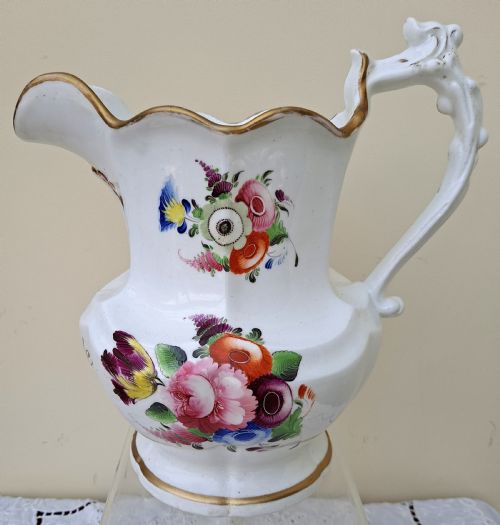


Gilded Ceramic Water Jug
These gilded ceramic water jug examples bring a touch of historic lustre to a room, offering both decorative presence and traditional utility.
Gilded Ceramic Water Jug
A gilded ceramic water jug serves as both a functional vessel and a decorative display piece, drawing on centuries of ceramic tradition. When searching for a gilded ceramic water jug, buyers encounter forms ranging from simple washstand pitchers to elaborate ewers.
The selection includes pieces spanning the Georgian, Regency, Victorian, and Edwardian periods. Many examples appear alongside matching basins as part of washstand sets, while others stand alone as decorative ewers.
Materials and construction
Potters shaped these vessels using porcelain and earthenware, often applying cobalt blue glaze, enamel, and handpainted details depicting birds, insects, and floral designs. Ironstone also appears among the sturdier utilitarian forms.
Makers applied gold leaf, gilt, and gold gilding by hand to highlight handles, rims, and moulded motifs. Firing techniques varied across factories such as Royal Worcester, Derby, and Meissen, determining the durability of the glaze and the brilliance of the metallic finish.
Listings feature porcelain and earthenware pieces decorated with gold leaf, gilt, and enamel across the Victorian, Regency, and Georgian periods.
Assessing quality
Quality rests upon the crispness of the moulding and the finesse of the handpainting, particularly where floral motifs or armorial crests are concerned. Superior pieces display even distribution of the gold leaf or gilding without heavy rubbing.
The weight of the porcelain and the balance of the handle relative to the body indicate the maker's skill. Finer examples retain clear factory marks, crisp enamel colours, and intact metallic embellishments that have survived decades of handling.
Royal Worcester·Chamberlain Worcester·Meissen·Crown Derby·Coalport
The Gilded Ceramic Water Jug Glossary
- Ewer
- A large jug with a wide spout and a curved handle, traditionally used for holding water. Ewers frequently appear as purely decorative ornamental pieces rather than utilitarian items.
- Gilt
- A thin layer of gold applied to the surface of porcelain or earthenware to provide a metallic sheen. Over time, gentle rubbing can alter the coverage of the gilt.
- Ironstone
- A heavy, durable type of earthenware patented in the nineteenth century to rival true porcelain. It provides a robust body suitable for large water jugs and basins.
- Armorial
- Decorated with a heraldic coat of arms or family crest. These bespoke commissions denote pieces made for specific prominent households.
- Puce mark
- A purple-red factory stamp used by makers such as Royal Worcester during the nineteenth century. Such marks assist in dating the piece accurately.
Gilded Ceramic Water Jug: Frequently Asked Questions
How do I clean a gilded ceramic water jug?
Clean these fragile pieces using only a soft, dry cloth or a feather duster to remove surface dust. Avoid submerging antique ceramics in water, as moisture can penetrate hairline cracks and weaken old gilding.
Chemical cleaning agents and abrasive sponges will permanently strip the gold leaf and handpainted enamels. Treat the metallic surfaces with utmost care during routine maintenance.
Were these jugs used for daily washing?
Many nineteenth-century water jugs formed part of larger washstand sets that included matching basins. They supplied water for morning ablutions in bedrooms before indoor plumbing became universal.
Finer decorative ewers remained in reception rooms or cabinets as ornamental showpieces. The presence of wear near the rim often indicates active domestic service.
How can I date a porcelain water jug?
Dating relies heavily on factory backstamps, ceramic body composition, and stylistic cues such as Victorian Rococo revival moulding or Art Nouveau lines. Puce marks and painted numbers provide specific clues to the decade of manufacture.
Comparing the weight, glaze opacity, and handpainting style with documented factory pieces confirms the era. Georgian and Regency pieces often feature unmarked bases with distinctive paste qualities.