


Regency Period Tableware
Regency period tableware brings disciplined symmetry and bright colour to the dining room through crystal glass, porcelain, and sterling silver.
Regency Period Tableware
When you search for regency period tableware, you encounter dining and serving items from the early nineteenth century designed for formal meals and dessert courses. The objects span porcelain, earthenware, crystal, and sterling silver, reflecting the dining customs of the Georgian and Regency eras.
You are most likely to meet dessert plates, serving dishes, and crystal glass pieces on this page, alongside specific items like condiment jars, celery vases, and berry spoons. These pieces originate from notable English factories and workshops operating during the late eighteenth and early nineteenth centuries.
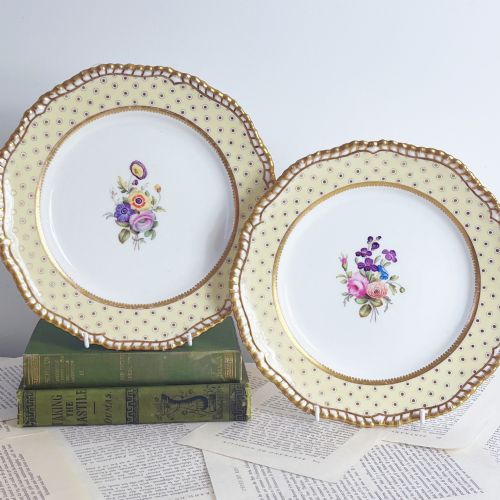
The assortment includes complete sets such as dessert services and custard sets, as well as pairs of plates and individual jugs. The stylistic vocabulary draws on botanical motifs, armorial crests, and cut crystal facets characteristic of the period.
Materials and construction
Porcelain and earthenware forms were shaped in British potteries using refined clays and glazes, often decorated with hand-painted botanicals, gilding with gold leaf, and transfer-printed patterns like the Union and Hibiscus designs. Factories such as Spode, Coalport, Chamberlain Worcester, and Barr, Flight & Barr utilised these ceramic techniques to produce durable yet delicate tablewares.
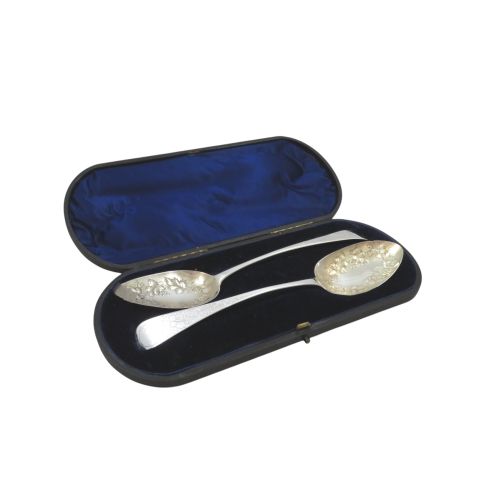
Glassware from the period relies on heavy crystal blanks shaped by blowing and finished with deep wheel-cut facets to refract candlelight across the dining table. Sterling silver items, including berry spoons, demonstrate period silversmithing techniques such as repousse work and engraved crests housed in fitted cases.
Listings feature ceramics from nineteenth-century English factories alongside Georgian sterling silver and Regency period cut crystal glass.
Markers of quality
The refinement of the ceramic body and the crispness of the hand-painted enamel decoration distinguish finer porcelain pieces from standard productions. Armorial crests and botanical subjects executed with fine brushwork and rich gilding indicate superior workshop output.
In cut crystal, the depth, precision, and sharpness of the facet cutting determine the optical quality and weight of the glass object. Sterling silver quality reveals itself in the balance of the piece, the clarity of the hallmarks, and the detail of any embossed decoration.
Spode·Coalport·Chamberlain Worcester·Minton·Wedgwood·Barr Flight and Barr
The Regency Period Tableware Glossary
- Dessert service
- A matching set of plates, dishes, and often bowls intended for the final course of a formal meal. These services frequently feature botanical paintings or armorial crests.
- Felspar porcelain
- An innovative ceramic body introduced by Spode in the early nineteenth century that incorporated feldspathic rock for increased durability and a bright white surface. It allowed for vibrant enamel painting and heavy gilding.
- Celery vase
- A tall glass vessel specifically designed to hold and display upright stalks of celery as a table centrepiece during formal dining. Regency examples often feature heavy cut crystal designs.
- Armorial crested
- Bearing a family coat of arms, crest, or motto painted on porcelain or engraved on silver. Such pieces were custom-ordered by landed families for their dining tables.
- Berry spoon
- A large serving spoon with a bowl embossed and engraved with fruit and foliage, often dating from the Georgian period and housed in a fitted case.
Regency Period Tableware: Frequently Asked Questions
What is regency period tableware?
Regency period tableware comprises ceramic, glass, and silver items used for dining and serving during the late Georgian and Regency eras. It includes items such as dessert plates, serving dishes, crystal glasses, and cutlery.
These pieces reflect the formal dining practices of the early nineteenth century, combining utility with decorative elegance through hand-painted motifs, armorial crests, and cut glass.
How do I identify Regency crystal?
Regency crystal is distinguished by heavy, clear lead glass blanks featuring deep, sharp wheel-cut facets, flutes, and diamond patterns. The weight is noticeably substantial compared to later Victorian glass.
These pieces often have a resonant ring when struck gently and show minor irregularities indicative of hand-blown and hand-cut production.
Can I use antique porcelain for dining?
While antique porcelain and earthenware from the Regency period remain structurally sound, modern dishwashers and harsh detergents can damage historic glazes and hand-applied gold leaf. Gentle hand washing in warm water preserves the enamels.
Many collectors prefer to display these items or reserve them for special occasions to protect the fragile ceramic bodies and painted decoration.