


Georgian Milk Jug
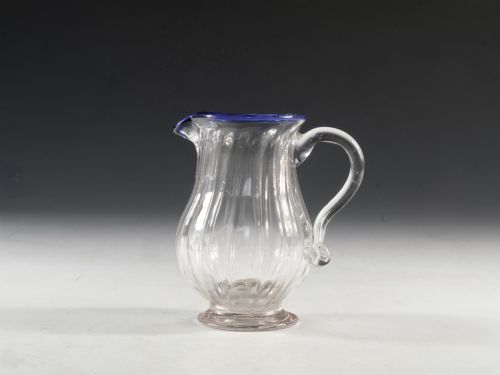
A georgian milk jug brings domestic history to the tea table, offering tactile pleasure through sterling silver, soft-paste porcelain, and earthenware.

Georgian Milk Jug
When you search for a georgian milk jug, you encounter functional vessels designed for pouring cream or milk during tea service, spanning the eighteenth and early nineteenth centuries.
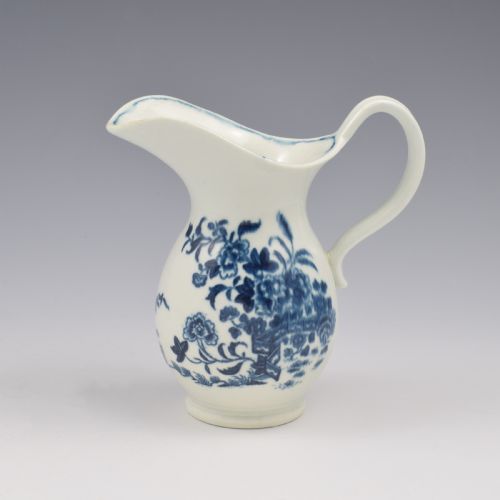
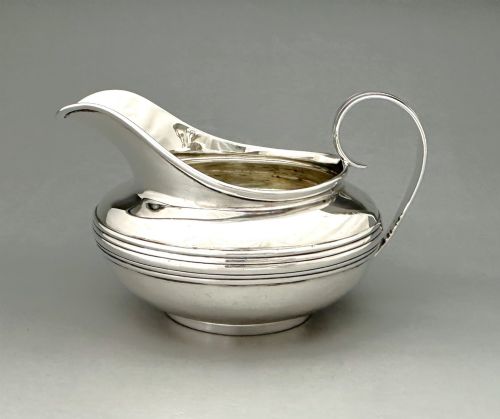
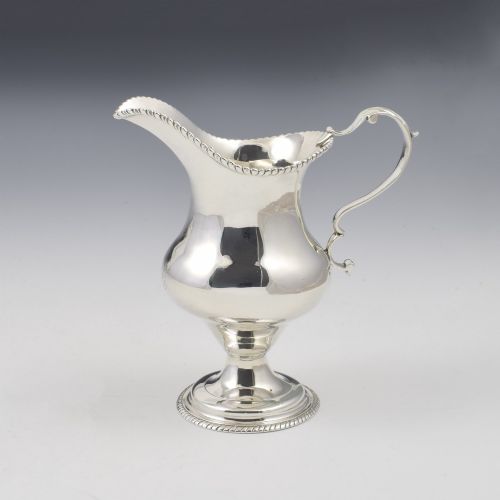
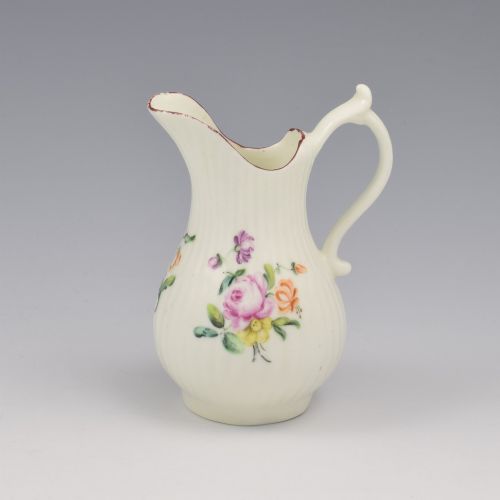
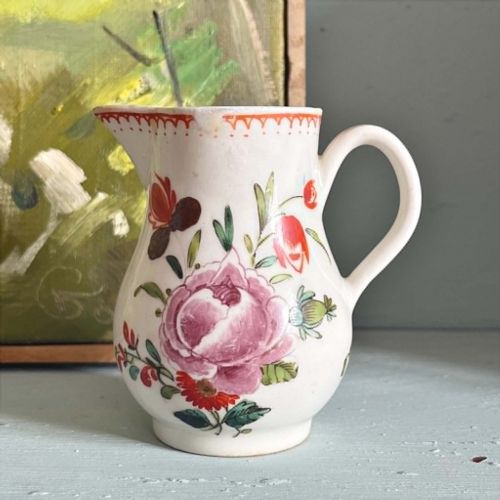
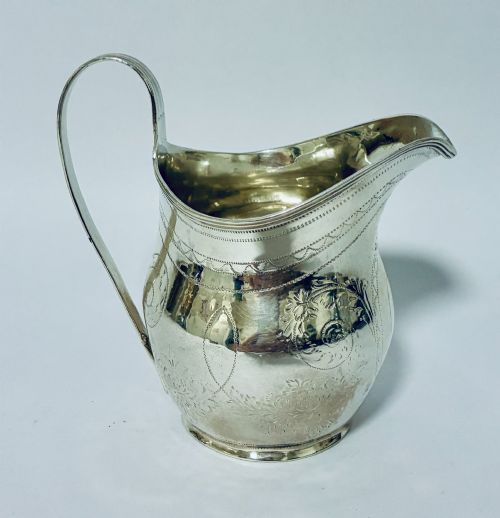
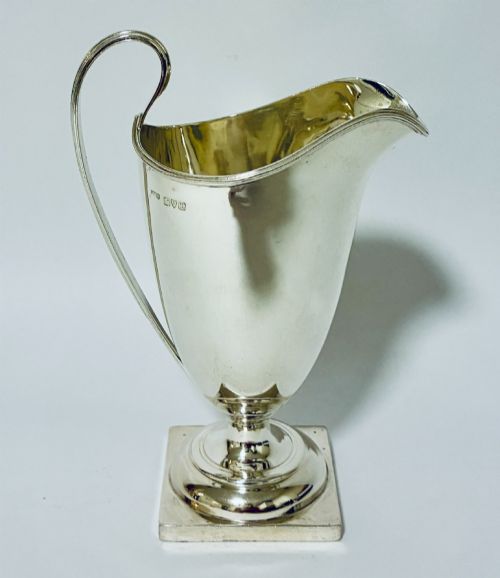
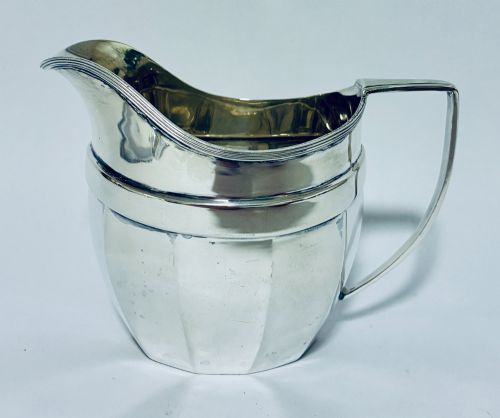
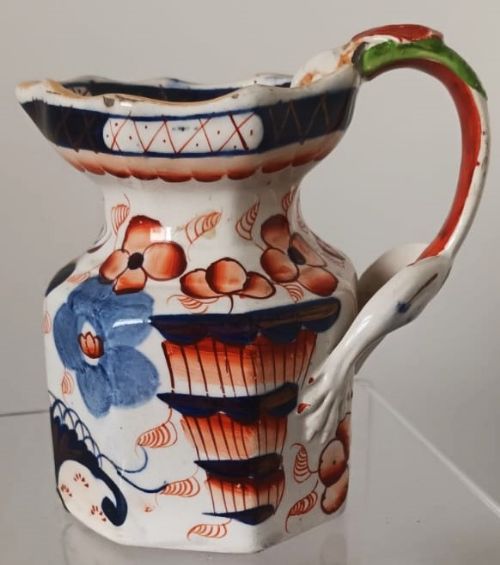
The pieces on this page appear in sterling silver, porcelain, creamware, and earthenware, taking forms from sparrowbeak jugs to helmet shapes and cow creamers.
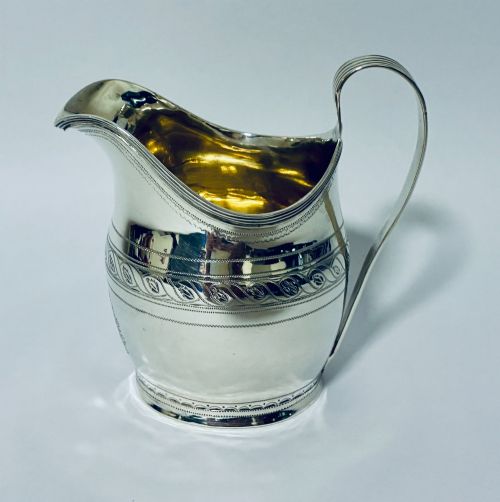
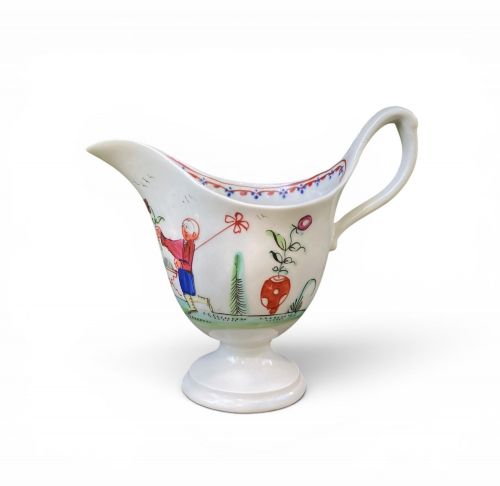
Silver examples range from plain domestic items to bright-cut engraved creations, while ceramic versions showcase factories such as Worcester, New Hall, and Derby.
How they were made
Silversmiths hammered sterling silver into helmet and pear shapes, applying handles and foot rims by hand before embellishing surfaces with bright-cut engraving.
Potters shaped soft-paste porcelain and earthenware on wheels or in moulds, applying underglaze blue, enamel colours, and transfer printing before firing in kilns.
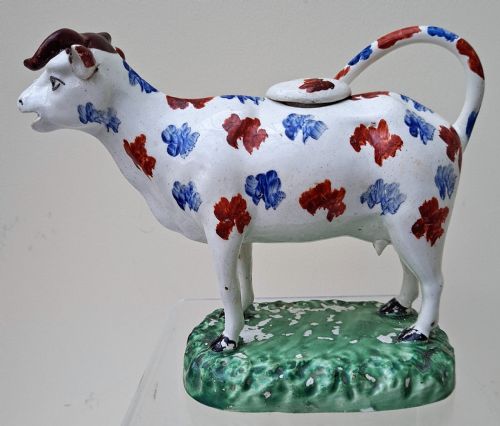
Several cows stand ready to pour cream from their backs.
What varies in quality
Quality rests in the crispness of a silver maker's mark, the delicacy of a porcelain wall, and the precision of hand-painted polychrome decoration.
Pottery examples show variation in the smoothness of the glaze and the alignment of transfer-printed or hand-drawn patterns.
Stalker and Mitchison·James Gordon·H and R Daniel·John Emes·Peter and Ann Bateman·George Unite·John Mackfarlan·William Hunter
The Georgian Milk Jug Glossary
- Sparrowbeak
- A small eighteenth-century porcelain jug featuring a distinctively pinched spout resembling a bird beak.
- Bright-cut engraving
- A faceted linear engraving technique executed with flat gravers that catches light from multiple angles.
- Soft-paste porcelain
- An early ceramic composition of clay, glass, and frit fired at lower temperatures than hard-paste porcelain.
- Creamware
- A fine earthenware developed in Yorkshire featuring a pale yellow-buff glaze over a cream-coloured body.
- Cow creamer
- A whimsical ceramic container moulded in the shape of a cow with a milk-pouring opening on its back.
Georgian Milk Jug: Frequently Asked Questions
How do I date a silver jug?
Silver pieces carry hallmarks that indicate the assay office, date letter, and silversmith's mark.
Matching these stamps against historical records gives the exact year of manufacture.
Were these jugs used for milk or cream?
Historical records and contemporary sizes show they served both purposes during tea and breakfast service.
Smaller sparrowbeak vessels held rich cream, while larger pitchers accommodated milk.
Can I use antique porcelain for daily tea?
Soft-paste porcelain and creamware require gentle hand washing rather than dishwasher cleaning.
Thermal shock from boiling liquids should be avoided to protect the historic glaze.
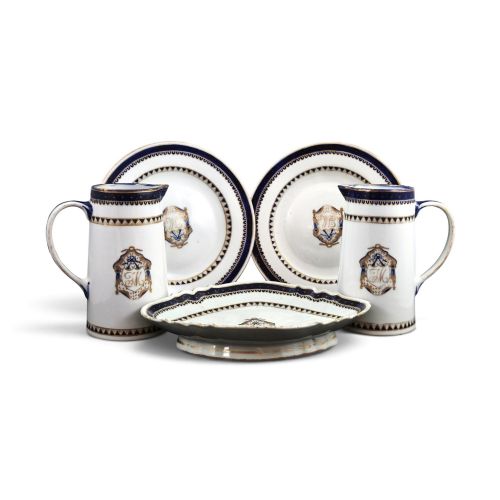
What is Chinese export porcelain?
Chinese export porcelain refers to wares made in China specifically for European and American markets.
These pieces often feature Western monograms, armorial crests, or custom shapes requested by foreign buyers.