

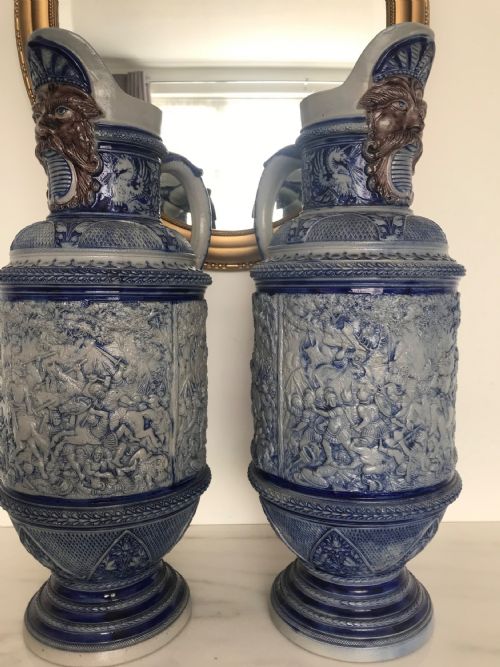


Antique Ceramic Wine Jug
An antique ceramic wine jug brings tactile weight and historic craft directly to the table.
Antique Ceramic Wine Jug
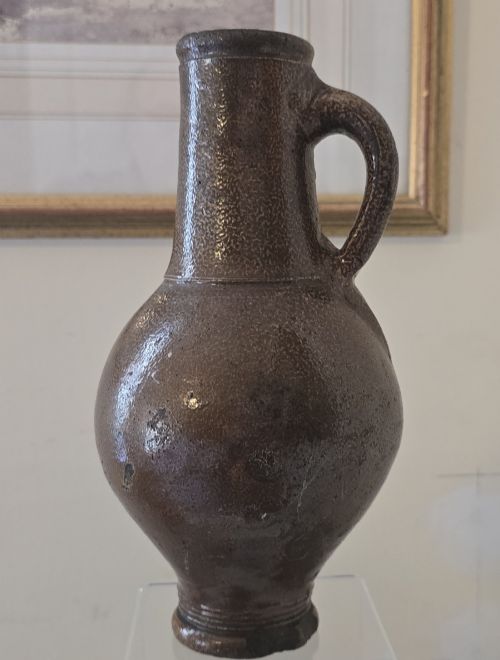
An antique ceramic wine jug encompasses vessels designed for serving and holding wine across centuries of domestic and decorative use. These pieces bridge utilitarian origins and high decorative arts, appearing in forms ranging from salt-glazed stoneware pitchers to porcelain ewers.
The selections available here span diverse periods including the seventeenth, eighteenth, and nineteenth centuries, alongside specific movements like Arts and Crafts and Victorian Neoclassical. Buyers will frequently encounter earthenware, stoneware, and porcelain bodies, occasionally accented with pewter lids.
Geographic origins stretch from English potteries to German salt-glazed centres, French factories, and Asian export kilns. Each piece demonstrates the distinct stylistic priorities of its era, whether Dutch Baroque influence or Japanese Arita design.
Materials and production methods
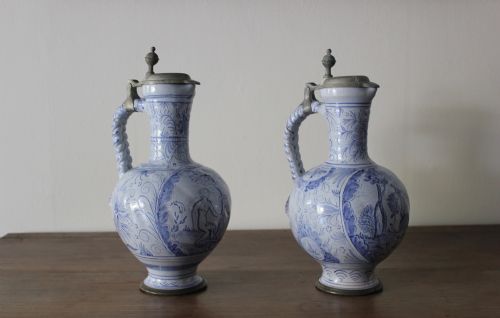
Potters shaped these vessels using clay, earthenware, stoneware, and porcelain bodies, often throwing them on a wheel or forming them in moulds. Salt glazing and cobalt blue pigments provided durable, decorative surfaces on German and English wares.
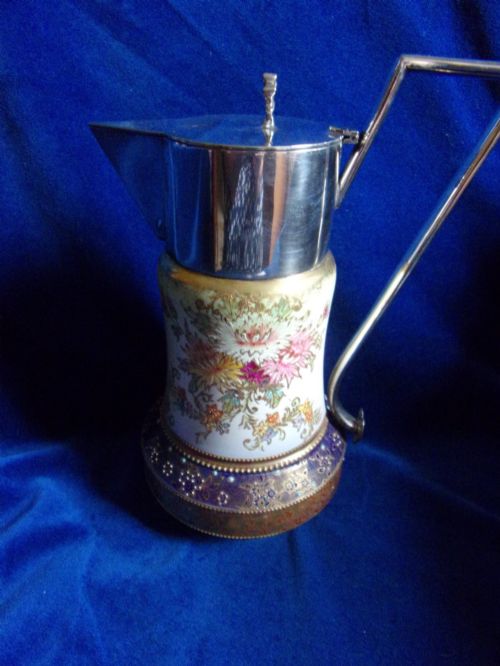
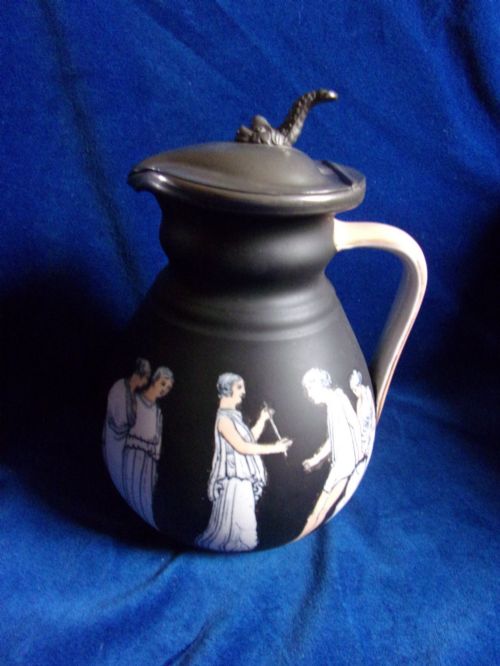
Metal components like pewter lids and silver plate mounts were fitted to ceramic bodies by specialised craftsmen, adding functional hinged covers and structural collars. Fine porcelain and buff-coloured stoneware allowed for intricate relief moulding, depicting classical scenes and bacchanalian revels.
Antique Ceramic Wine Jug Retail Price Guide 2026
Typical asking prices for ceramic wine jug among the pieces listed under this phrase on Sellingantiques today, from the lower quarter to the upper quarter. They describe what is for sale here now, not the wider market.
The listings demonstrate a broad geographic spread, encompassing English, German, French, Chinese, and Japanese ceramic traditions across multiple centuries.
Distinguishing quality in production
Quality rests in the crispness of moulded relief work, the evenness of salt or cobalt glaze application, and the structural integrity of applied handles. Superior pieces display sharp definition in figural scenes and balanced proportions across the body and spout.
The integration of metal mounts, such as pewter lids, indicates the standard of secondary materials used in assembly. Expert firing control in historic kilns produced reliable vitrification and stable glazes that separate masterworks from utilitarian output.
John Dwight Fulham Pottery·Simon Peter Gerz·Charles Meigh·Choisy-le-Roi·Sarreguemines·Royal Worcester
The Antique Ceramic Wine Jug Glossary
- Salt-Glazed Stoneware
- A ceramic type finished by throwing common salt into the kiln during high-temperature firing, producing a textured orange-peel surface. This technique created durable, impervious vessels common in German and English production.
- Ewer
- A large jug with a wide spout and handle, traditionally used for pouring water or wine at the table. Many antique examples emphasise sculptural form over practical service.
- Claret Jug
- A specific beverage vessel intended for serving red wine, frequently featuring a glass or ceramic body with metal mounts and a hinged lid. They became particularly popular during the Victorian era for formal dining.
- Cobalt Blue
- A metallic oxide pigment used under the glaze to impart a deep blue colour that withstands high kiln temperatures. It is characteristic of Westerwald stoneware and various oriental export porcelains.
- Bacchanalian
- A decorative style or motif depicting scenes of drunken revelry associated with Bacchus, the Roman god of wine. These relief carvings often encircle nineteenth-century stoneware jugs.
Antique Ceramic Wine Jug: Frequently Asked Questions
How were antique wine jugs used?
These vessels served primarily to decant, hold, and pour wine at the dining table or during formal gatherings. Many functioned as serving pitchers, while more ornate ewers acted as display pieces or water containers for hand-washing.
Over the centuries, their roles shifted from daily tavern or household utilities into decorative mantel ornaments and cabinet collection pieces.
Are these jugs safe for serving wine today?
While many historic jugs remain physically robust, using antique ceramics for consuming acidic beverages like wine requires caution. Historic glazes can contain lead or other substances that leach into liquids.
Most collectors choose to display these pieces as works of art or historical artefacts rather than utilising them for modern dining.
How do I distinguish seventeenth-century jugs from nineteenth-century revivals?
Seventeenth-century pieces, such as early salt-glazed bottles and Chinese Kangxi porcelain, exhibit the raw potting techniques, hand-applied handles, and material characteristics typical of early industrial or export workshops. Revival pieces often display the cleaner, more standardised manufacturing methods and heavier historical ornamentation of the Victorian period.
Examining the base, glaze texture, and stylistic cues helps place a vessel within its correct century.