

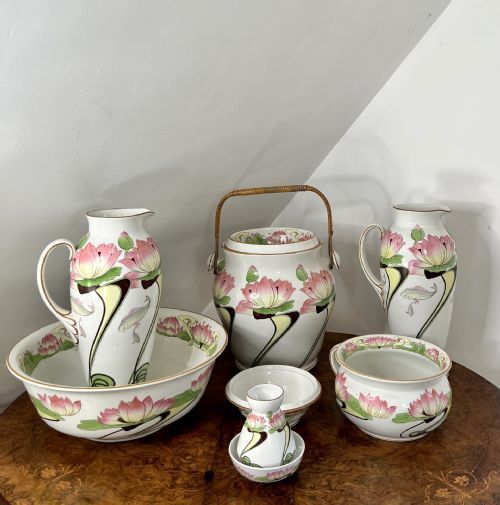


Edwardian Floral Pitcher
An edwardian floral pitcher brings botanical charm to your table, offering a graceful vessel that captures the refined tastes of the early twentieth century.
Edwardian Floral Pitcher
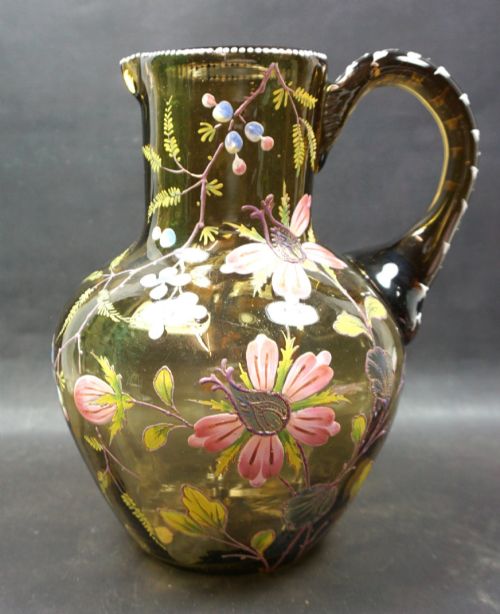
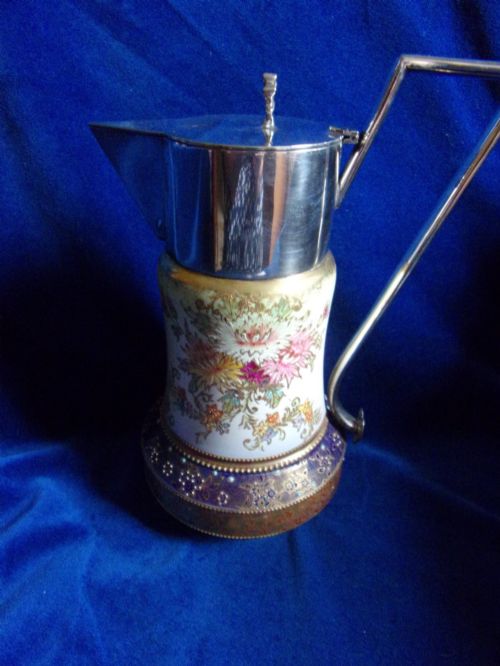
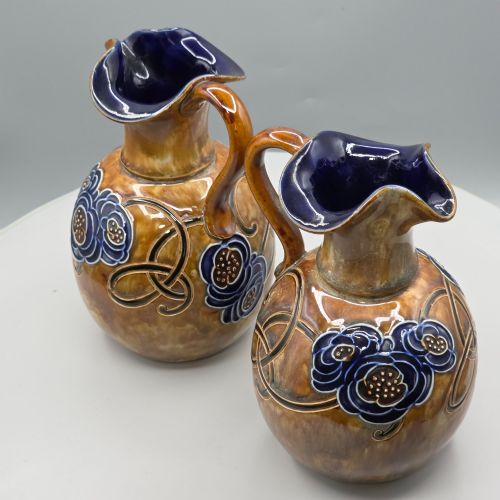
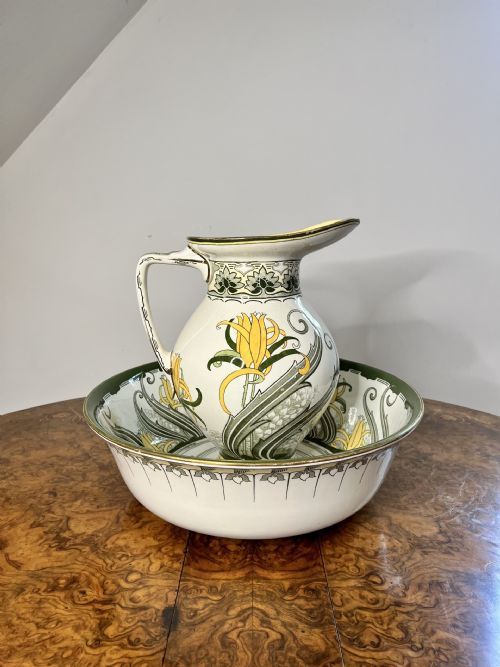
An edwardian floral pitcher represents the domestic and decorative ceramic wares produced around the turn of the twentieth century. These pieces encompass standalone serving vessels, claret jugs, and matching bathroom wash sets designed for daily utility and display.
The versions most commonly met on this page include earthenware and porcelain jugs adorned with painted or printed botanical motifs. Makers ranged from prominent factories to smaller ceramic works, capturing the transition from ornate Victorian tastes to lighter Edwardian aesthetics.
How they were made
Potters shaped these vessels using traditional earthenware and porcelain bodies, frequently applying enamel colours and glaze to create smooth, durable surfaces. Metal components such as silver lids or woven handles were added to select claret jugs and serving pieces for enhanced function.
Decoration often involved hand-painted or transfer-printed floral patterns, sometimes highlighted with gilt or gold leaf. Artisans working in the Art Nouveau and Arts and Crafts styles also utilised copper and cut glass to form distinctive ewers and vases.
Edwardian Floral Pitcher Retail Price Guide 2026
Typical asking prices for edwardian floral pitcher among the pieces listed under this phrase on Sellingantiques today, from the lower quarter to the upper quarter. They describe what is for sale here now, not the wider market.
Listings span the Victorian, Edwardian, and Art Nouveau periods, featuring earthenware, porcelain, copper, and cut glass.
What varies in quality
The refinement of the ceramic body and the precision of the floral decoration distinguish standard utility wares from the finest studio productions. Hand-painted examples by notable potteries display superior artistic control over printed transfers.
The integration of precious materials, such as solid silver mounts or gilt accents, elevates certain pieces above domestic earthenware. Preservation of the original glaze and enamel colours without excessive wear indicates how carefully a vessel has been kept over the decades.
Royal Doulton·Stevens & Williams·Doulton Burslem·Joseph Sankey·Royal Worcester·Mark Jones & Sons·William Moorcroft·William Davenport
The Edwardian Floral Pitcher Glossary
- Earthenware
- A porous ceramic body fired at lower temperatures, commonly glazed to ensure it holds liquid.
- Ewer
- A large jug with a wide spout and a curved handle, traditionally used for holding water or wine.
- Blush ivory
- A soft, creamy ceramic finish developed by potteries to mimic the tone of real ivory, often tinted with floral colours.
- Claret jug
- A specialised pouring vessel designed specifically for serving red wine at the dining table, frequently fitted with a metal lid.
Edwardian Floral Pitcher: Frequently Asked Questions
What is an edwardian floral pitcher used for?
These vessels originally served practical household functions such as pouring water, serving wine, or completing matching wash sets in bedrooms.
Today, collectors mostly utilise them as decorative flower vases or display them on sideboards to add period character to a room.
How do I distinguish Edwardian pieces from Victorian ones?
Edwardian designs generally favour lighter palettes, simpler forms, and brighter botanical patterns influenced by Art Nouveau and Arts and Crafts aesthetics.
Victorian pieces often rely on heavier proportions, darker glazes, and denser ornamentation, though transitional items from around nineteen hundred share traits of both.
Are these pitchers safe for holding drinks?
While many earthenware and porcelain jugs were originally made for liquids, older glazes and enamel decorations can degrade over long periods.
It is generally wiser to treat antique ceramic pitchers as decorative display objects rather than using them for daily food and drink service.