





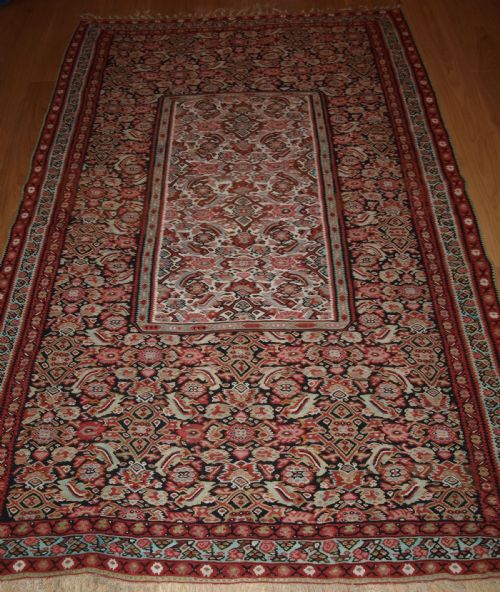
Persian Tribal Tapestry
A persian tribal tapestry brings authentic nomadic history into a room, offering rich geometric patterns and tangible textile heritage.
Persian Tribal Tapestry
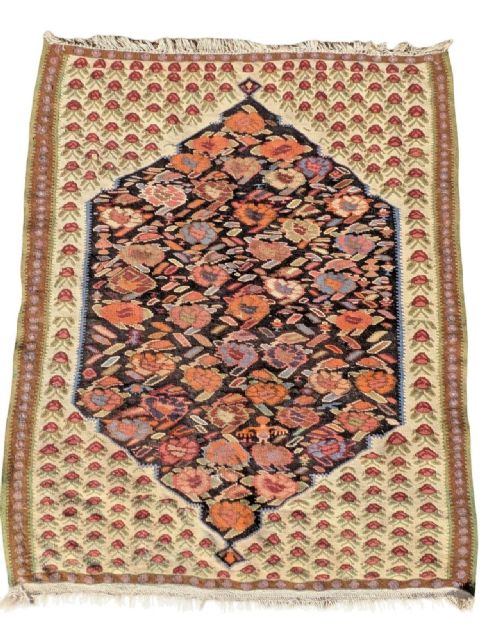
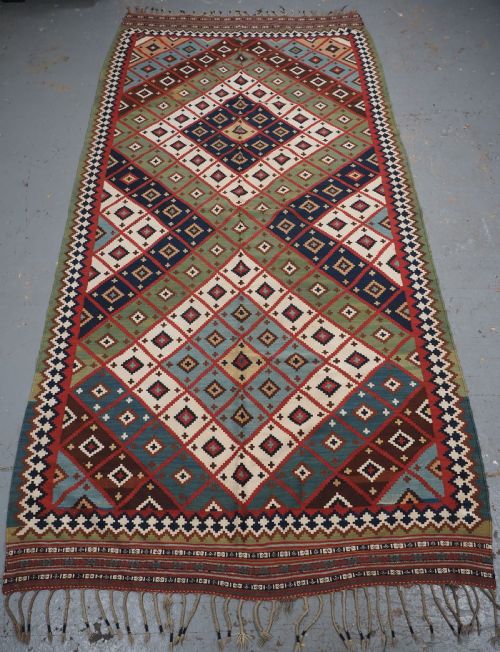
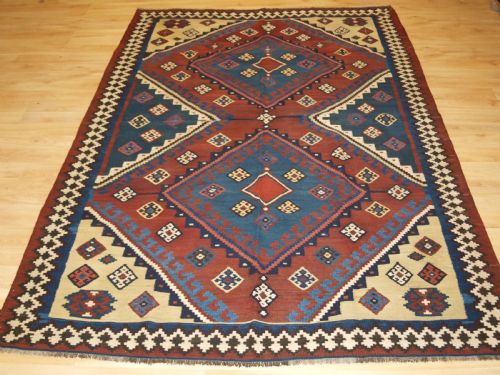
When buyers search for a persian tribal tapestry, they are typically looking at flat-woven rugs, kilims, bags and nomadic textiles originating from various tribes and regions. The pieces available span across the nineteenth and early twentieth centuries, showcasing the distinct visual language of southern and western Persia.
The most common examples you will encounter on this page include kilims, saddlebags and specialised textiles produced by groups such as the Qashqai, Shahsavan, Afshar and Bidjar. These objects reflect the functional domestic and nomadic requirements of their makers, transitioning from utilitarian items to valued wall hangings and floor coverings.
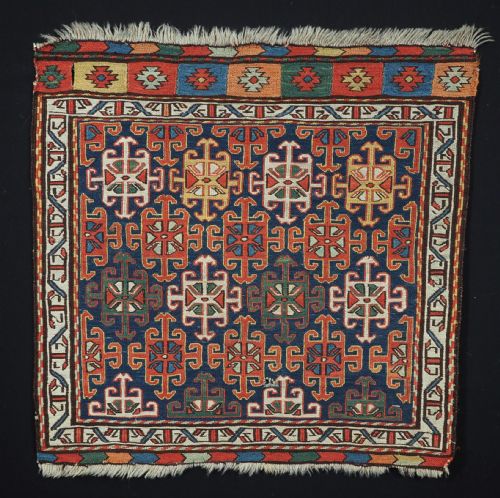
Forms range from large carpets and kilims to smaller bag faces, cushions and bread sofrehs. Each format provides a direct link to the weaving traditions of specific tribal confederations and provinces like Fars and Kerman.
Materials and construction methods
The primary materials recorded in these textiles are wool and cotton, often utilised together with wool providing the pile or flat-weave face and cotton serving as a sturdy foundation warp in certain pieces. Natural dyes impart the characteristic deep hues found across the older woven examples.
Techniques vary according to the specific tribal origin, featuring flat-weaving, slit-weave kilim construction and soumak or sumac wrapping methods that create raised surface textures. Leather and wood occasionally appear in functional structural components such as cradles.
Weavers employed intricate interlocking weft techniques to build sharp geometric motifs, diamond medallions and eye-dazzler patterns without the use of a mechanical loom.
Nomadic weavers occasionally inserted deliberate small irregularities into their geometric grids, preserving humility before the perfection of the divine.
Determinants of quality in nomadic textiles
Quality in these textiles rests upon the fineness of the weave, the tightness of the structural foundation and the clarity of the design execution. Tighter knotting and precise geometric alignment separate standard utility pieces from exceptional tribal examples.
The depth and harmony of the natural dyes play a critical role in visual distinction. Colours that have aged gracefully with subtle tonal variations indicate superior dye preparation and high-grade wool quality.
Intact original edges, minimal structural restoration and well-preserved borders enhance the integrity of an antique piece. The complexity and scarcity of the specific tribal design further elevate the standing of an individual textile.
The Persian Tribal Tapestry Glossary
- Kilim
- A flat-woven carpet or rug produced without a pile by tightly interlacing warp and weft strands. This technique creates a lightweight textile suitable for both floor use and hanging.
- Soumak
- A brocade-like flat-weave technique utilising extra-weft wrapping to produce a textured surface with raised patterns. It offers greater structural durability than standard plain-weave kilims.
- Sofreh
- A flat-woven cloth traditionally used for serving bread or meal preparation within nomadic households. These items frequently display minimalist geometric compositions.
- Khorjin
- A traditional paired saddlebag woven for transport use on animals during nomadic migrations. Surviving examples are often separated into individual bag faces for display.
- Warp
- The stationary lengthwise threads stretched tightly on a loom that form the structural foundation of the textile. Wefts are woven across these threads to create the design.
Persian Tribal Tapestry: Frequently Asked Questions
How were these tribal textiles originally used?
Nomadic groups utilised these woven pieces for practical daily functions within tents and temporary settlements, ranging from floor coverings and bedding storage to animal transport bags and food preparation cloths.
Over time, these utilitarian objects became expressions of tribal identity and family heritage, incorporating traditional motifs passed down through generations.
How do I care for a textile wall hanging?
Hanging a textile requires a supportive mounting method that distributes the weight evenly across the entire upper edge, avoiding stress on individual threads or weak areas.
Protect the piece from direct sunlight to prevent natural dye fading, and gently vacuum it occasionally through a protective mesh screen on a low suction setting.
What defines a Qashqai tribal weave?
Qashqai textiles originate from the pastoral nomadic confederation based largely in the Fars province of south-west Persia. They are celebrated for finely spun wool and rich saturated colour palettes.
Common design elements include repeated diamond medallions, stylized bird motifs and intricate geometric borders executed with high precision.
How can I distinguish Shahsavan work?
Shahsavan pieces are frequently distinguished by the use of the soumak technique, which produces a ridged, textured surface with striking linear patterns. Their output often includes detailed bag faces and smaller utilitarian formats.
Designs typically feature bold horizontal striping, hooked polygons and striking polychrome contrasts derived from traditional dye sources.