
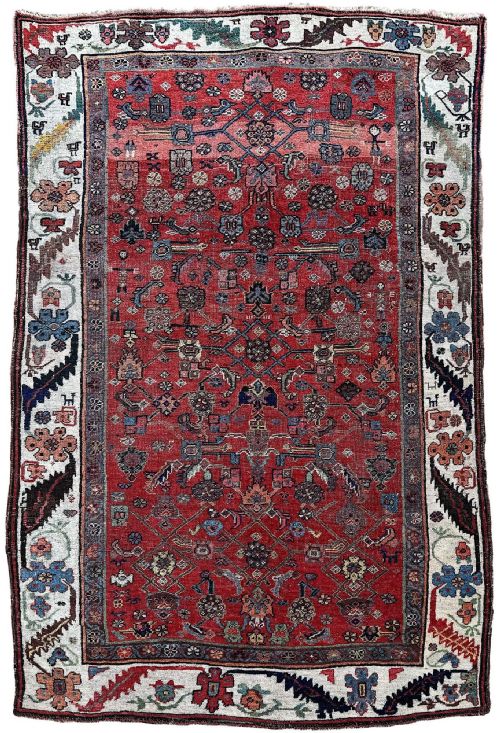
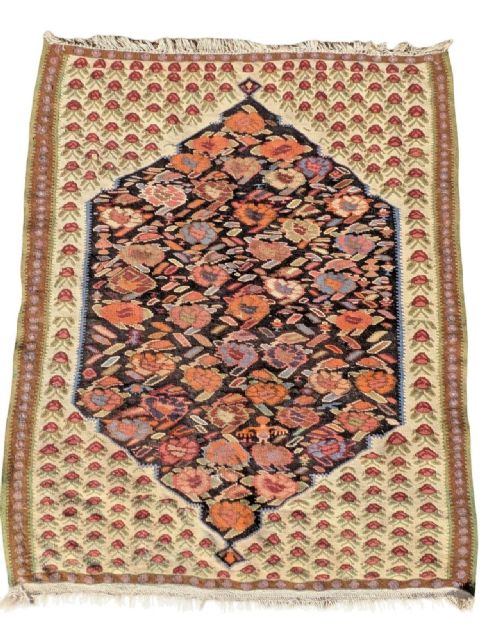
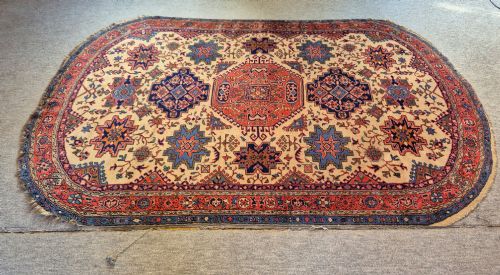
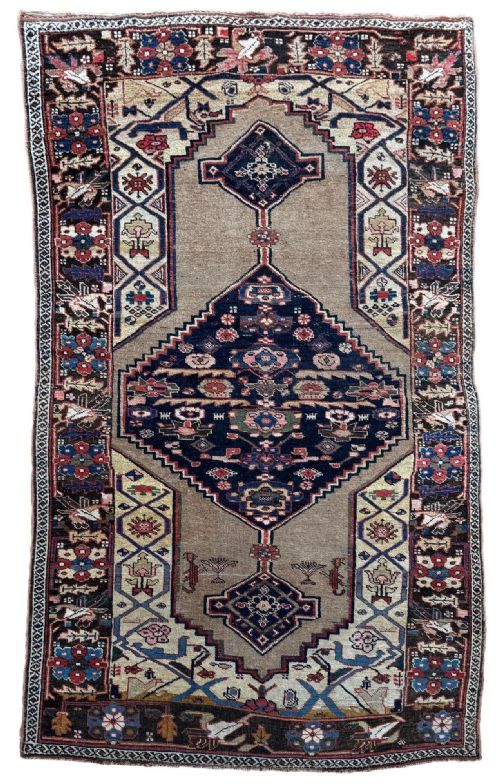
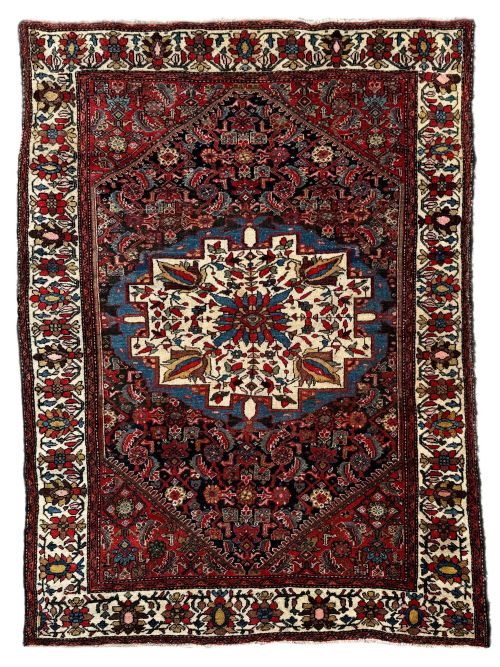


Persian Bidjar Carpet
A persian bidjar carpet brings dense, durable weaving and rich traditional patterns straight from the workshops of Persian Kurdistan into your home.
Persian Bidjar Carpet
When you search for a persian bidjar carpet, you encounter heavy, resilient wool floor coverings originating from the Kurdish weavers of Western Iran. These pieces range from small scatter rugs and bag faces up to large kelleh carpets and expansive room-sized formats.
You will see various traditional formats on this page, including long runners, curve ended pieces, and flatwoven kilims. Many examples date from the late nineteenth century and the early decades of the twentieth century, reflecting enduring tribal and regional traditions.
Materials and construction
A persian bidjar carpet relies on sturdy wool piles knotted tightly onto cotton foundations, creating a famously dense and heavy fabric. This compact construction allows the structure to withstand generations of heavy footfall without losing its form.
Weavers utilised traditional Persian knotting techniques alongside sturdy warps and wefts. The tight packing of the wool gives these textiles their characteristic rigid handle and exceptional longevity.
Some weavers occasionally added unexpected lemon ground tones to traditional dark fields, brightening up the Kurdish village aesthetic.
Distinctions in quality
Quality in a persian bidjar carpet rests on the tightness of the weave and the precision of the traditional design execution. Finer examples display remarkable knot density and crisp, well-balanced botanical or geometric motifs.
The choice of ground colour and the depth of the natural dye palette also dictate the desirability of the piece. Unusual background shades, such as a distinct lemon hue, elevate the visual impact of the weaving.
The Persian Bidjar Carpet Glossary
- Kelleh
- A large rectangular carpet format, longer than a standard room rug but narrower than a grand room carpet. These pieces typically served narrow reception spaces in traditional Persian interiors.
- Kilim
- A flatwoven textile produced without a pile by tightly interweaving warp and weft threads. These lightweight pieces offer geometric clarity and versatility.
- Garrus
- A specific regional style associated with the Bidjar district, known for large-scale Herati patterns and substantial proportions. These oversized formats are built for major spaces.
Persian Bidjar Carpet: Frequently Asked Questions
What makes a persian bidjar carpet so heavy?
The weight comes from an exceptionally dense knotting technique where the wool pile is packed down firmly onto the foundation.
This rigorous construction method creates a stiff, durable fabric designed to resist heavy wear.
Where were these carpets made?
They were woven by Kurdish tribes and village workshops in the Bidjar region of Persian Kurdistan.
Local artisans passed down traditional motifs and robust weaving methods through generations.
How do I care for my carpet?
Protect the heavy wool pile by vacuuming gently without a rotating brush and keeping the rug out of harsh direct sunlight.
Professional cleaning tailored to antique textiles ensures the cotton foundations and wool fibres remain secure.
Are these pieces suitable for hallways?
Long runner formats and narrow kelleh carpets suit corridors and heavy-traffic areas exceptionally well.
Their dense structure handles continuous movement while adding traditional warmth to transitional spaces.