


Persian Style Hallway Carpet
A persian style hallway carpet brings grounded pattern and heavy textile warmth straight to narrow floors.
Persian Style Hallway Carpet
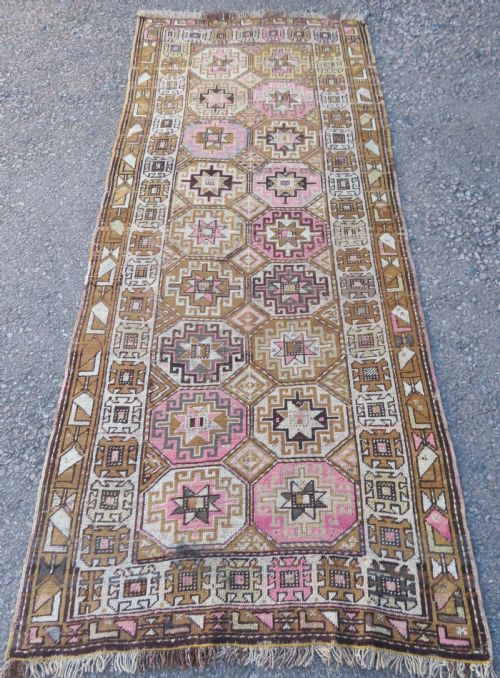
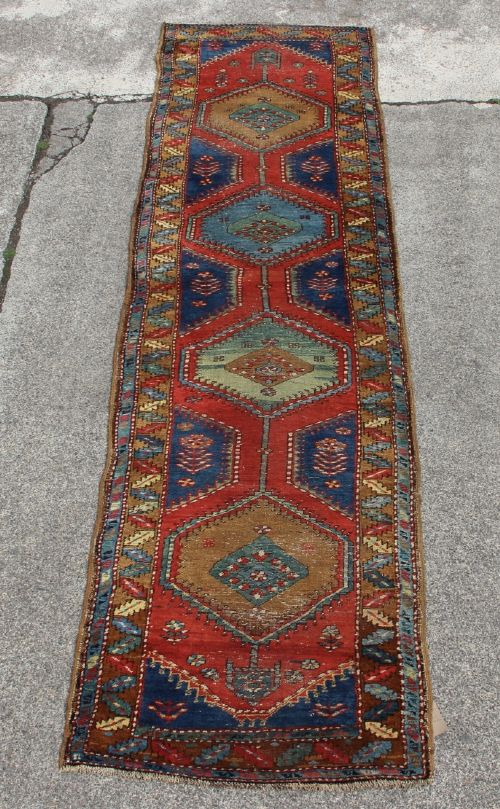
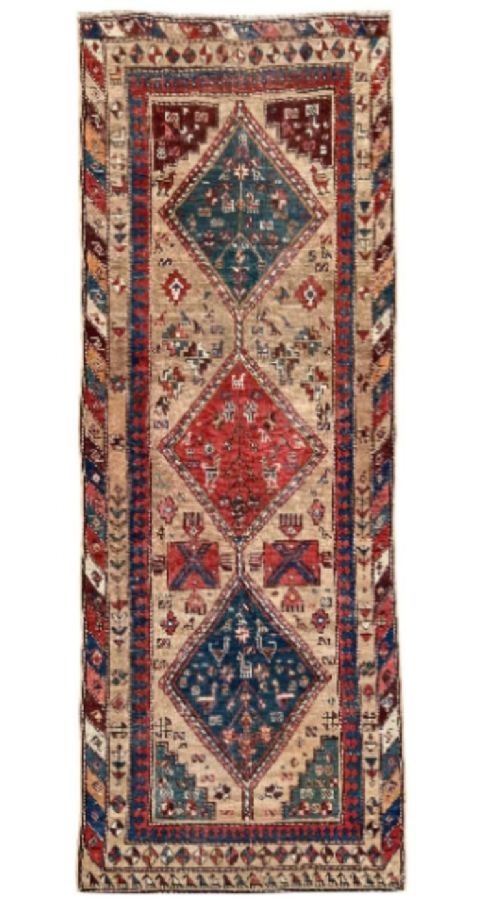
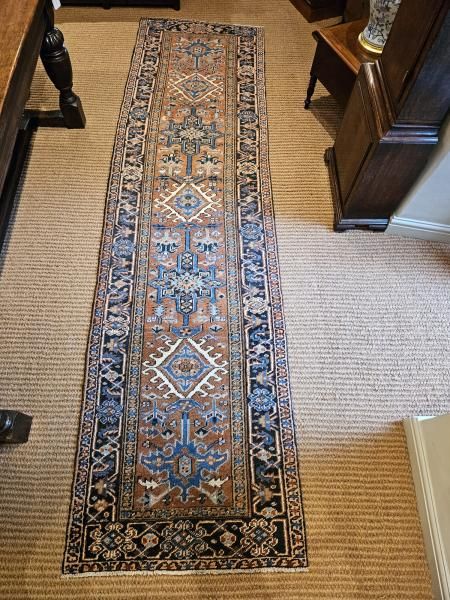
A persian style hallway carpet covers narrow spaces with enduring woven design drawn from nineteenth and early twentieth century traditions. These long floor coverings arrive in forms such as runner rugs, hallway runners, and long rugs designed specifically for corridors and extended walkways.
Most examples originate from specific weaving traditions across Persia, the Caucasus, Anatolia, and Afghanistan. The selection spans distinct regional outputs including Heriz, Sarab, Karaja, and Caucasian tribal pieces.
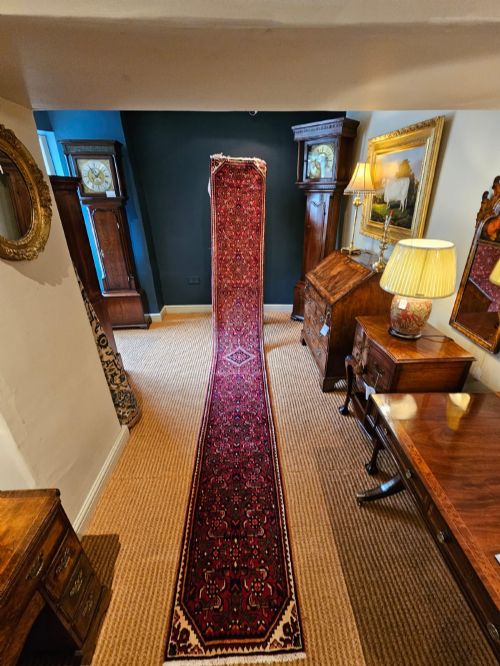
Buyers encounter formats ranging from compact lengths under three metres to grand fourteen-foot corridors woven for large country houses. The overarching aesthetic relies on traditional tribal and oriental motifs adapted for functional linear spaces.
Materials and construction
Makers constructed these floor coverings primarily using hand-knotted wool pile secured onto sturdy cotton foundations. Certain regional pieces incorporate camel hair alongside wool to introduce natural tonal variations without artificial dyeing.
Weavers tied dense knots by hand across extended looms, producing durable surfaces suited for heavy domestic traffic in halls and landings. Vegetable and natural dyes provided the deep olive greens, navy blues, and mellow colour palettes seen across the period.
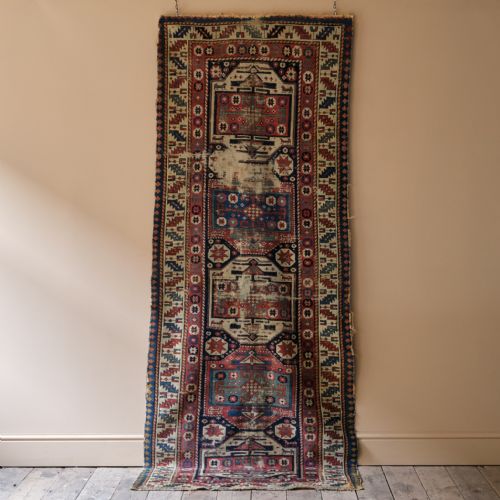
Several runners embrace charmingly crooked weaves, proving that nineteenth-century village weavers were remarkably human.
What separates the grades
Pile density and knot regularity dictate the crispness of geometric medallions and floral motifs along the length. Tighter hand-knotting preserves intricate details in regional designs like Heriz and Sarab runners over decades of heavy footfall.
The integrity of the foundation threads and selvedges determines structural longevity. Even structural irregularities, such as the natural asymmetry found in crooked village pieces, reflect genuine hand production rather than mechanical uniformity.
The Persian Style Hallway Carpet Glossary
- Runner
- A long, narrow carpet designed specifically for hallways, corridors, and stairs. These pieces measure significantly longer than they are wide.
- Hand-knotted
- A construction method where individual lengths of wool are tied by hand onto a warp foundation. This technique creates a dense and durable pile that resists heavy wear.
- Boteh
- A stylised almond or paisley motif representing a floral sprout or cypress tree. It appears frequently in traditional Caucasian and Persian textile designs.
- Camel hair
- Animal fibre utilised in its natural undyed shade within wool piles. It provides durable warmth and distinct earthy tones.
- Warp
- The stationary vertical foundation threads stretched across a loom. Weft threads and knots are woven through these structural elements.
Persian Style Hallway Carpet: Frequently Asked Questions
Where should I place a runner?
These long carpets suit narrow corridors, hallways, and deep landings where traditional floorboards need warmth and acoustic softening. Their linear proportions guide movement through domestic spaces.
They also function effectively in long kitchens or beside bedroom furniture where a narrow expanse of patterned wool anchors the room.
How do I identify a Heriz runner?
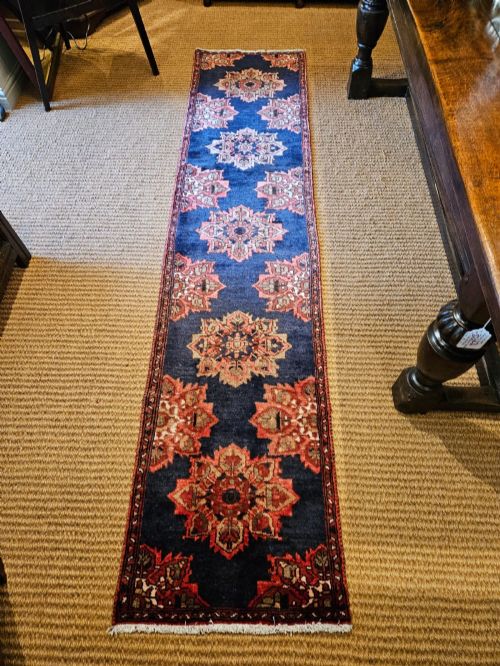
Heriz pieces typically display bold geometric medallions, strong corner spandrels, and robust rectilinear designs woven with durable wool. Their substantial structure reflects production in north-west Persian workshops.
These carpets often feature prominent terracotta, navy, and ivory tones built to withstand heavy daily use.
Are these carpets handmade?
Traditional pieces from this selection are hand-knotted by village and tribal weavers using wool, cotton, and camel hair. Each rug displays individual variations in knot count and design symmetry.
Hand production ensures that no two hallway coverings share identical dimensions or exact colour distributions.
How do I care for an old wool runner?
Regular gentle vacuuming without a rotating brush roll keeps dust from settling deep into the wool pile. Professional cleaning suited for antique textiles preserves the natural lanolin in the fibres.
Using a quality underlay prevents slipping on hard hallway floors and reduces friction against the cotton foundation.