
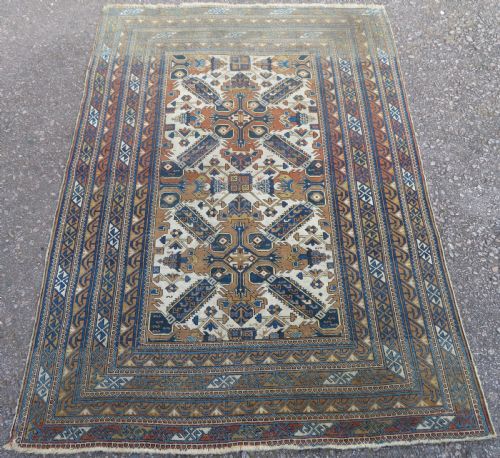
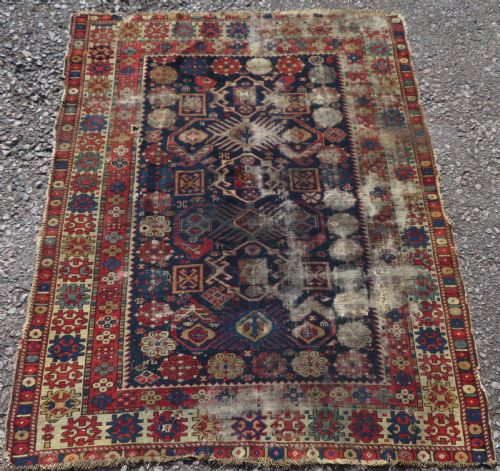
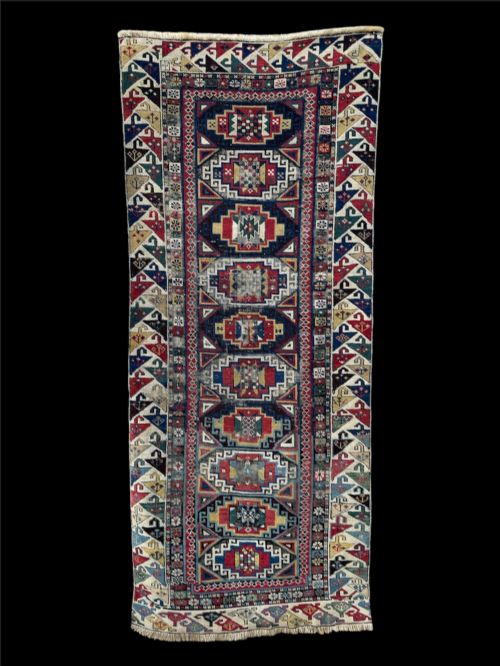
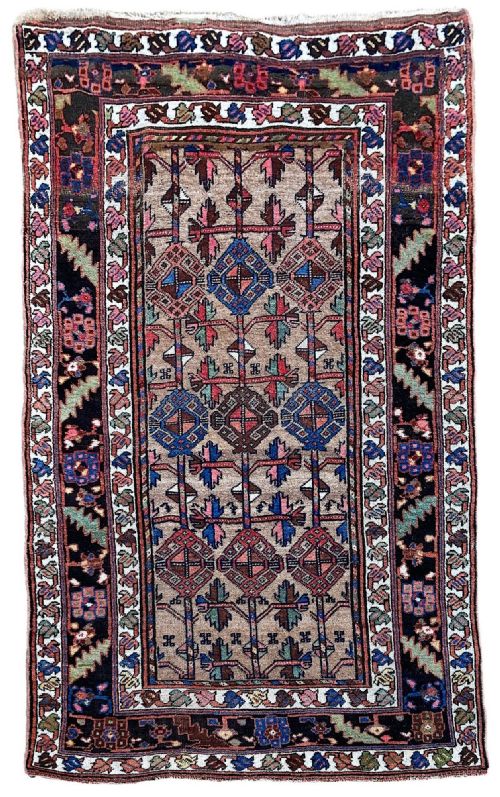




Authentic Caucasian Carpet
An authentic caucasian carpet brings geometry and saturated wool into a room, offering the bold village patterns that collectors prize.
Authentic Caucasian Carpet
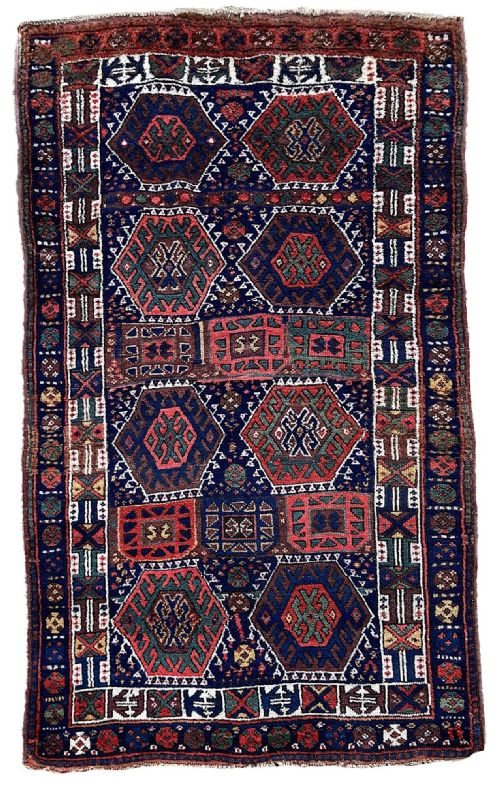
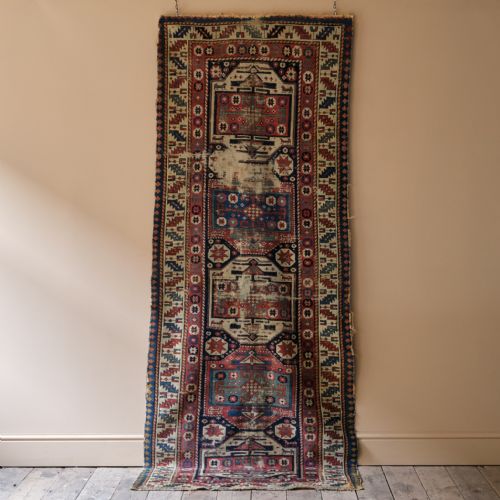
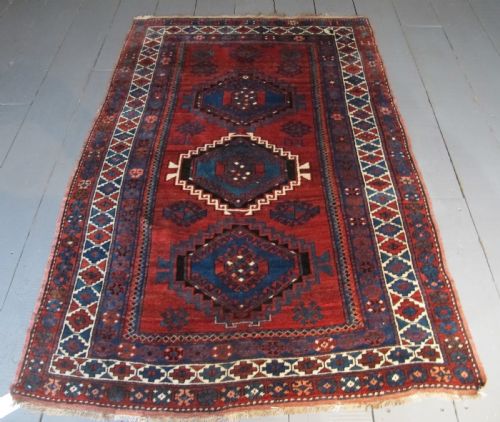
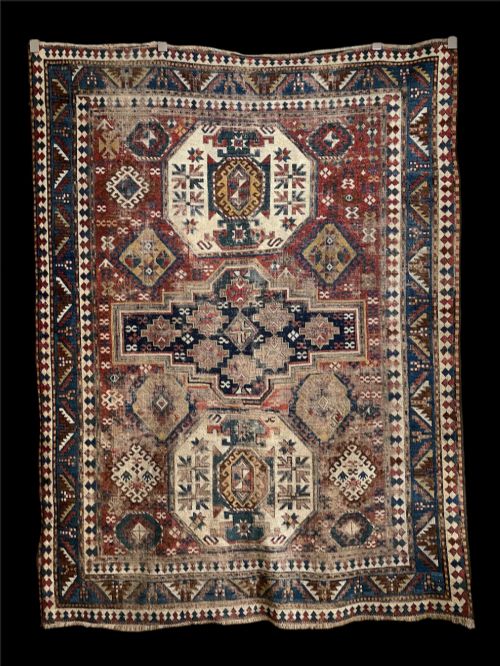
When you search for an authentic caucasian carpet, you are looking at hand-knotted tribal floor coverings originating from the Caucasus region and surrounding tribal areas during the nineteenth and early twentieth centuries. These pieces encompass specific regional village weaves such as Kazak, Shirvan, Daghestan, Karabagh, and Lori Pambak, alongside related Kurdish and Persian tribal types.
The versions you are most likely to meet on this page take the form of small rugs, long runners, and prayer rugs dating from the eighteen-fifties through to nineteen-thirty. Their formats range from square proportions to elongated runners, reflecting the practical needs of the weavers who made them on upright village looms.
How they were made
These carpets are constructed using wool piles hand-knotted onto foundations of wool or cotton. The reliance on hand-spun wool gives the pile its characteristic varied texture and resilience underfoot.
Colour comes from natural dyes, which yield deep tones of madder red, indigo blue, and yellow that age gracefully over decades. The interplay of these organic colorants creates subtle shifts in shade known as abrash.
The listings on this site span the nineteenth and early twentieth centuries, featuring wool pile structures on cotton and wool foundations.
What varies in quality
Quality in these tribal weaves rests upon the crispness of the geometric drawing and the saturation of the palette. Tightly knotted piles and well-balanced proportions separate the finest village work from simpler commercial output.
The integrity of the original borders and the complexity of the medallion structures dictate the visual impact of each piece. Surviving early examples with intact outer guards command attention for their structural completeness.
The Authentic Caucasian Carpet Glossary
- Abrash
- Natural variations in wool colour caused by changes in dye batches or hand-spun yarn lots. This slight striping or tonal shift is a hallmark of traditional dyeing methods.
- Kazak
- A designated style of antique rug originating from the southern Caucasus region. These pieces typically feature bold geometric medallions and primary colours.
- Prayer rug
- A small format rug featuring a directional mihrab or arch design at one end. Historically used for daily Islamic prayer, these pieces have distinct niche motifs.
- Runner
- A long, narrow carpet format designed for hallways or corridors. These pieces adapt specific village patterns to linear dimensions.
Authentic Caucasian Carpet: Frequently Asked Questions
How do I clean an old carpet?
These woolen floor coverings require gentle professional cleaning rather than immersion or harsh chemical treatments. Regular light vacuuming without a rotating brush helps remove surface grit.
Keeping them out of direct sunlight prevents natural dyes from fading prematurely. Rotating the rug every year ensures even wear in high-traffic spaces.
Can I put these rugs on wooden floors?
Placing a suitable breathable underlay beneath the piece prevents slipping and protects the original foundation threads from friction against hard timber.
An underlay also adds cushioning, which reduces stress on the hand-knotted wool pile during daily walking.
How do I identify a Kazak weave?
Kazak examples display bold geometric polygons, hooked guls, and large-scale primary motifs executed in saturated red, blue, and ivory wool. Their drawing is robust and structural rather than curved.
The handle is typically heavier and thicker than the finer, lower-pile Shirvan or Daghestan pieces from the same geographic region.
What is a prayer niche?
The prayer niche, or mihrab, is a pointed arch motif positioned at one end of a rug to direct the user during daily devotions. It acts as the visual focal point of the composition.
In older village weaving, this architectural element is often filled with small amulets, stars, or plant forms.