


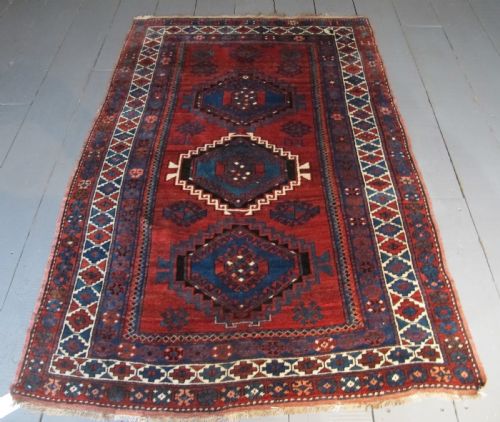


Hand Knotted Kazak Runner
When you search for a hand knotted kazak runner, you are looking at tribal floor coverings from the Caucasus woven with geometric medallions, hooked motifs and strong saturated dyes.
Hand Knotted Kazak Runner
A hand knotted kazak runner brings together traditional Caucasian tribal weaving and the elongated format required for hallways and corridors. These pieces originate from the Caucasus region and date from the nineteenth and early twentieth centuries, spanning periods such as 1880, 1890, and 1900.
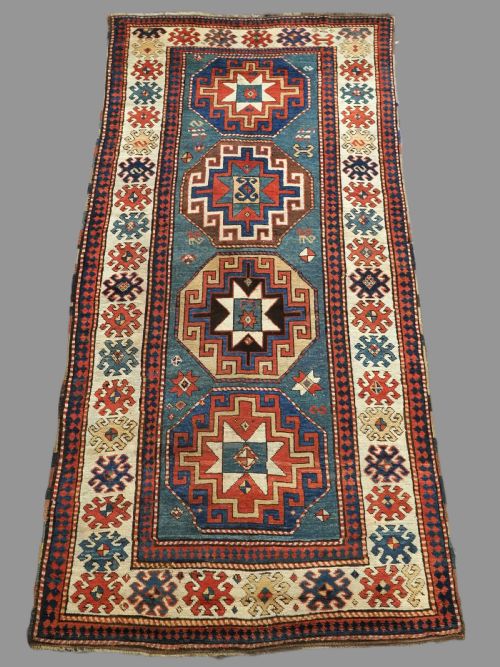
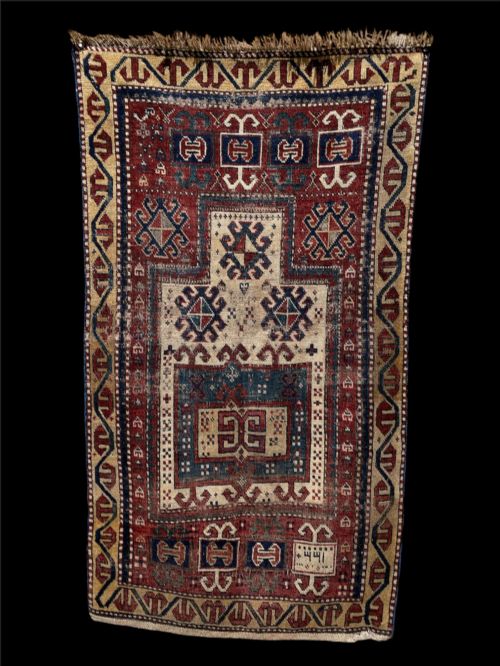
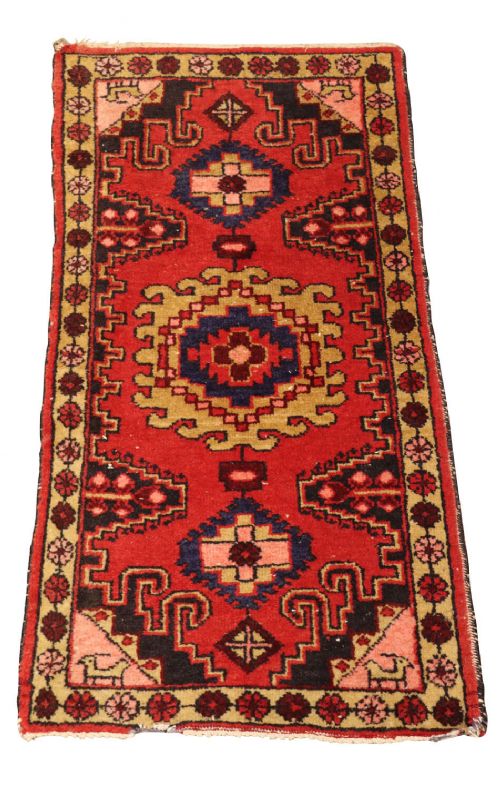
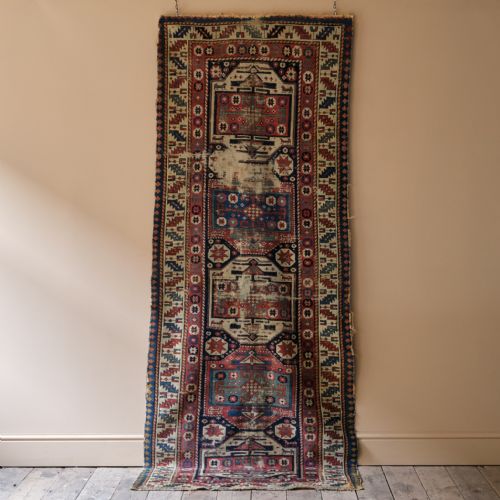
The designs on these runners typically incorporate geometric medallions, hooked polygons, and repeating motifs such as the boteh or Memling guls. Regional variations connect specific layouts to places like the Gendje and Moghan districts, while others appear as prayer rugs or feature animal and human folk art figures.
Most examples found on this page are antique floor textiles constructed with wool and cotton foundations. They function as both decorative furnishings and historical artefacts of regional village weaving traditions.
What varies in quality
The fineness of the knot count and the crispness of the geometric design separate different grades of weaving. Tighter knotting allows for sharper definition in hooked medallions and intricate lattice patterns.
The clarity and saturation of the natural dyes influence the visual depth of the runner. Well-preserved wool pile and balanced colour distribution indicate a higher standard of original production and subsequent survival.
Current listings feature pieces dated from 1860 through the 1930s, utilising wool, cotton, and natural dyes within Caucasian tribal styles.
The Hand Knotted Kazak Runner Glossary
- Kazak
- A term applied to rugs woven in the Caucasus region by various tribal groups, known for bold geometric patterns and primary colour palettes.
- Boteh
- A pear-shaped or almond-shaped motif with a curved upper end, frequently seen in repeating patterns across Caucasian runners.
- Memling gul
- An octagonal or polygonal gabled medallion enclosing hooked figures, named after the fifteenth-century painter who depicted similar carpets.
- Warp
- The vertical threads stretched tightly on the loom that form the structural foundation of the rug.
- Weft
- The horizontal threads passed through the warp threads to secure the knots in place after each row of weaving.
Hand Knotted Kazak Runner: Frequently Asked Questions
Where were these runners made?
These runners were produced in the Caucasus region by village and tribal weavers. Specific designs connect to districts such as Gendje and Moghan.
Production largely took place during the nineteenth and early twentieth centuries before commercial dyes and modern looms altered traditional methods.
What materials make up these rugs?
The pile consists of hand-spun wool, which provides both durability and a soft texture underfoot. Foundations typically utilise cotton or wool threads for the warp and weft.
Natural dyes provide the characteristic colour palette found across the regional patterns.
How do I identify a regional design?
Regional types often display distinct structural motifs. Moghan examples frequently incorporate Memling guls or hooked medallions, while Gendje pieces may feature diagonal stripes or colourful boteh patterns.
Fachralo types are commonly associated with specific prayer rug layouts and large central squares.
How should I care for an antique runner?
Place the runner in areas with moderate foot traffic to preserve the wool pile over time. Use an appropriate underlay to prevent slipping and reduce friction against the floor.
Vacuum gently without using a rotating brush roll and consult a specialist in antique textiles for professional cleaning.